
Free visual inspection and a written scope of work before any mitigation begins - photos, moisture readings, and drying logs go in your claim file
The scope we write is the scope we bill. Anything new gets shown to you, in writing, before we touch it.
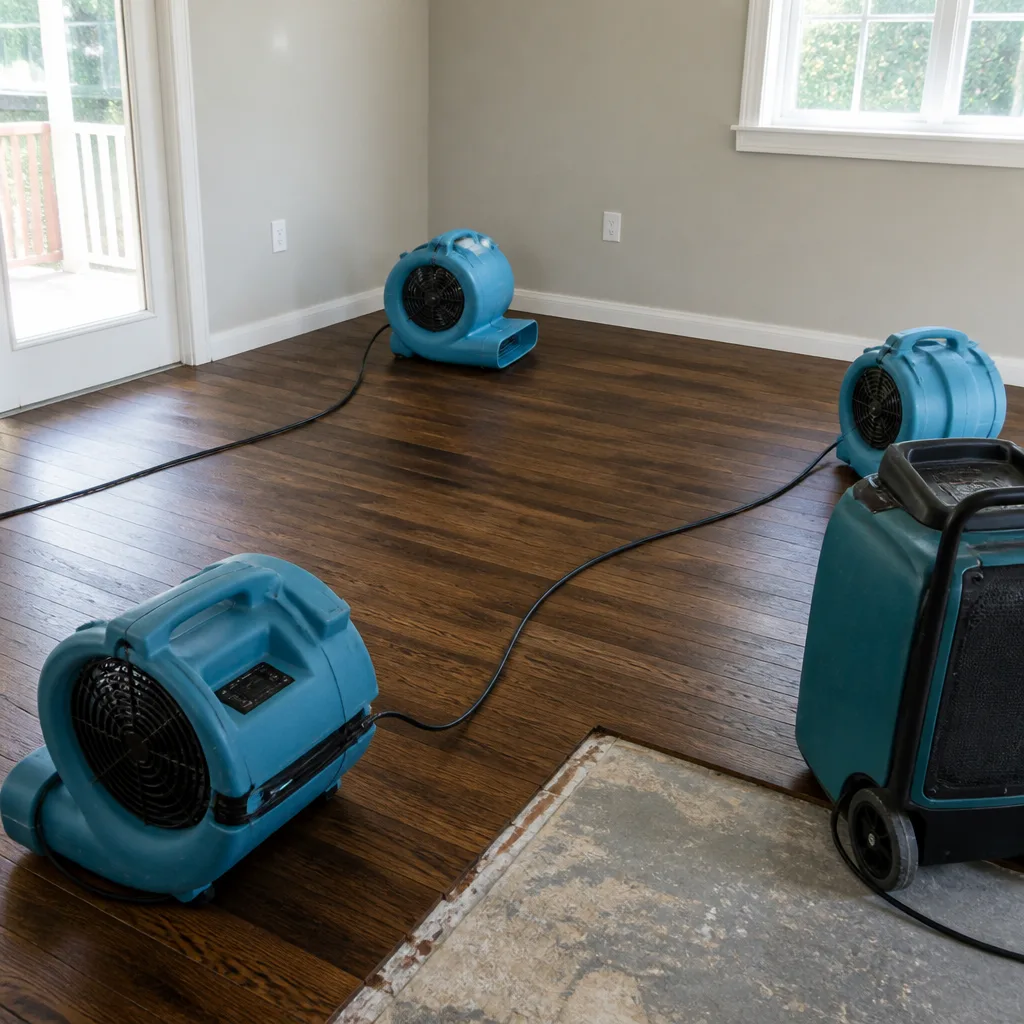
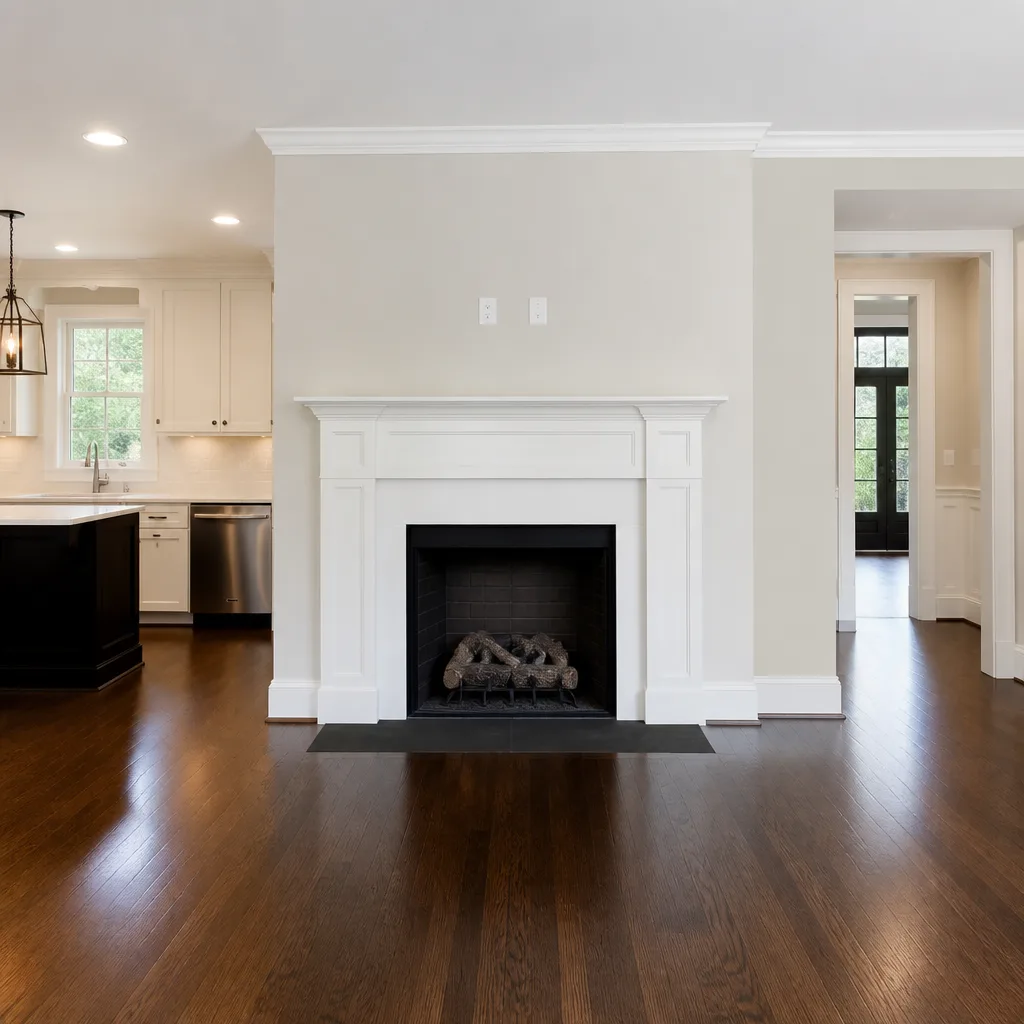
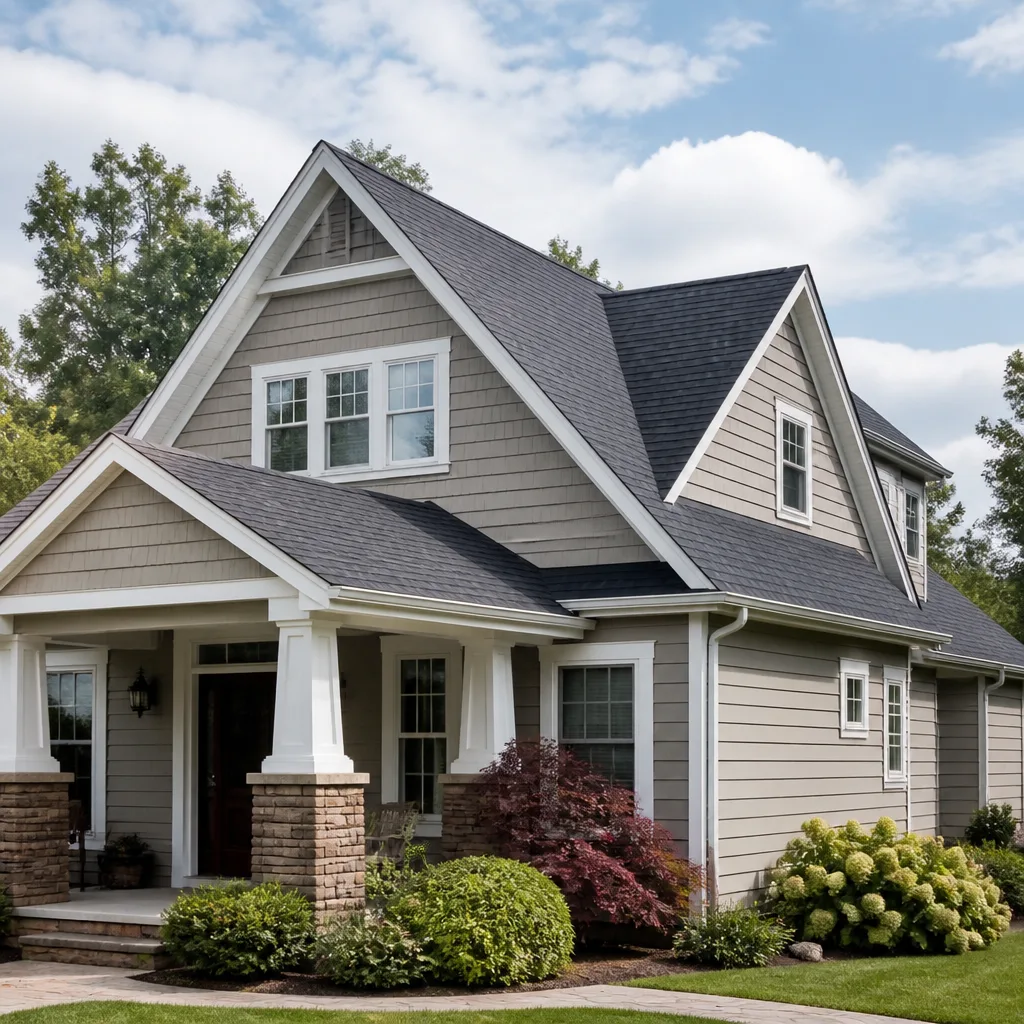
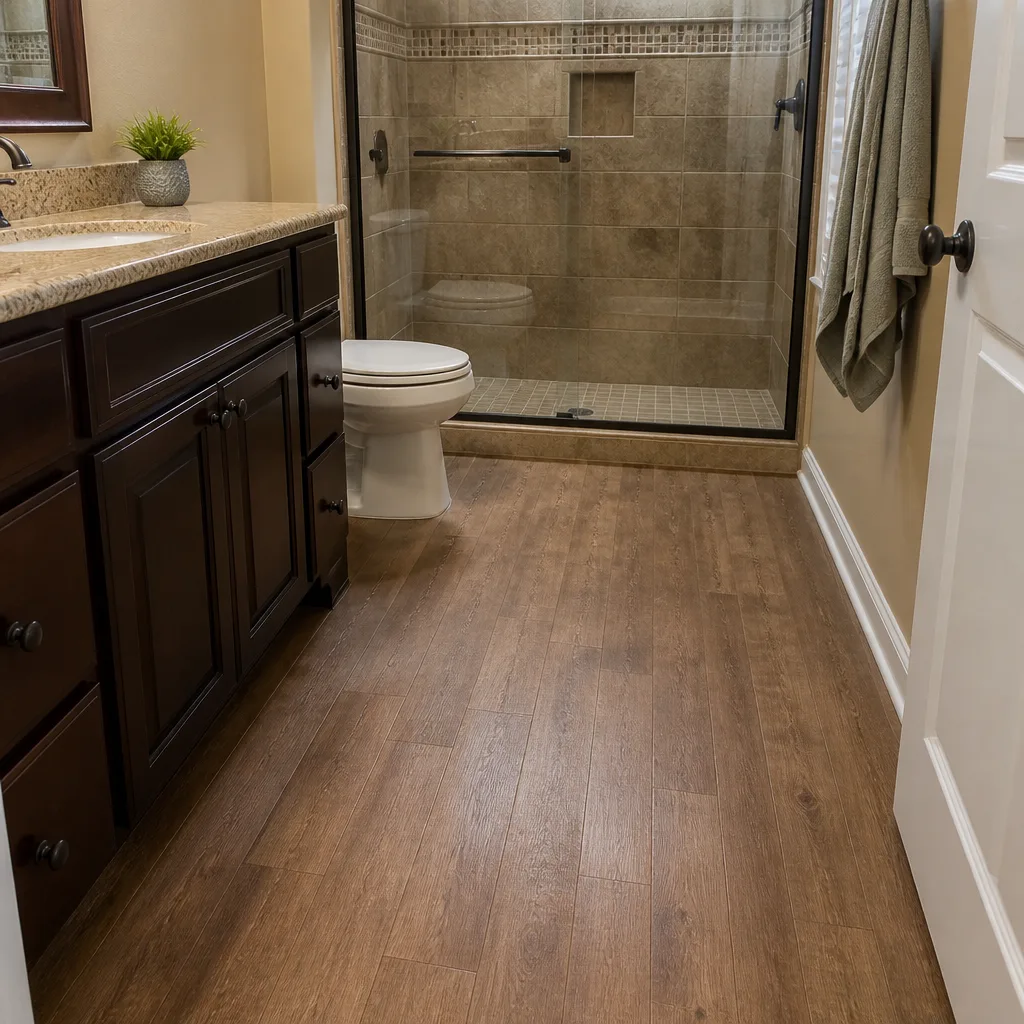
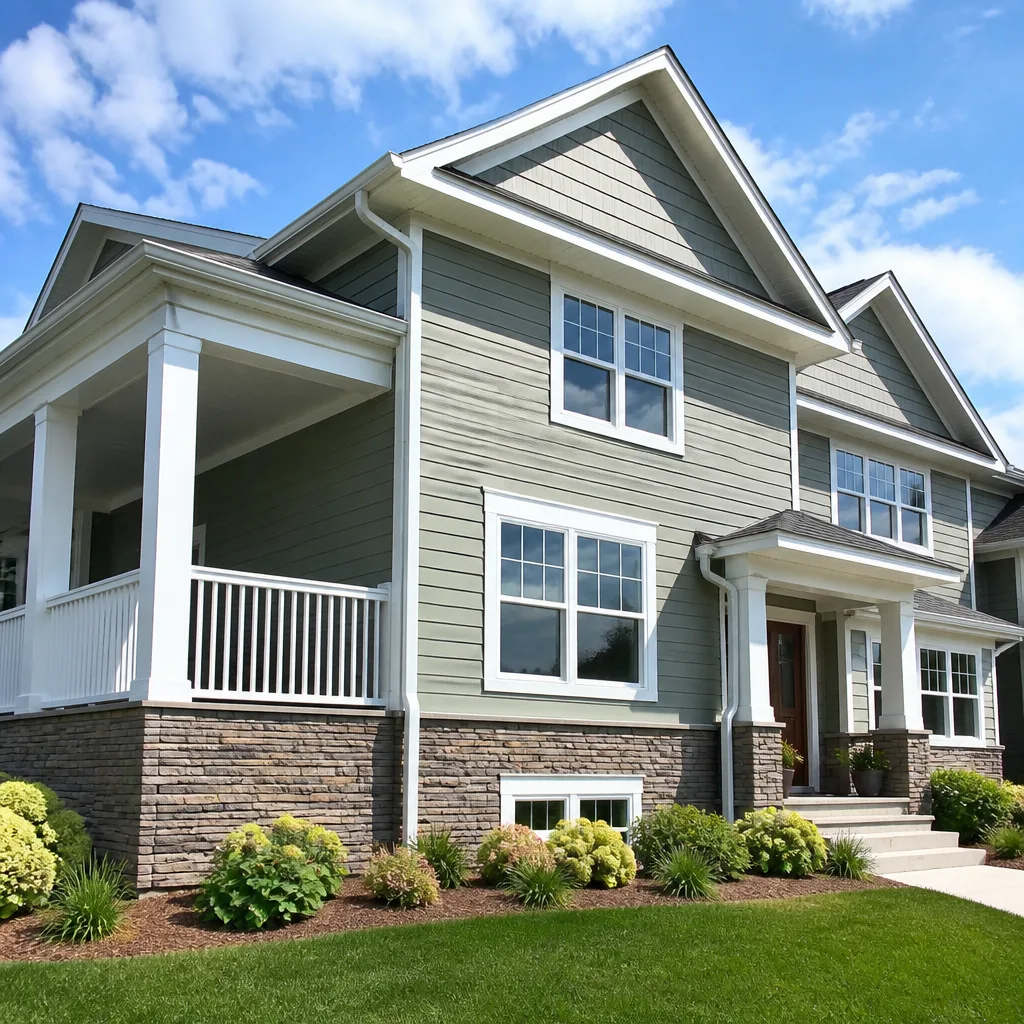
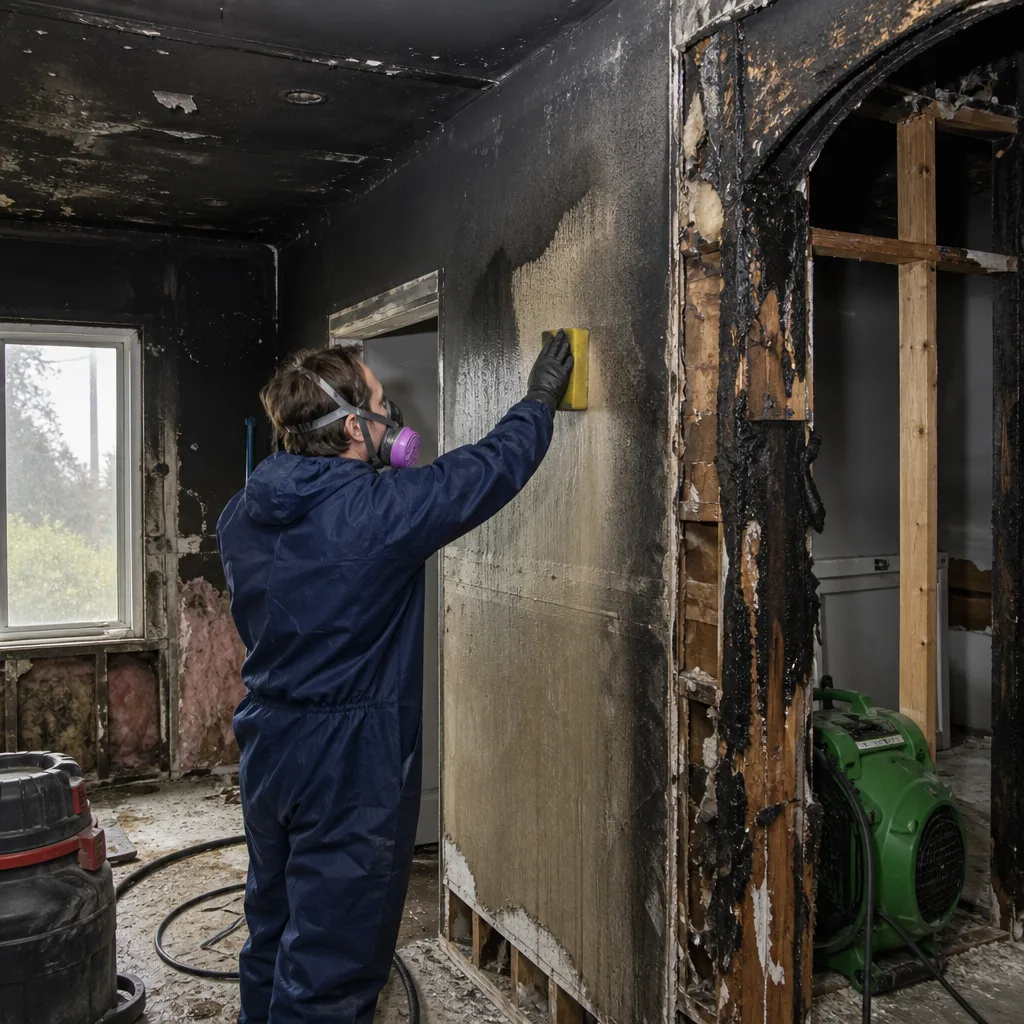
 Before
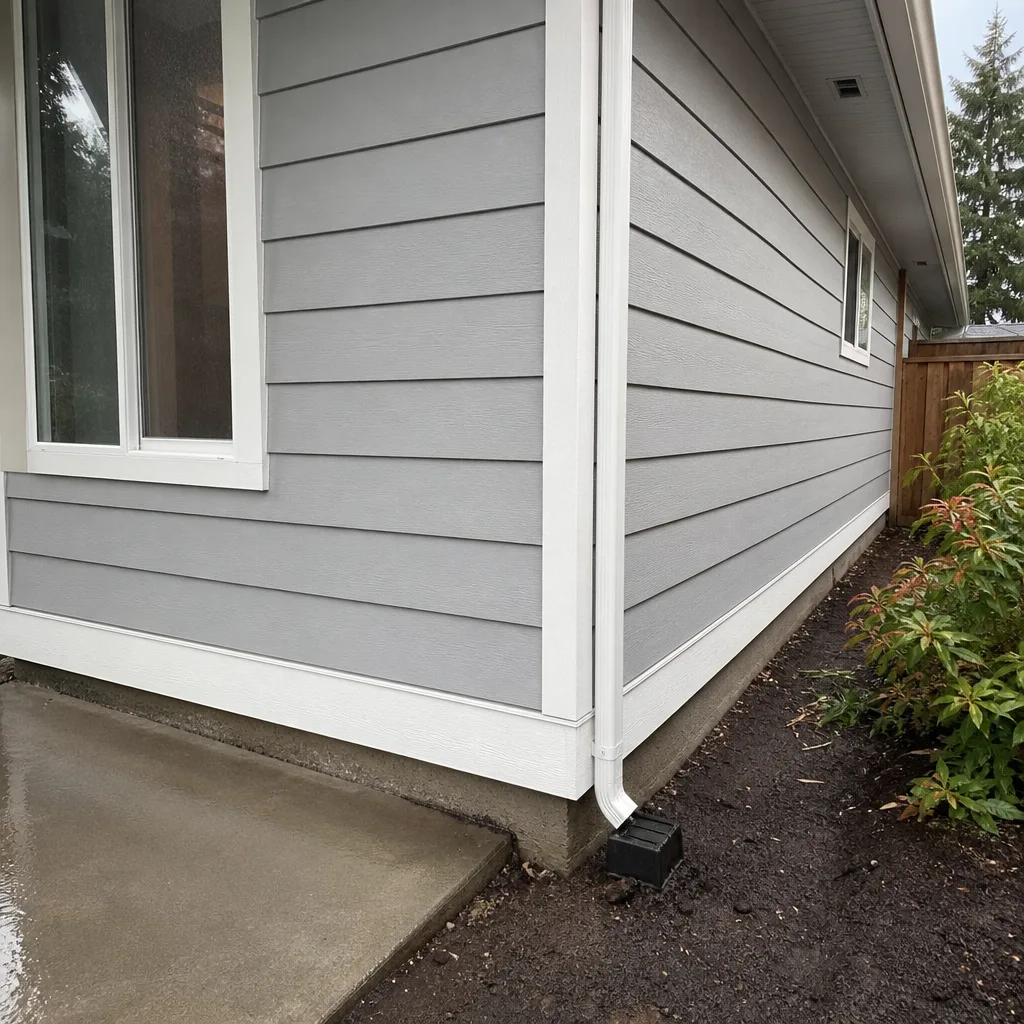 After
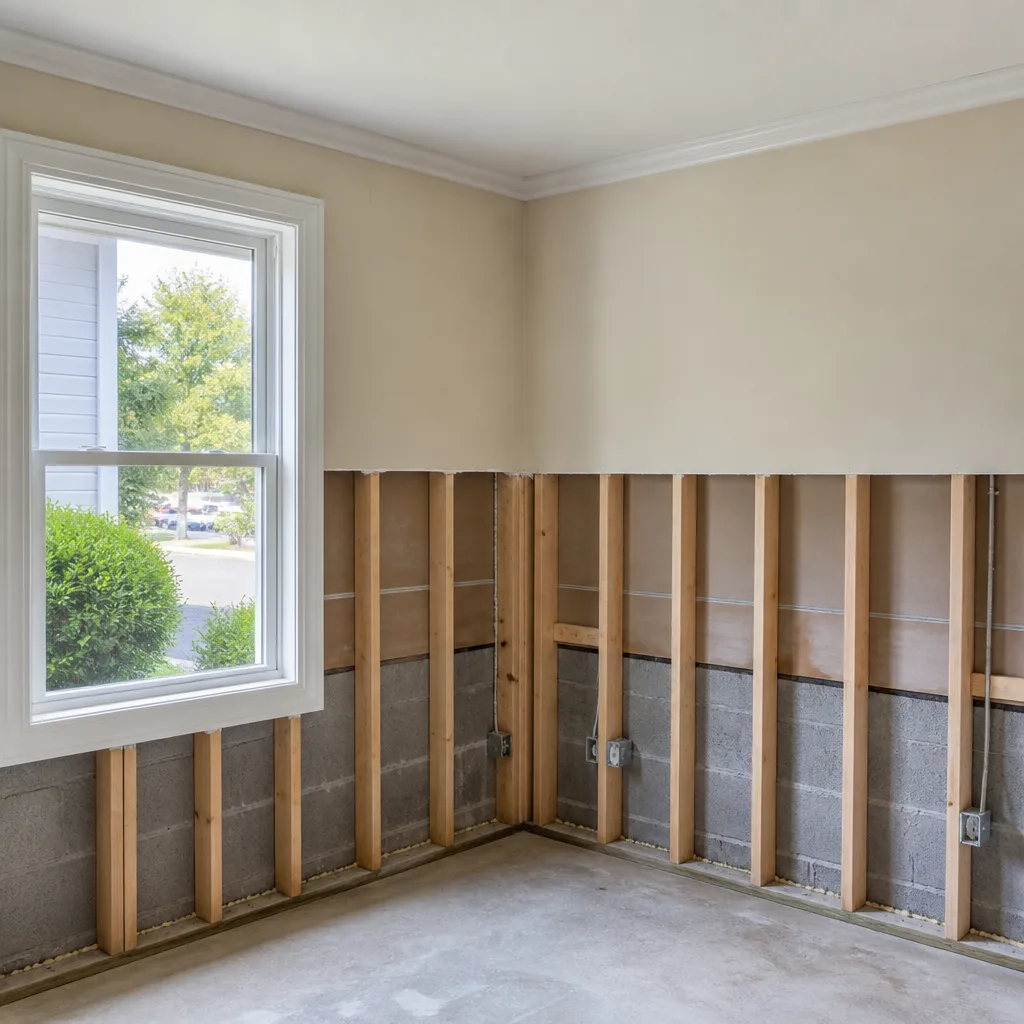
After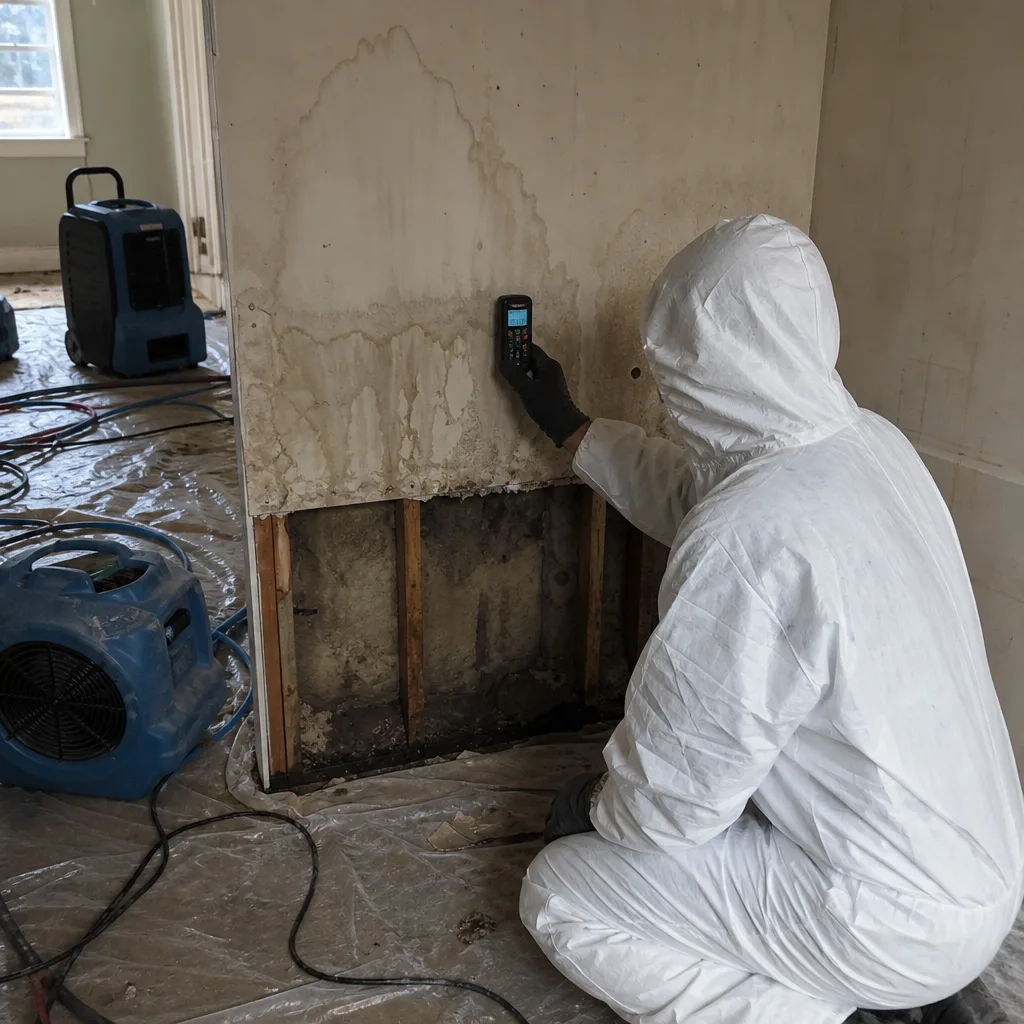 Before
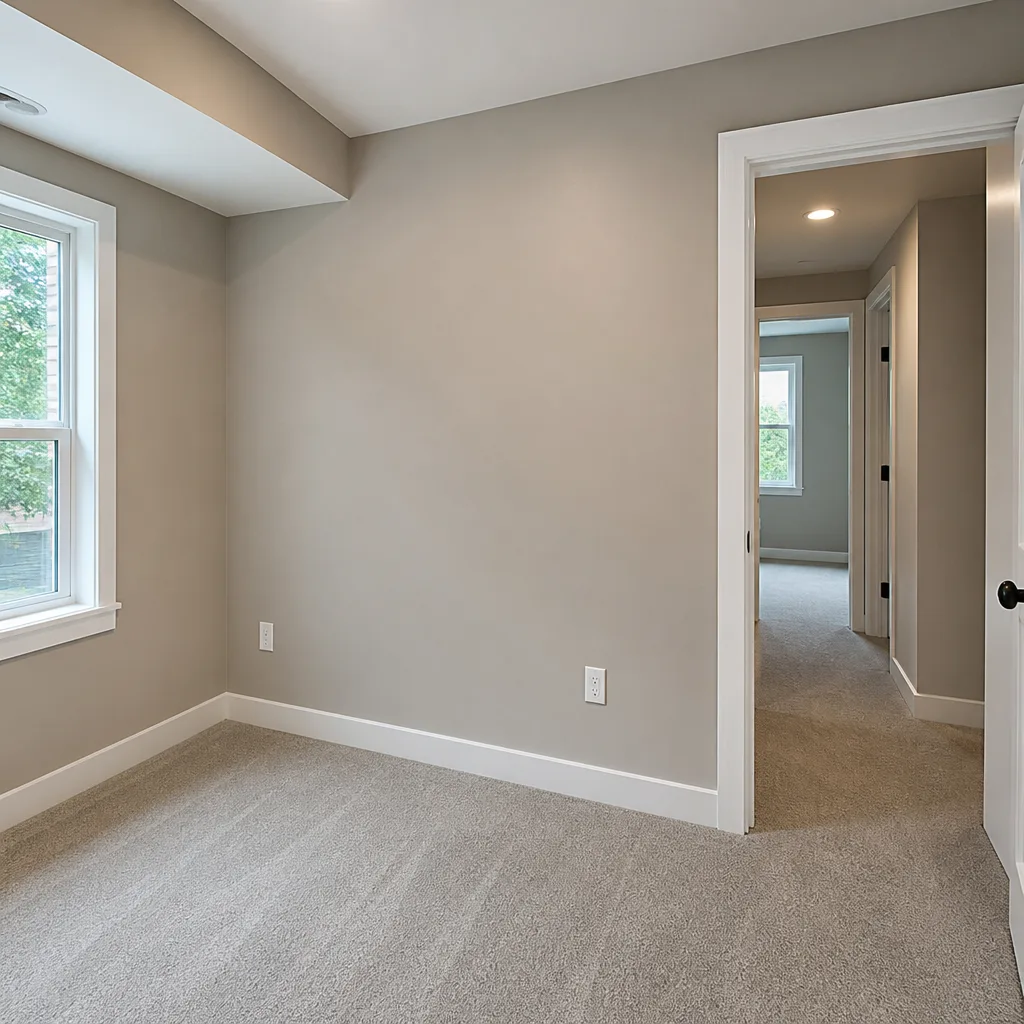 After
After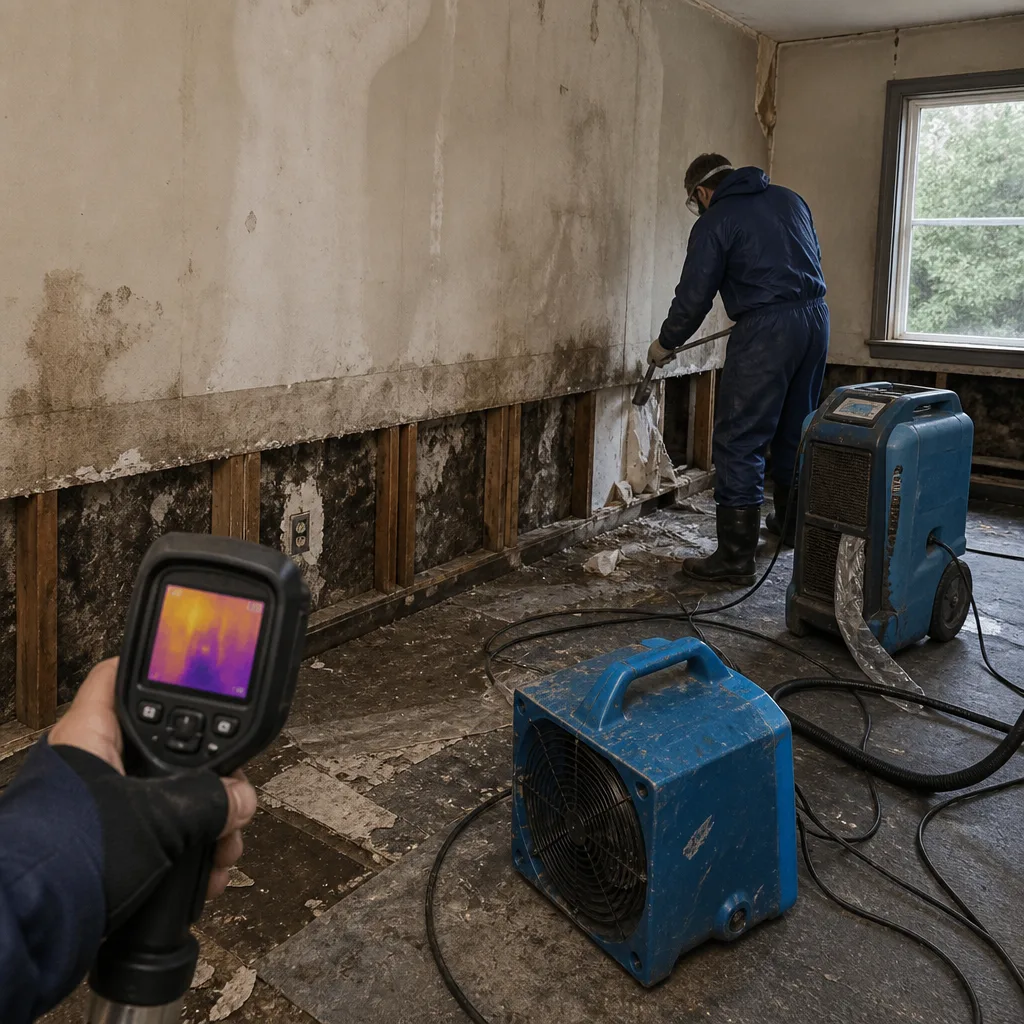 Before
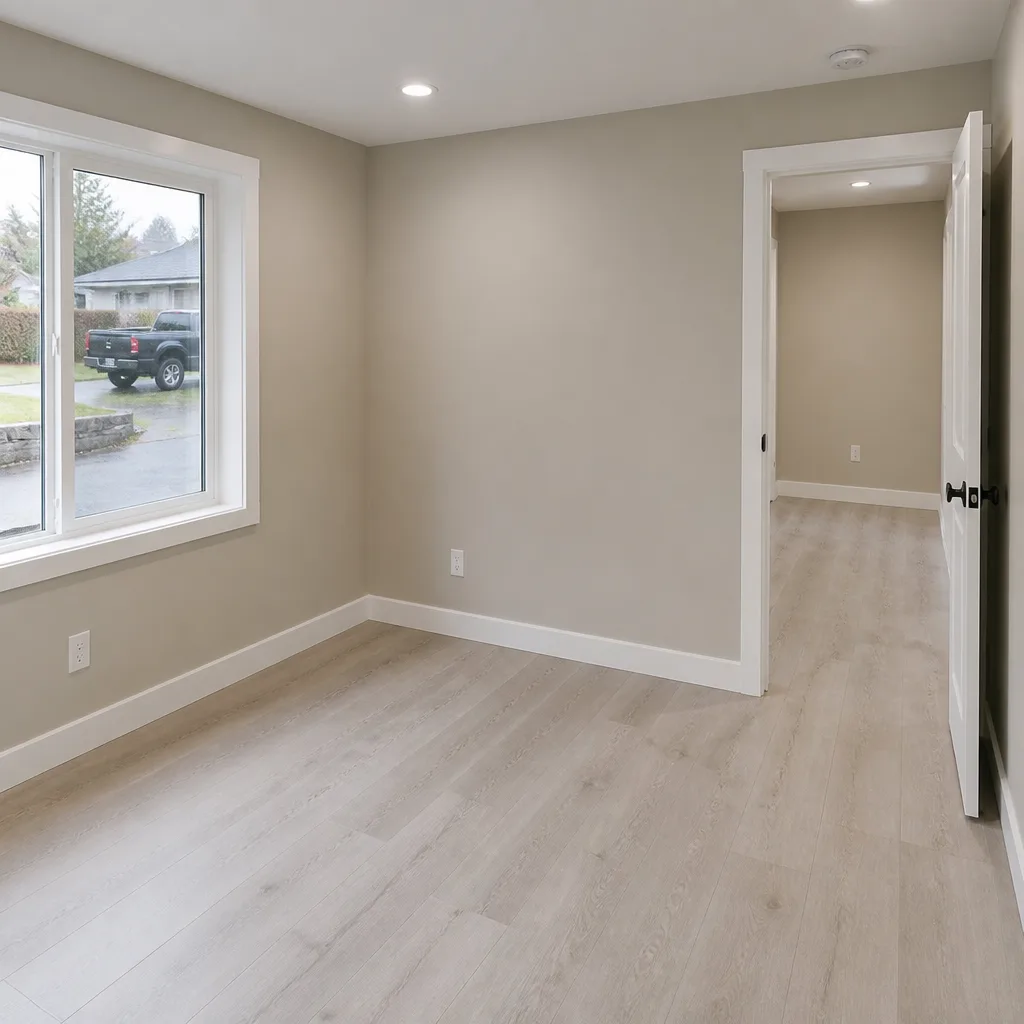 After
After24/7 Emergency Mold Remediation in Kirkland
Mold remediation in Kirkland typically costs $1,800-$6,500 depending on affected square footage, with crawl space and hillside foundation jobs running toward the higher end. Our crews answer live at (360) 502-8815 around the clock, and we can have a technician on-site anywhere in Kirkland within 45 minutes. The first hour matters because mold colonies double in mass roughly every 24 to 48 hours under favorable moisture conditions, and in Kirkland’s persistent wet-season climate, favorable conditions last for months.
We start every Kirkland mold call with a free visual inspection and moisture mapping. If elevated readings show active growth, we build containment immediately to prevent spore migration into clean areas. Our dispatch and scheduling are coordinated from our Seattle office, with crews serving Kirkland neighborhoods directly - no out-of-area contractors learning your hillside’s drainage patterns on the fly.
Understanding Mold Remediation Severity in Kirkland Properties
Mold contamination is classified by affected area and material porosity. Under IICRC S520 standards, Category 1 contamination covers less than 10 square feet of non-porous surfaces - think tile or sealed concrete. Category 2 spans 10 to 100 square feet and may involve porous materials like drywall or carpet. Category 3 exceeds 100 square feet or involves HVAC systems, requiring full containment with negative air pressure and HEPA filtration. Condition 4, the most severe, indicates hidden or widespread colonization inside wall cavities, subfloors, or crawl spaces.
Kirkland’s housing stock skews heavily toward 1950s-1970s ranch and split-level construction, many with minimal or no crawl-space vapor barriers. These homes sit on steep lots with clay-heavy soils, so Category 2 surface mold on basement drywall often masks Condition 4 colonization in the rim joist and subfloor above. Our moisture mapping with thermal imaging and penetrating hygrometers finds the hidden reservoir before we quote a scope. In post-2011 annexation areas like Totem Lake, shared-wall townhome construction means a single unit’s water loss can create Category 3 contamination spanning multiple HOA-managed properties, with liability and access complications that require documented coordination from day one.
Why Kirkland Property Owners Choose DryMark Restoration Everett
- 45-minute response commitment to any Kirkland address, with crews staged for the eastside lakefront corridor.
- 24/7 live answer - a real person, never an automated system or voicemail tree, on every call.
- IICRC-certified crews holding WRT (Water Restoration Technician), AMRT (Applied Microbial Remediation Technician), and FSRT (Fire & Smoke Restoration Technician) credentials.
- Free visual inspection with moisture readings and thermal imaging before any scope is proposed.
- Direct insurance billing with documented photo records and drying logs submitted to your adjuster.
- One team from extraction to reconstruction - no handoffs between mitigation and rebuild contractors.
BeforeAfterOur Mold Remediation Process
1. Inspection & Assessment
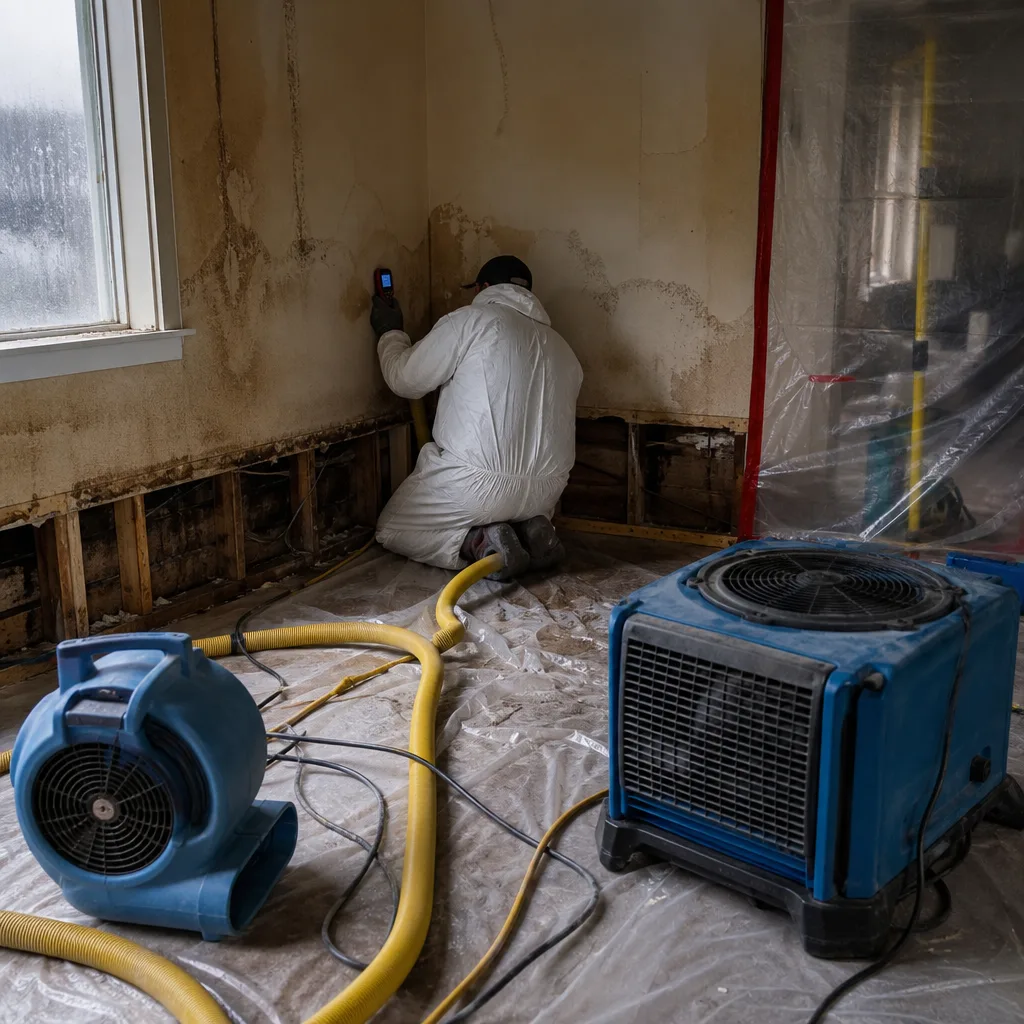
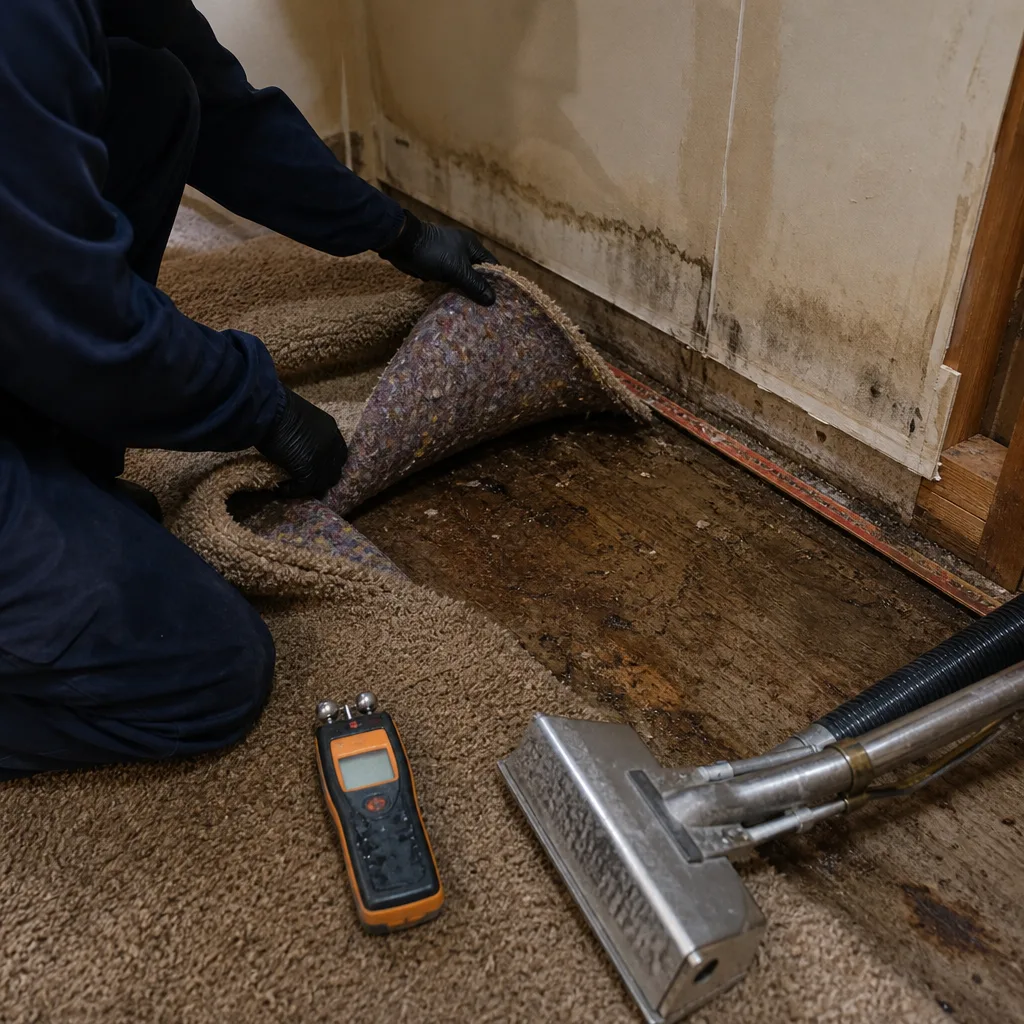
We arrive with moisture meters, thermal imaging cameras, and borescopes to map the full extent of water intrusion and mold colonization. In Kirkland hillside homes, we specifically test for uphill seepage through clay hardpan - a failure mode that reads like a plumbing leak but behaves like groundwater. Every reading is logged with time, location, and photo documentation.
2. Containment & Air Filtration
We establish critical barriers with 6-mil polyethylene sheeting and maintain negative air pressure using HEPA air scrubbers. This prevents spore migration during disturbance. In shared-wall Kirkland townhomes, we coordinate containment boundaries with adjacent units and document for HOA records.
3. Structural Drying
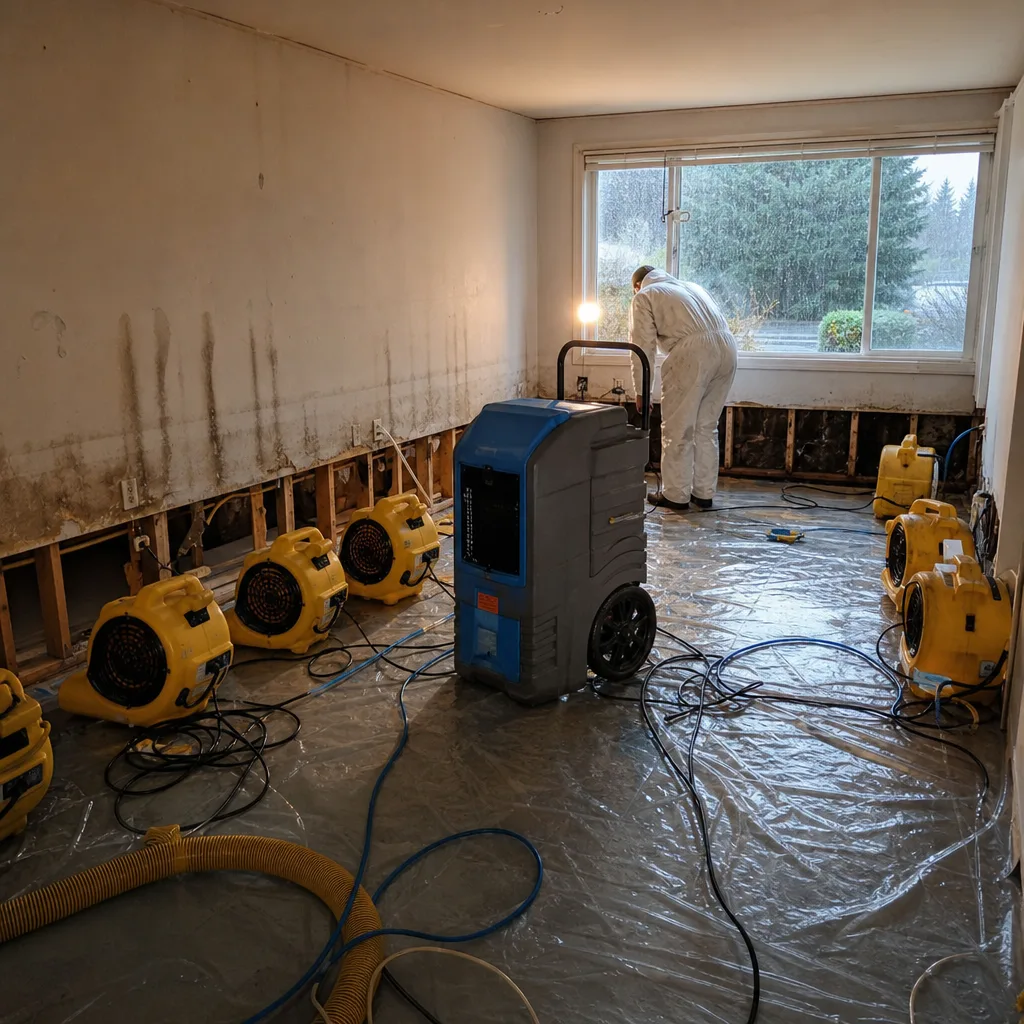
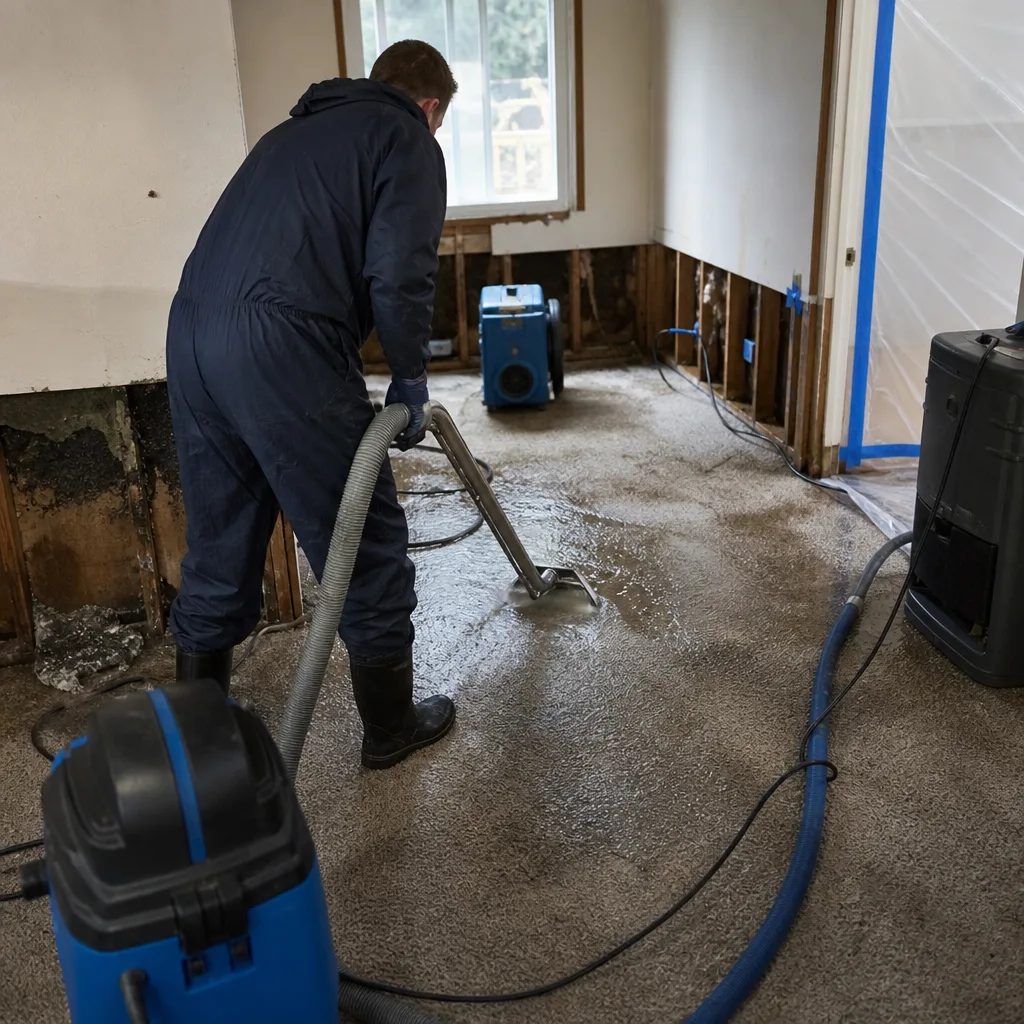
We deploy Phoenix dehumidifiers and XPOWER air movers sized to the cubic footage and vapor pressure differential - the measurable force that drives moisture from wet materials into drier air. In Kirkland’s hillside crawl spaces, standard flat-terrain drying timelines often fail; we extend protocols until daily moisture logs confirm stability through multiple weather cycles.
4. Cleaning & Antimicrobial Treatment
Non-porous surfaces receive HEPA vacuuming and detergent cleaning per IICRC S520. Porous materials showing root penetration are removed and bagged. We apply antimicrobial agents registered for the material class, with application logs recorded for insurance documentation.
5. Crawl Space & Moisture Control
For Kirkland’s vapor-barrier-deficient 1950s-1970s stock, we install or repair crawl space encapsulation, grade drainage, and where uphill seepage is confirmed, specify curtain drains or French drains to intercept lateral groundwater before it reaches the foundation. This step separates Kirkland remediation from generic mold cleanup.
6. Clearance Testing & Restoration
We verify drying with third-party or in-house air and surface sampling, then repair or reconstruct affected finishes. Our 365-Day Done Right Promise under The Haven Standard covers the entire scope: if moisture returns or mold recolonizes, we return at no charge.
Need Emergency Mold Remediation in Kirkland Now?
Crews minutes away, answering live 24 hours a day. The sooner we start, the less it costs.
Working With Your Insurance Company
Mold claims succeed or fail on documentation. We begin photo records at the front door and continue through every visit. Our estimates follow industry-standard Xactimate pricing with line-item detail that adjusters recognize and can process without back-and-forth. We speak directly with your carrier, submit drying logs showing daily psychrometric data - temperature, relative humidity, and specific humidity readings - and flag any coverage limits or exclusions before work begins so you’re not surprised.
Our founder built Back to Dry around the documentation gap that costs homeowners their claims. That origin shows in our daily practice: no scope-creep additions once the crew is inside, because Haven Standard, Clause 1 requires a written price before any work starts.
What We Provide Your Insurer
- Thorough documentation of the loss
- Photos of all damage, room by room
- Moisture readings and drying logs
- A detailed, line-item scope of work
- Direct coordination with your carrier
Built for Kirkland’s Loss Calendar
Kirkland’s Pacific Northwest wet season runs roughly October through April, but the damage calendar differs from flat-terrain cities. Persistent low-intensity rainfall loads cumulative moisture into clay soils rather than draining through them. By February, hillside homes in Norkirk and Houghton show elevated crawl space humidity that standard winter drying protocols miss. March and April bring the heaviest seepage calls - not from current rain, but from saturated hardpan finally pushing through foundation walls.
May through July surprises homeowners. The rain stops. The sun returns. But crawl spaces and below-grade rooms stay at damaging humidity levels because the hillside soil hasn’t released its stored moisture. We routinely extend IICRC drying timelines into June and July for Kirkland hillside jobs, and we document this extension for insurers who question job duration. August and September bring the brief dry window; smart homeowners schedule vapor barrier installation and drainage improvements then, before the cycle repeats.
Mold Remediation Across Kirkland’s Neighborhoods
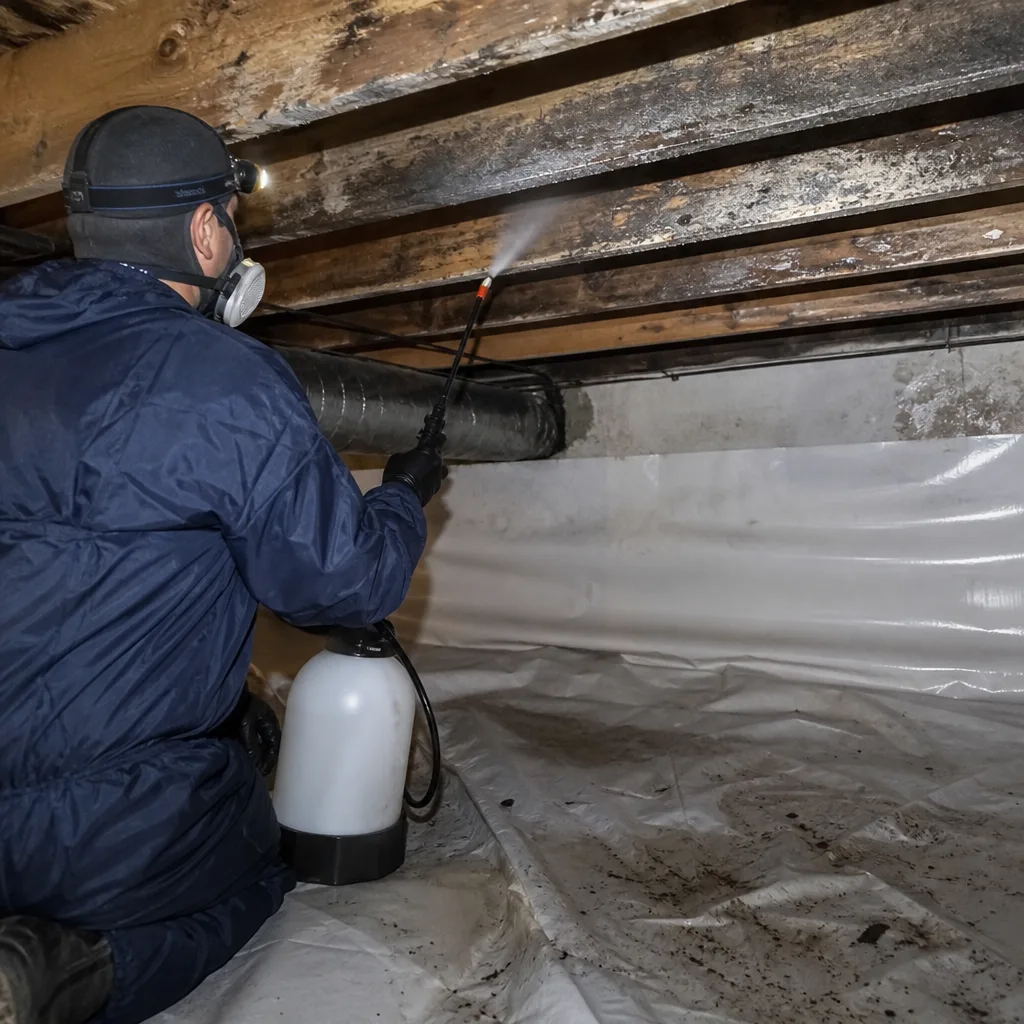
Houghton and Norkirk sit on the steepest eastern bluffs, and this is where our Mold Remediation teams spend the most time on groundwater management. The 1960s split-levels and ranches here lack vapor barriers and face uphill seepage through clay hardpan. We were called to a 1960s split-level in Houghton where the homeowner reported a musty smell returning every spring despite previous drying attempts. Our moisture mapping revealed elevated moisture readings on the uphill-facing foundation wall and no vapor barrier in the crawl space, pointing to clay hardpan seepage rather than a plumbing leak. After installing a curtain drain to intercept the groundwater, we ran structural drying with Phoenix dehumidifiers and XPOWER air movers, applied antimicrobial treatment, and confirmed via drying logs that the space stayed dry through the following wet season.
Totem Lake and Finn Hill, annexed post-2011, added dense townhome and condo clusters where a single water loss triggers shared-wall and HOA liability complications. Our crews coordinate with property managers, document multiple affected units, and build containment that respects fire-rated party walls. The mold reservoir often hides in the common cavity, invisible from any single unit’s interior.
Juanita and Moss Bay include lakefront and near-lake properties with older construction and higher water tables. Here we see more basement and below-grade mold from hydrostatic pressure, plus the occasional failed sump pump during extended wet periods. The flat terrain actually helps drying hold once we achieve it - the challenge is getting there through saturated soils.
Central Kirkland and the commercial corridor mix retail, restaurant, and residential spaces where mold follows slow leaks in aging plumbing. Response routes from our Seattle-coordinated dispatch hit these addresses fastest, often under 30 minutes.
Specialized Mold Remediation Services We Offer in Kirkland
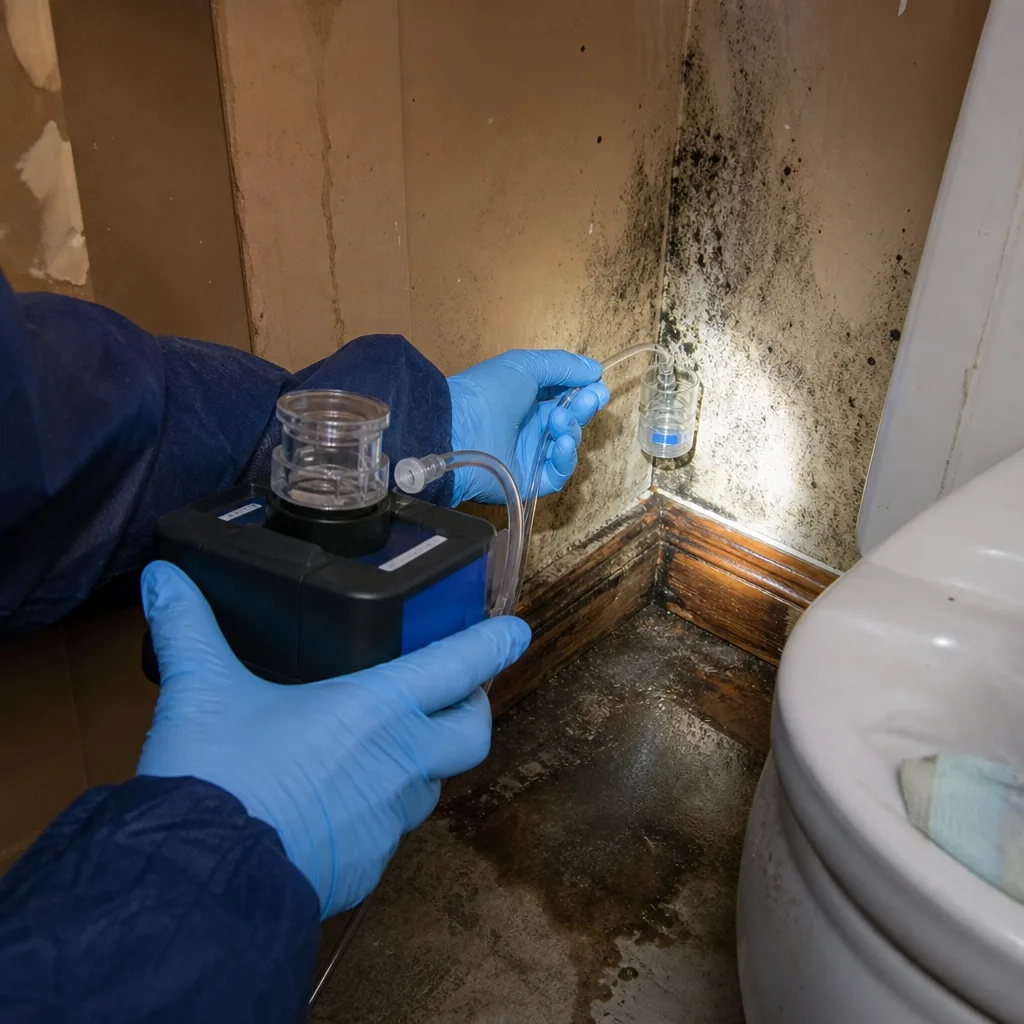
Mold Inspection & Testing
We offer independent mold inspection with air sampling, surface sampling, and ERMI dust analysis where health concerns or disclosure requirements demand it. In Kirkland’s competitive real estate market, pre-listing mold assessments are increasingly common - we provide documented findings that satisfy buyer inspection contingencies without unnecessary remediation scopes.
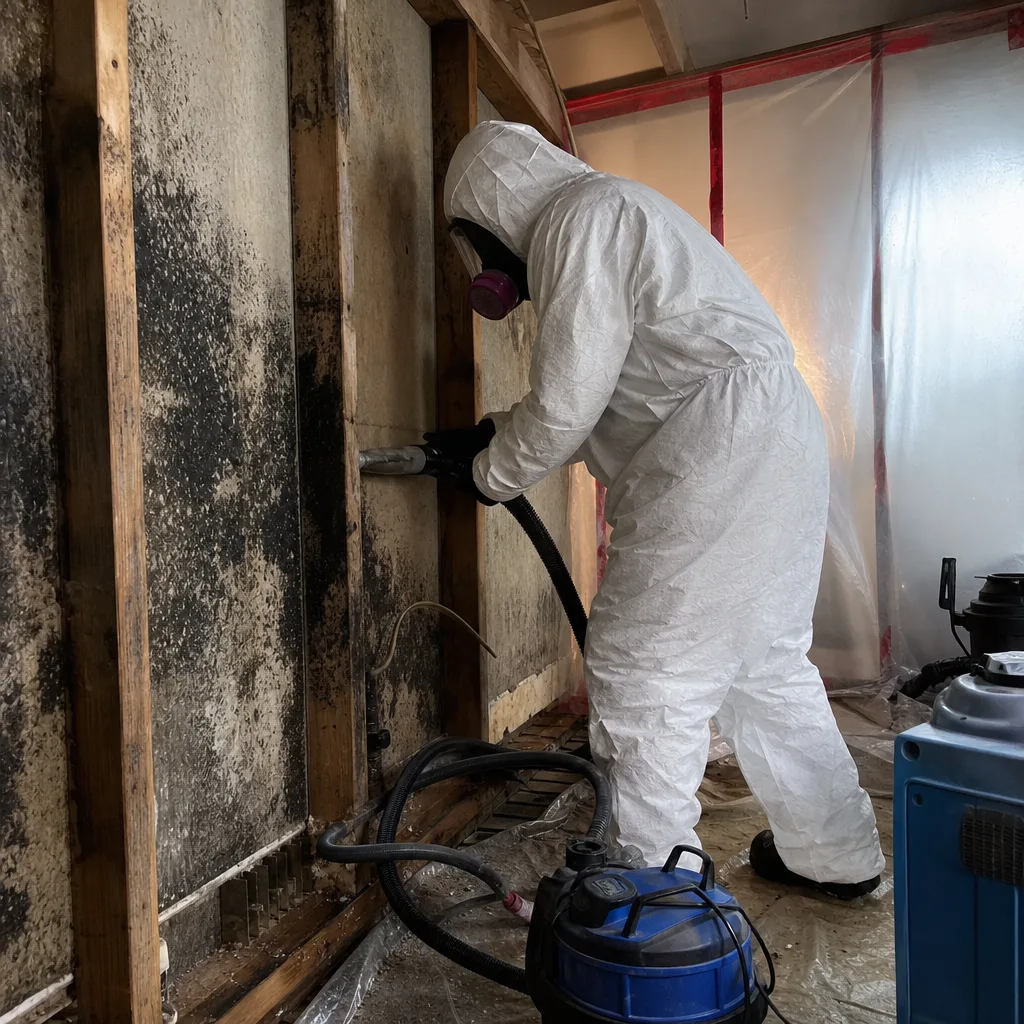
Mold Removal
Our removal protocols follow IICRC S520 and EPA guidelines for containment, negative air, and proper disposal. For Kirkland’s older homes, we distinguish between active colonization requiring removal and inactive staining that can be cleaned and sealed, saving unnecessary demolition.
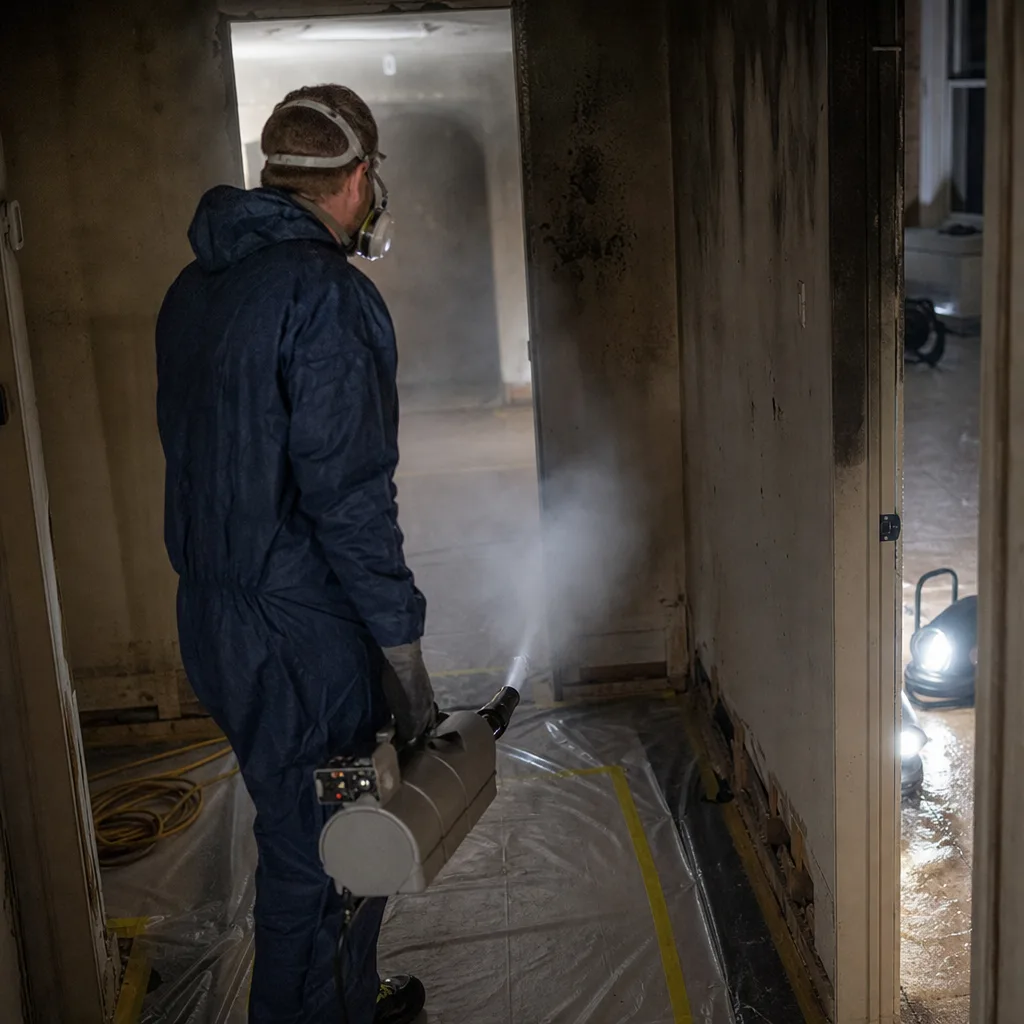
Black Mold Remediation
Stachybotrys chartarum and other toxigenic species require enhanced containment and PPE. We don’t use scare tactics - we test, confirm, and scope accordingly. In Kirkland’s persistently damp crawl spaces, black mold often indicates long-term moisture neglect that has also compromised structural wood fiber.
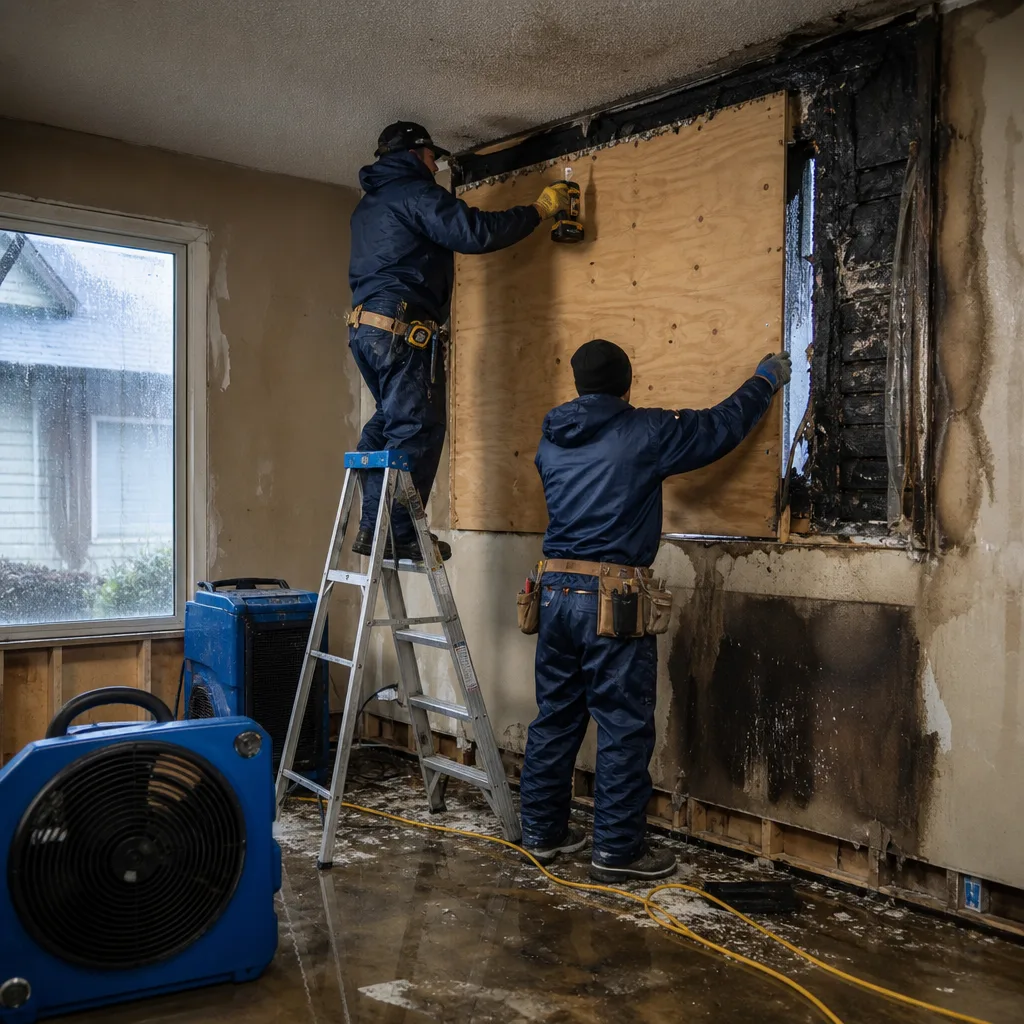
Air Quality Restoration
Post-remediation, we verify air quality with particle counting and, where specified, third-party laboratory analysis. Our HEPA scrubbers run during and after active work, with filter change logs documented for insurance and health records.
Crawl Space Treatment
This is where Kirkland’s mold story lives. Most 1950s-1970s ranches and split-levels have minimal or no vapor barrier, and the clay soil beneath holds moisture like a sponge. We install polyethylene barriers, seal vents where appropriate, and specify drainage improvements that prevent recurrence. Without this step, surface mold removal is temporary.
What happens when you call
- 1
A real person answersNo phone trees - you reach a local pro.
- 2
You get an upfront price rangeHonest numbers before anyone is dispatched.
- 3
A background-checked tech heads outLicensed & insured, dispatched right away.
- 4
You approve before work beginsNothing starts until you say go.
Mold Remediation Costs in Kirkland, WA
A typical mold inspection with moisture mapping in Kirkland runs $250-$450. Contained surface mold removal on non-porous materials in a single room: $1,800-$3,200. Crawl space mold remediation with vapor barrier installation: $3,500-$6,500. Full basement or multi-room colonization with structural drying and rebuild: $5,000-$12,000+.
What moves the price: affected square footage, material porosity (drywall vs. tile), hidden colonization in wall cavities or subfloors, and whether groundwater management is required. Kirkland hillside jobs with uphill seepage run higher than flat-terrain equivalents because drainage remediation precedes or accompanies mold work.
Insurance coverage varies. Sudden water damage with resulting mold is often covered; long-term neglect with gradual mold growth may be excluded. We review your policy, document the loss origin, and coordinate directly with your adjuster. Haven Standard, Clause 1: a written price before any work starts, every time, with no exceptions. Call (360) 502-8815 for your free inspection and firm scope.
We Also Serve Cities Near Kirkland
Our crews respond throughout the eastside and north Sound from our Seattle-coordinated dispatch. We also serve Kirkland neighboring communities including Bothell, Lynnwood, Mill Creek, and Snohomish with the same 45-minute commitment, live answer, and documented scope process.
Serving Kirkland, WA - Our Local Coverage Area
We’re based in the Kirkland area and know this community well. Use the map below to see our service coverage - if you’re nearby, we can almost certainly help.
Kirkland Mold Remediation Questions, Answered
Why does mold keep coming back in my Kirkland hillside home after remediation?
Because the moisture source was never eliminated. In Kirkland’s Houghton and Norkirk neighborhoods, clay hardpan holds groundwater against your uphill foundation wall for weeks after rain stops. Standard drying removes surface moisture; it doesn’t stop seepage. We test for lateral intrusion with moisture mapping, and if confirmed, specify curtain drains or French drains before closing the remediation. Call (360) 502-8815 for an inspection that finds the real source.
How long does mold remediation take in Kirkland compared to other cities?
Typically 3-7 days for contained surface mold, but Kirkland hillside crawl spaces often require 10-14 days or longer. The clay-heavy soils in neighborhoods like Houghton and Norkirk keep humidity elevated well into summer, extending structural drying timelines beyond flat-terrain protocols. We don’t sign off until daily moisture logs confirm stability. Call (360) 502-8815 for a timeline based on your specific property.
What’s the difference between a plumbing leak and uphill seepage in Kirkland?
A plumbing leak runs continuously or cycles with water use, and moisture concentrates near the source. Uphill seepage, common on Kirkland’s eastern bluffs, enters exclusively through the uphill-facing foundation wall, dries temporarily between rains, and returns with the next weather event. Our moisture mapping distinguishes the pattern: seepage shows a gradient highest at the uphill wall, lowest at the downhill side. Call (360) 502-8815 if your musty smell returns every spring.
Do you treat crawl spaces without vapor barriers in Kirkland’s 1950s-1970s ranches?
Yes, and this describes most Kirkland crawl spaces from that era. We remove contaminated material, dry the space with Phoenix dehumidifiers and XPOWER air movers, apply antimicrobial treatment, and install a proper polyethylene vapor barrier sealed at seams and piers. Without the barrier, the mold returns. Call (360) 502-8815 for a crawl space assessment.
How does mold remediation work in Kirkland townhomes with shared walls?
Post-2011 annexation areas like Totem Lake have dense townhome clusters where water losses cross unit boundaries. We coordinate with your HOA and adjacent owners, document all affected spaces, and build containment that respects fire-rated party walls. Hidden mold reservoirs in shared cavities require access agreements; we handle the documentation and communication. Call (360) 502-8815 for shared-wall mold assessment.
Will insurance cover my Kirkland mold remediation?
Sudden water damage with resulting mold growth is typically covered; long-term moisture buildup with gradual mold development is often excluded. We inspect for the loss origin, document our findings with photos and moisture readings, and coordinate directly with your adjuster to establish coverage. Haven Standard, Clause 1 applies regardless: you’ll have a written price before any work starts. Call (360) 502-8815 for a free inspection and coverage review.
Can my family stay in the home during mold remediation?
For Category 1 contamination under 10 square feet, often yes. For Category 2 and above, or any toxigenic species, we recommend temporary relocation during active disturbance and HEPA filtration. We build containment to isolate the work zone, but airborne particulate levels spike during removal. We provide real-time air quality data to inform your decision. Call (360) 502-8815 to discuss your specific situation.
What should I do in the first 30 minutes after discovering mold?
Don’t disturb it - agitation releases spores. Turn off HVAC if the system serves the affected area. Note the location, approximate size, and any water source you can identify. Then call (360) 502-8815. We answer live 24/7 and can have a technician on-site in Kirkland within 45 minutes to contain the area and begin moisture mapping.
Back to Dry Restoration has operated under The Haven Standard since 2011, when founder Alicia Brennan, a former claims adjuster, built the company around the documentation gap that costs homeowners their claims. Every one of the 12,000+ homes we’ve restored since then received a written price before work started and a documented record when the crew left. Our 365-Day Done Right Promise is a signed guarantee, not a marketing line. We offer a Free Second Opinion on any competitor’s written estimate, and we deploy professional-grade drying systems from Dri-Eaz, Phoenix, XPOWER, B-Air, and Injectidry, documented to IICRC, RIA, and IFA standards.
Written by Alicia Brennan, Owner at Back to Dry Restoration, serving Kirkland since 2011.
Mold Remediation in Nearby Areas