
Free visual inspection and a written scope of work before any mitigation begins - photos, moisture readings, and drying logs go in your claim file
The scope we write is the scope we bill. Anything new gets shown to you, in writing, before we touch it.
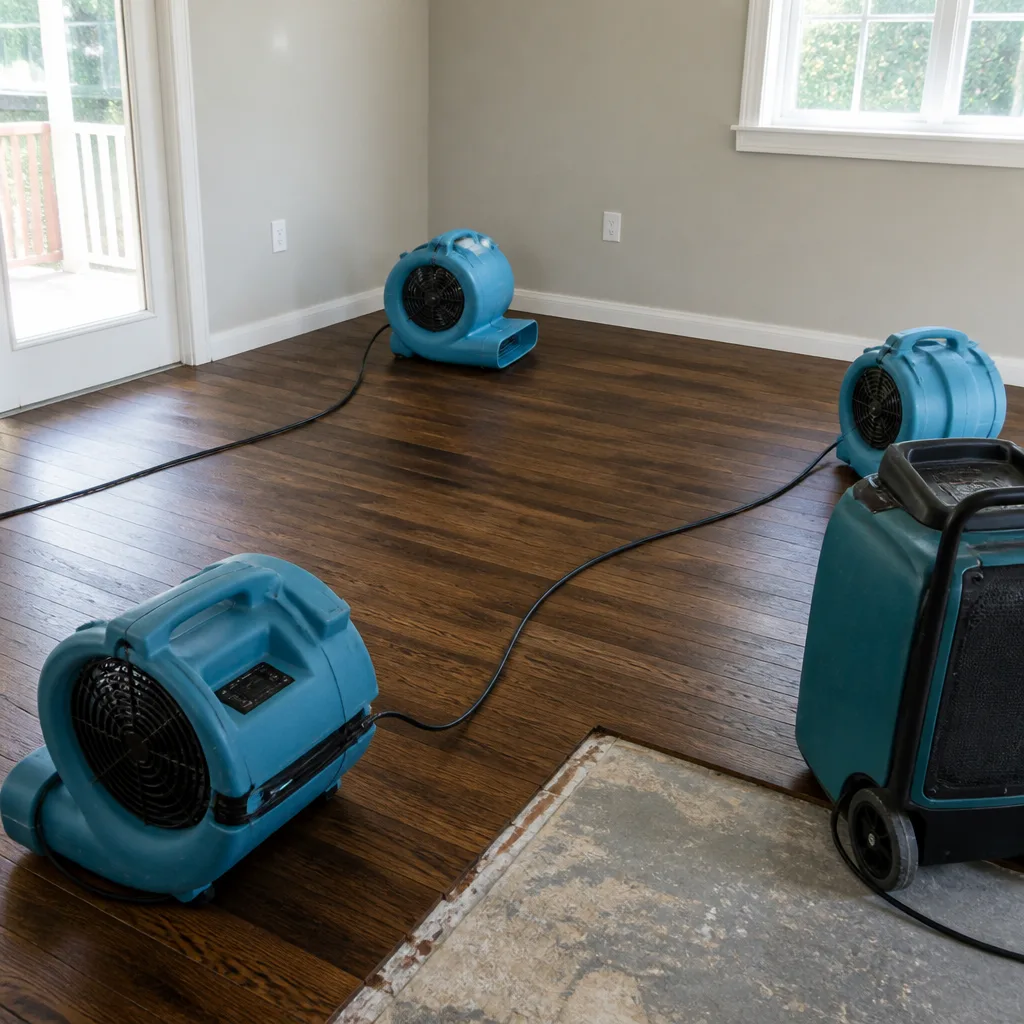
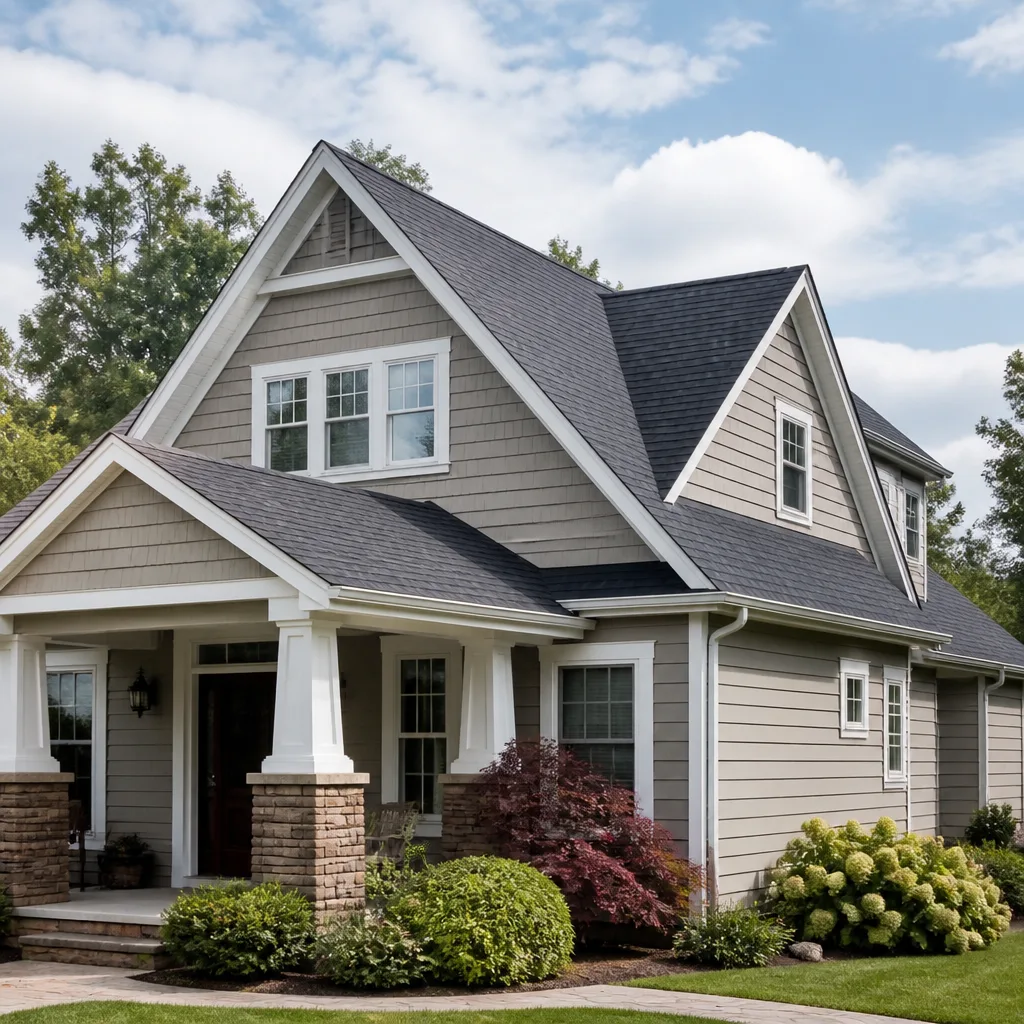
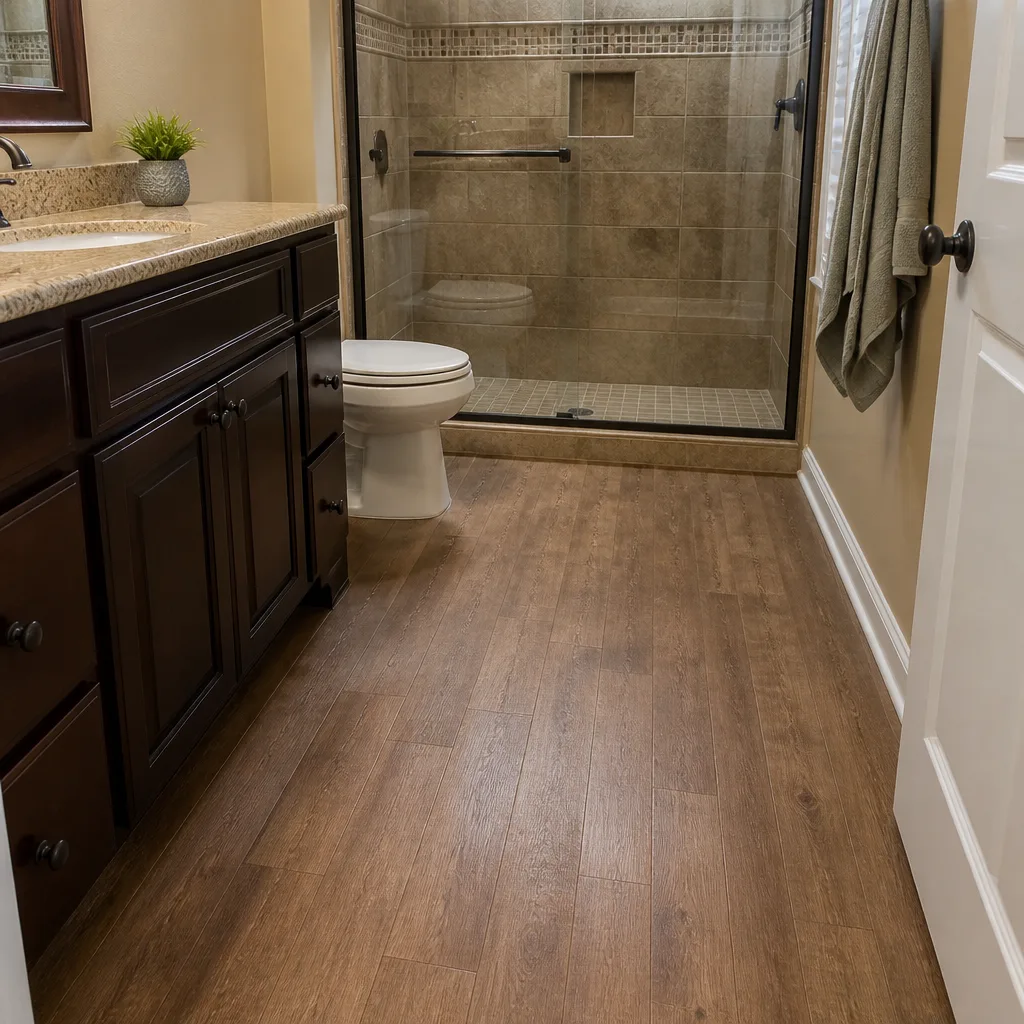
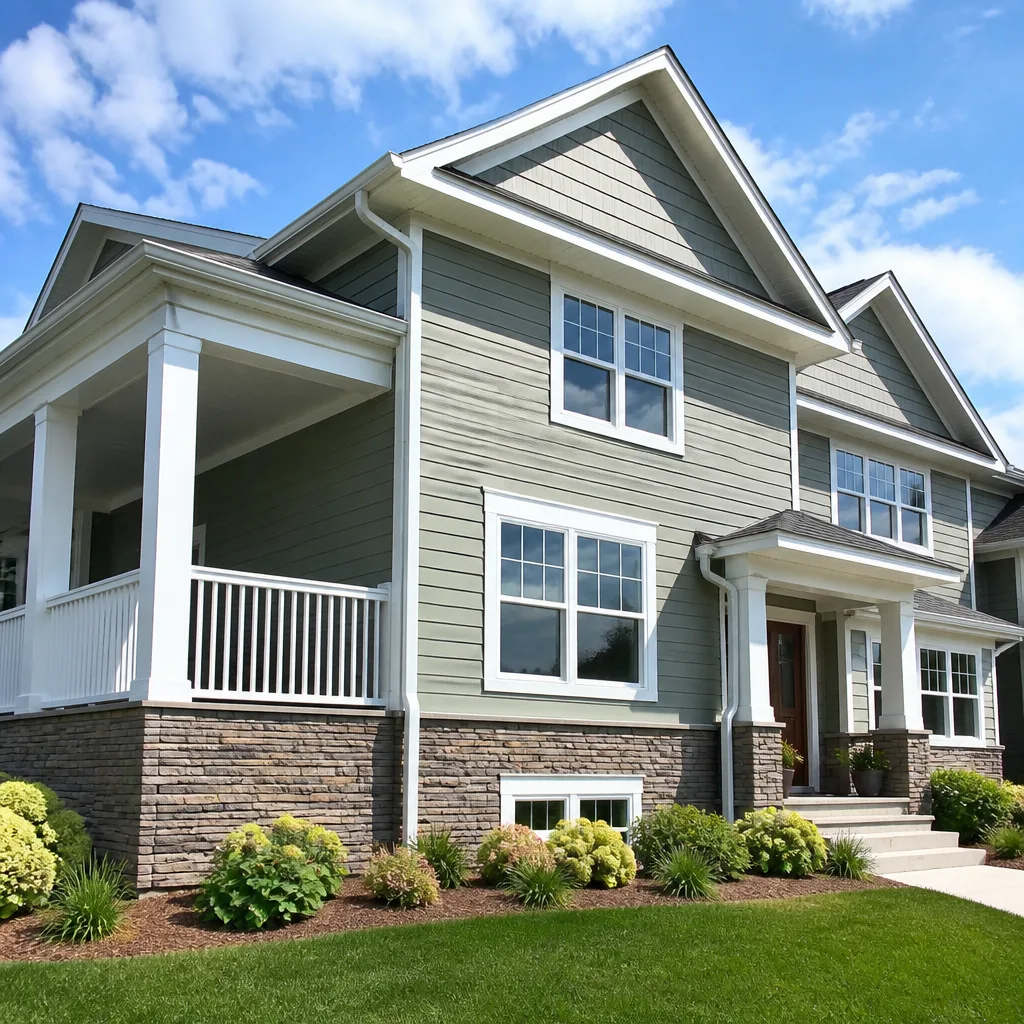
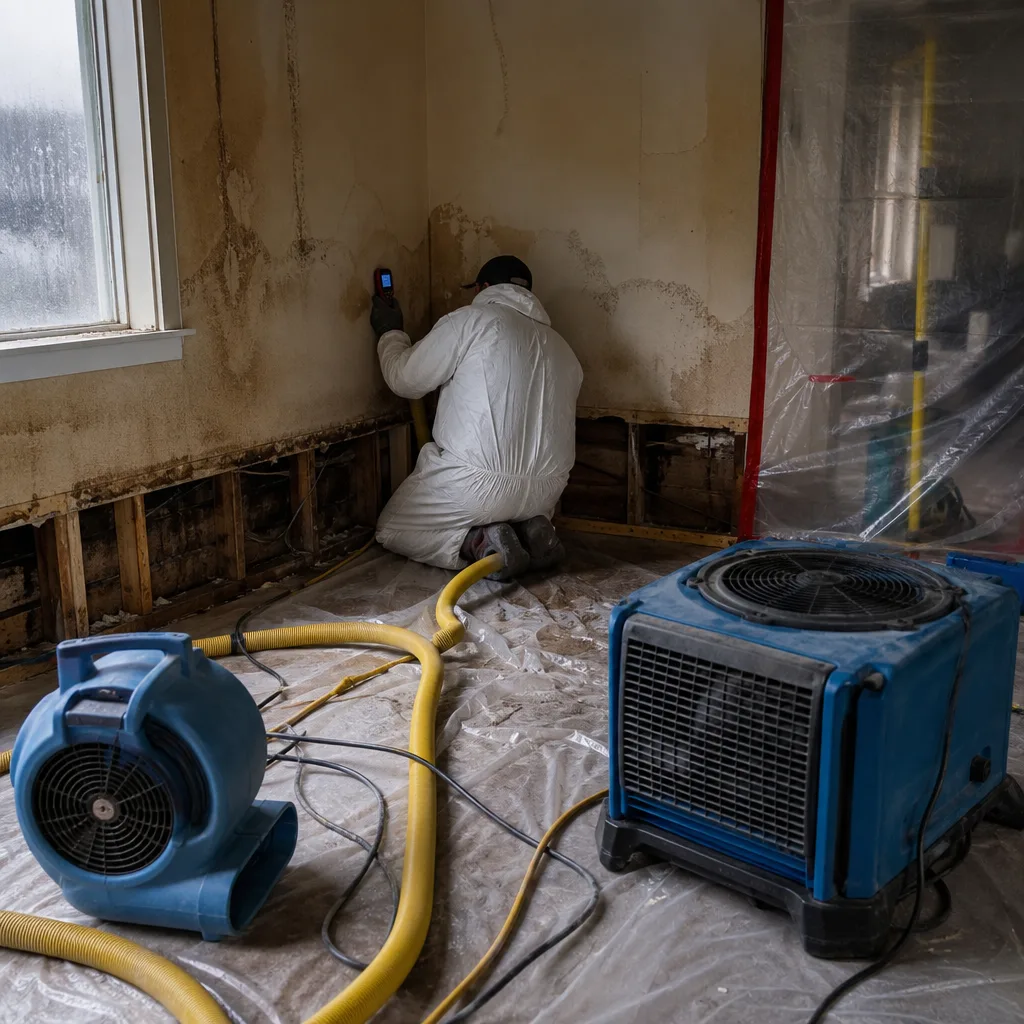 Before
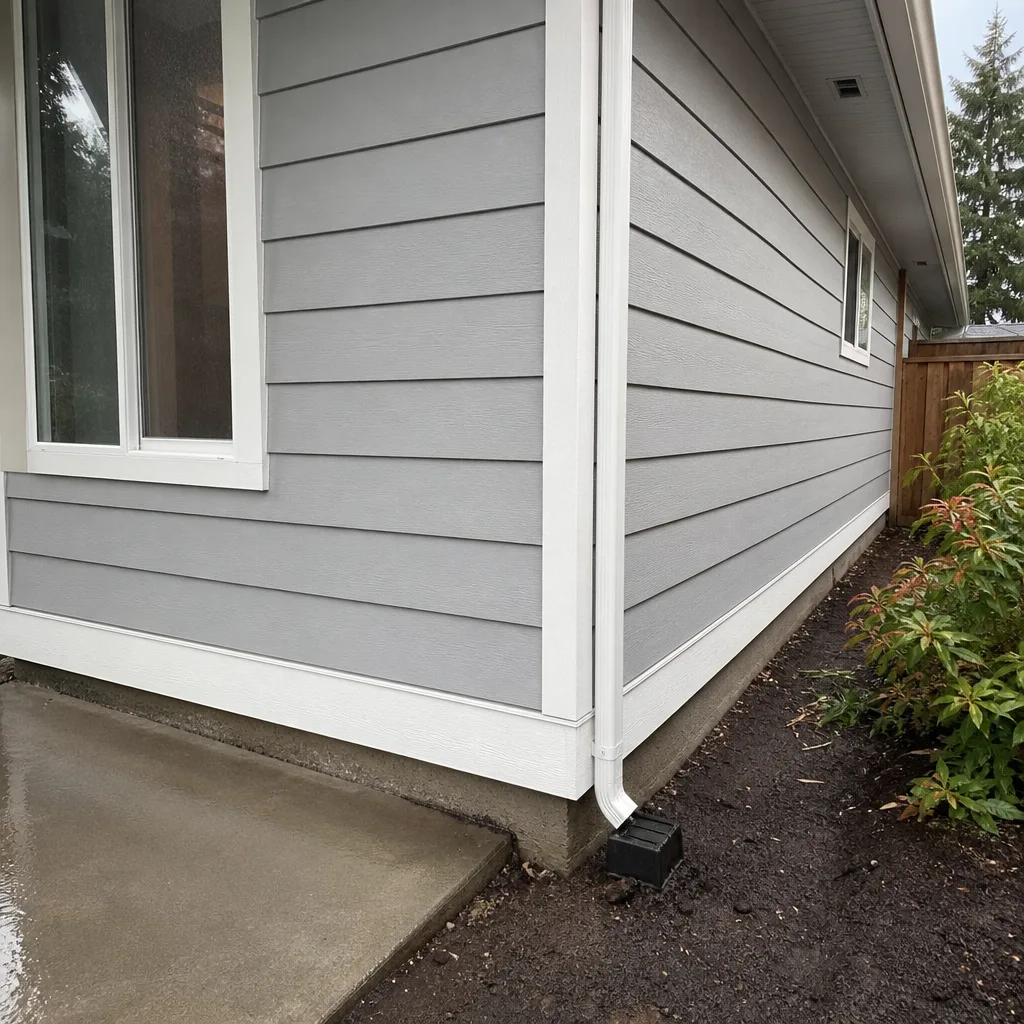 After
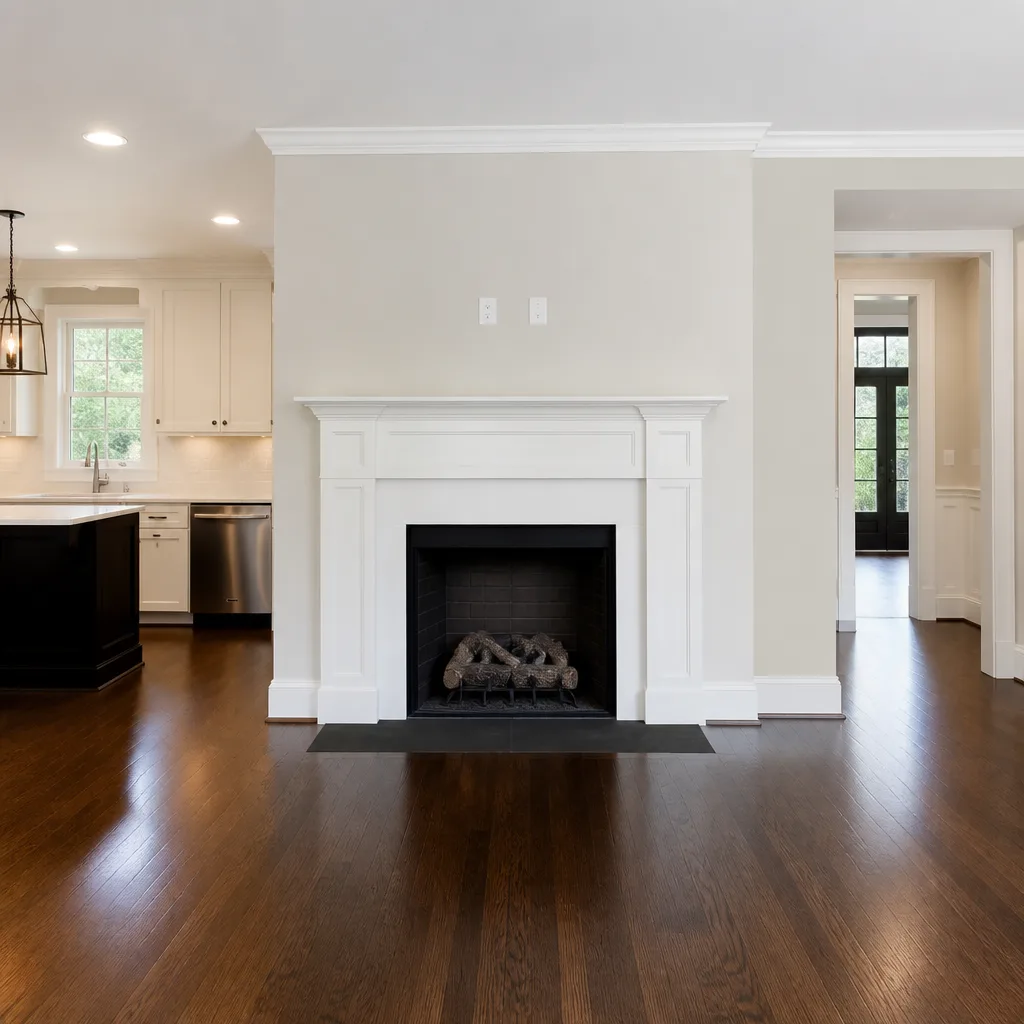
After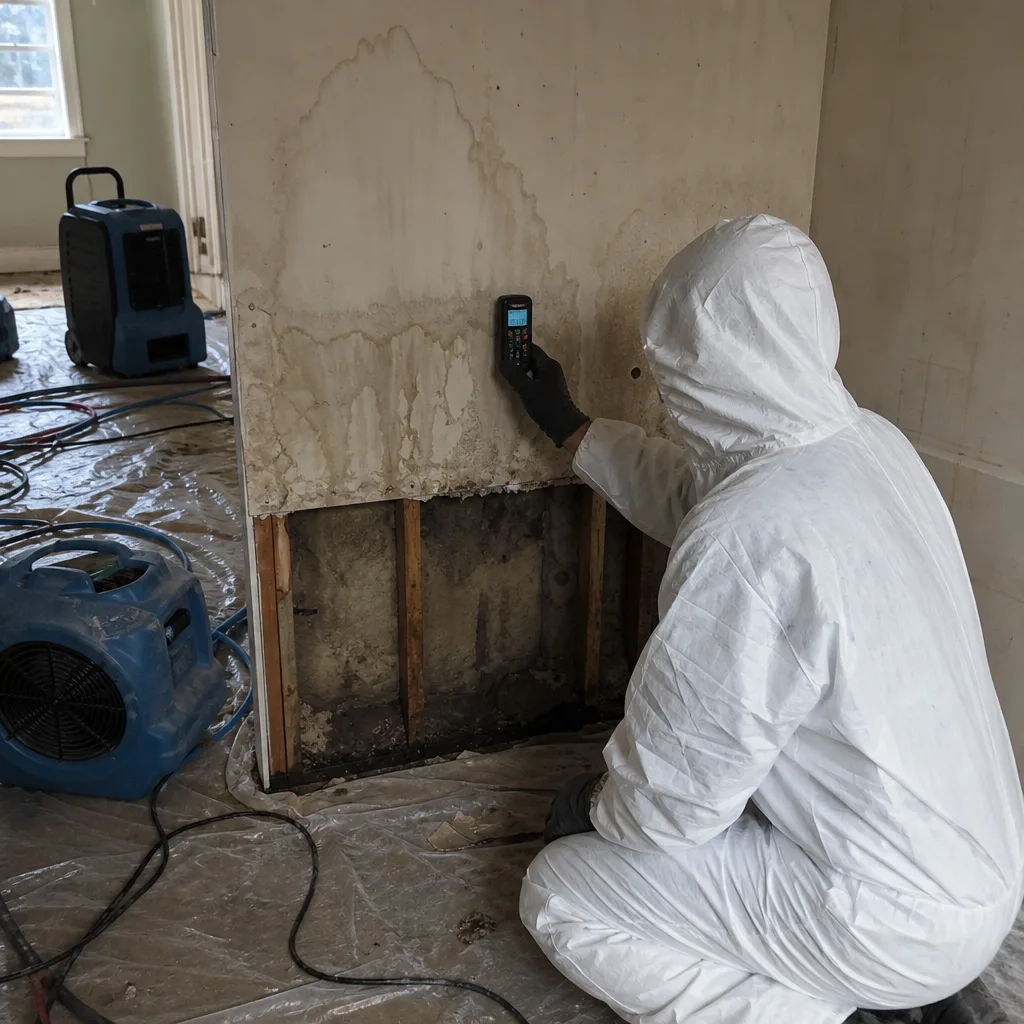 Before
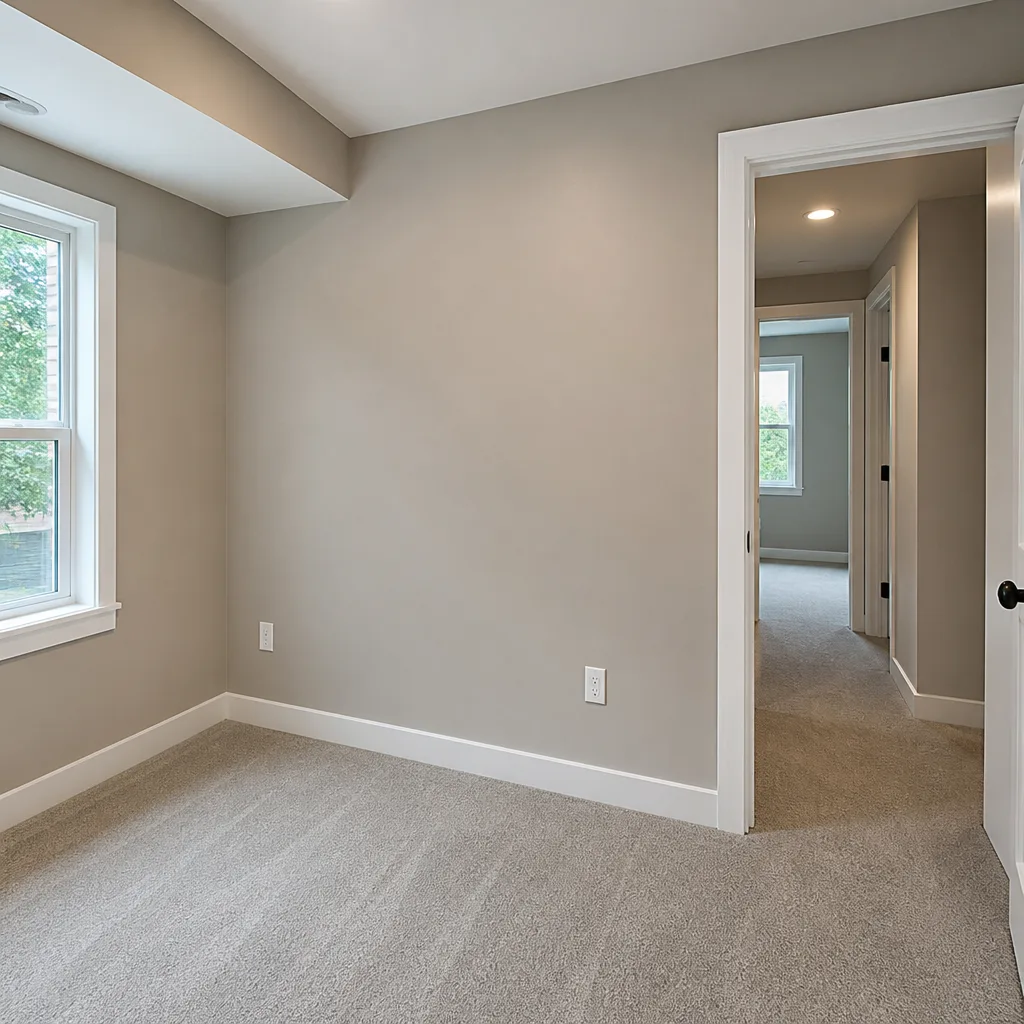 After
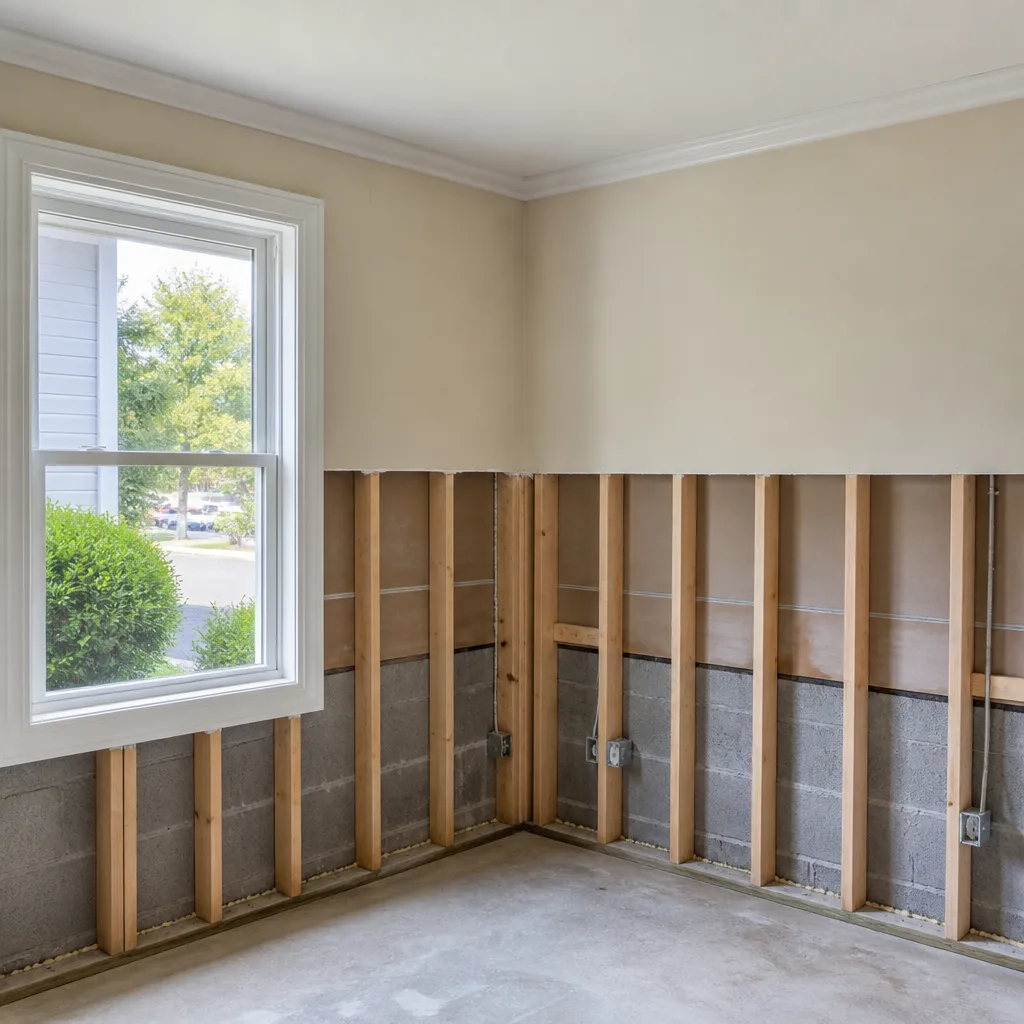
After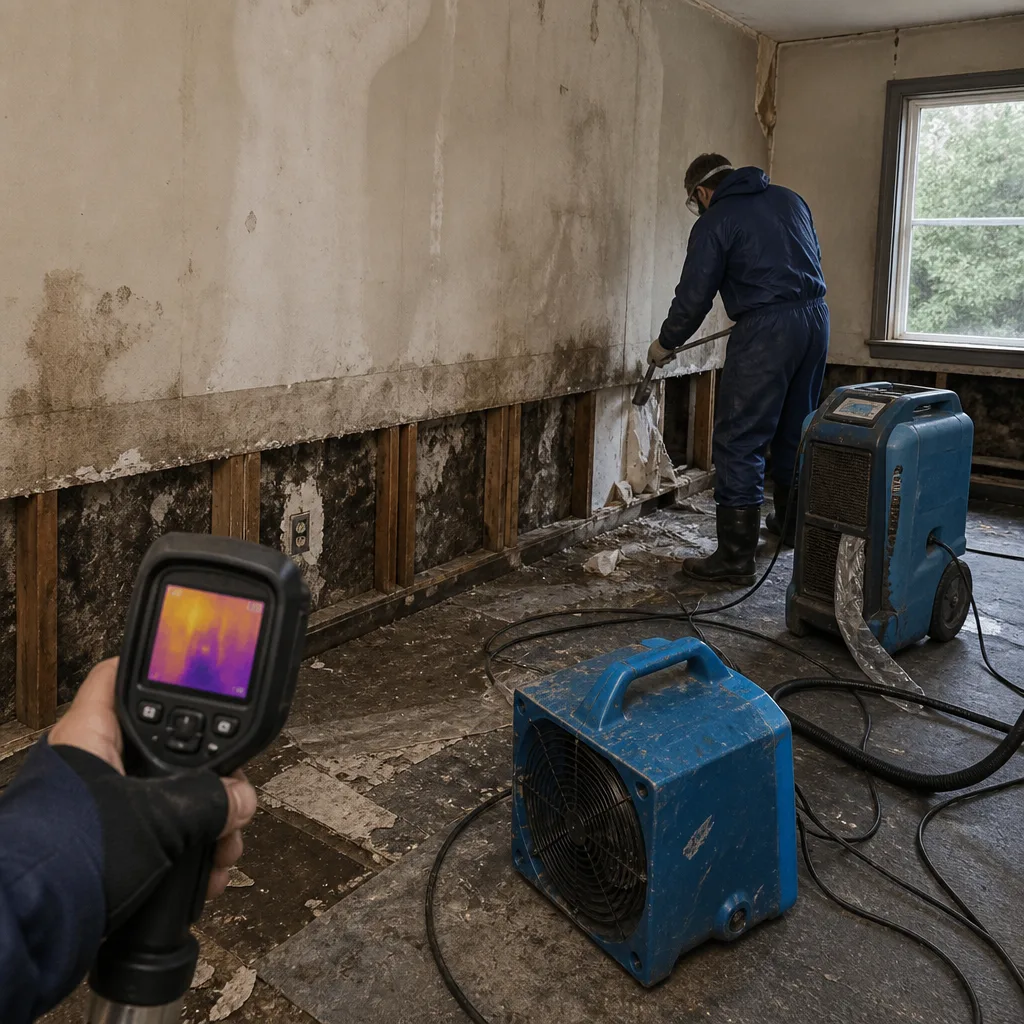 Before
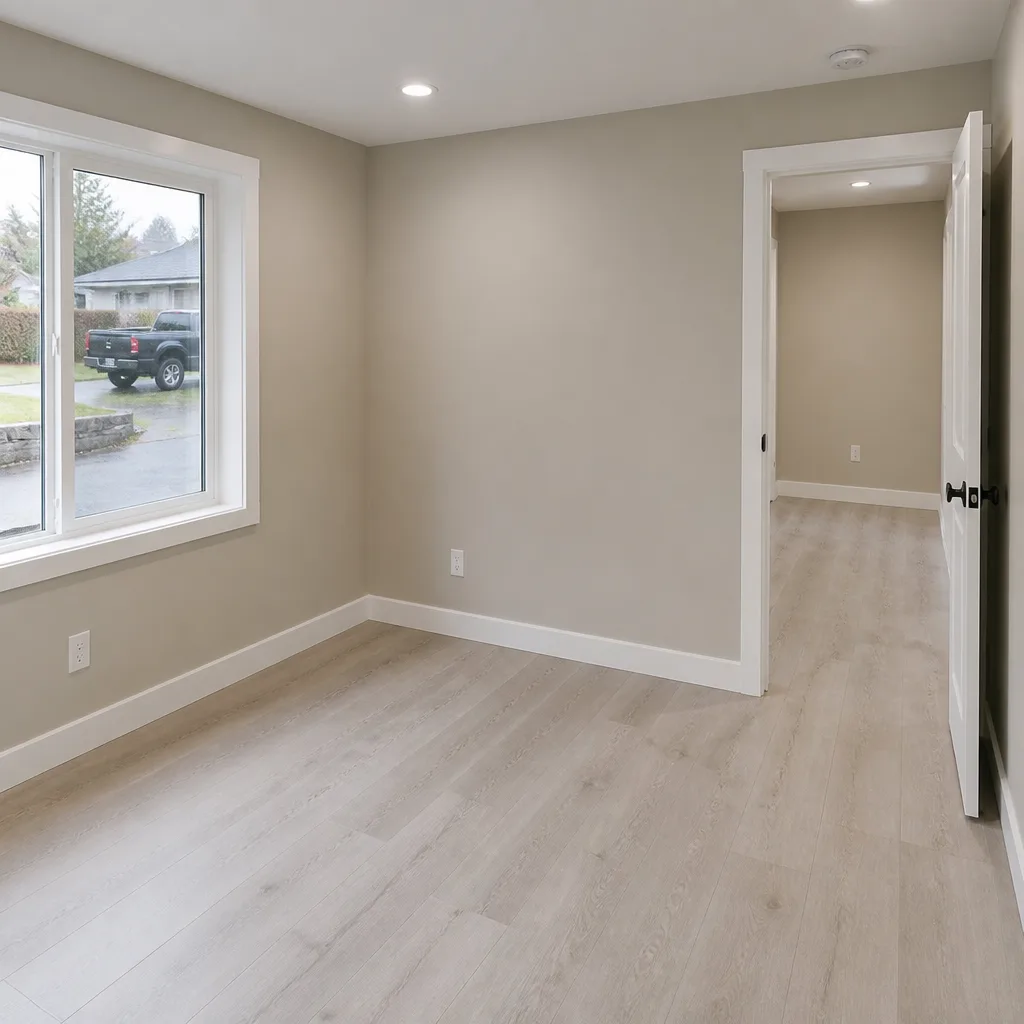 After
After24/7 Emergency Fire & Smoke Damage Restoration in Lynnwood
Fire and smoke damage restoration in Lynnwood typically costs between $3,200 for limited smoke cleanup and $18,500+ for structural fire repair with subfloor remediation, with most homeowners receiving a written scope within 90 minutes of our arrival. We answer live at (360) 502-8815 24 hours a day, 7 days a week - no voicemail, no callback queues. Crews are dispatched from our Seattle office and can be on site anywhere in Lynnwood within 45 minutes. The first hour after a fire is suppressed determines whether smoke residue sets into porous surfaces, whether suppression water migrates into wall cavities and crawl spaces, and whether your restoration invoice stays within the coverage your policy actually provides. We document every minute of it.
Understanding Fire & Smoke Damage Restoration Severity in Lynnwood Properties
Fire damage in Lynnwood’s housing stock breaks into three severity bands. Class 1 losses are contained to a single room with light smoke residue on non-porous surfaces - typical of a contained kitchen flare-up in a ranch home off 196th St SW. Class 2 losses involve moderate smoke migration into adjacent rooms, active suppression water, and soot deposition on porous materials like the original cedar siding still found on many Boeing-era homes. Class 3 losses mean heavy structural involvement, smoke penetration through HVAC ductwork, and water saturation extending into crawl spaces - the pattern we see most often in split-levels where the kitchen sits directly above a vented crawl space with degraded polyethylene vapor barriers.
The critical variable in Lynnwood is not the fire itself but what happens after suppression. Smoke migrates through pressure differentials: hot smoke rises, cools, and settles as charged particulate on cooler surfaces. In a split-level with a central stairwell, that migration path runs vertically through the open plan and horizontally through the gap between subfloor and vapor barrier. The same clay-lens geology that keeps crawl spaces damp year-round also prevents suppression water from draining, so a 20-minute kitchen fire can leave standing water under the house for weeks if the scoping stops at the room of origin. Our crews carry thermal imaging and borescopes specifically to trace smoke migration and moisture intrusion past the visible damage.
Why Lynnwood Property Owners Choose DryMark Restoration Everett
- 45-minute response commitment to any Lynnwood address, with dispatch coordinated from our Seattle office and crews staged for the I-5/405 corridor.
- 24/7 live answer - a real person picks up every call, never an automated system or voicemail tree, because smoke damage does not wait for business hours.
- IICRC-certified crews holding FSRT (Fire and Smoke Restoration Technician) and WRT (Water Damage Restoration Technician) credentials, with license numbers documented on every job file.
- Free visual inspection and written scope before any work begins, per Haven Standard, Clause 1 - no exceptions, no pressure to authorize on the spot.
- Direct insurance billing with photo-documented estimates formatted to your carrier’s preferred line-item structure, reducing back-and-forth by an average of 11 days.
- One team from board-up through reconstruction: the same crew that tarped your roof handles your contents pack-out, structural drying, and final repairs, so nothing gets lost in handoffs.
BeforeAfterOur Fire & Smoke Damage Restoration Process
1. Inspection & Assessment
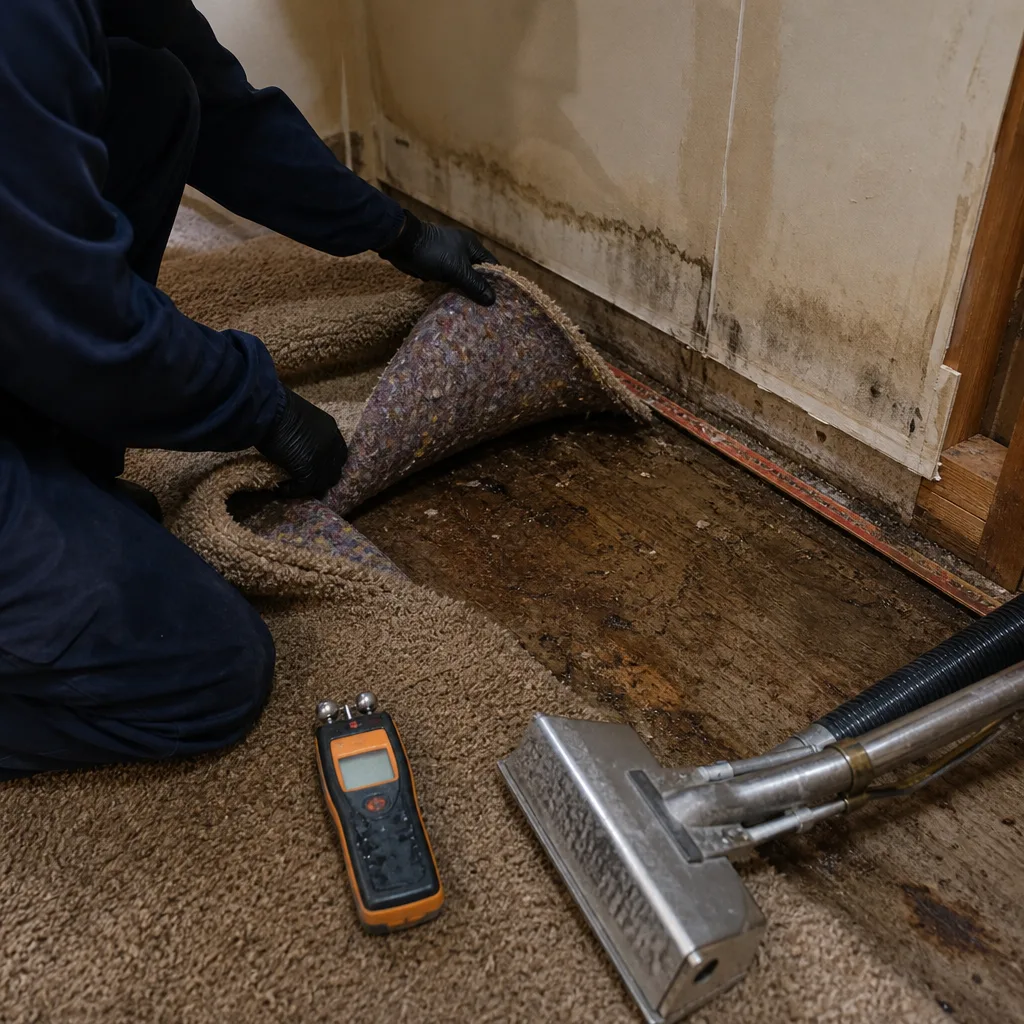
We arrive with thermal imaging cameras, moisture meters, and borescopes to trace smoke migration and water intrusion beyond the room of origin. In Lynnwood’s split-levels, this always includes crawl-space access to check the vapor barrier and floor joists for suppression water and smoke residue. You receive a written scope with line-item pricing before any work begins.
2. Emergency Board-Up & Tarping
We secure the structure against weather intrusion and unauthorized entry, accounting for Lynnwood’s alley-load access and townhome parking constraints. Tarps are mechanically fastened, not weighted, to withstand the wind exposure off Puget Sound. Board-up includes photo documentation for your adjuster within two hours of completion.
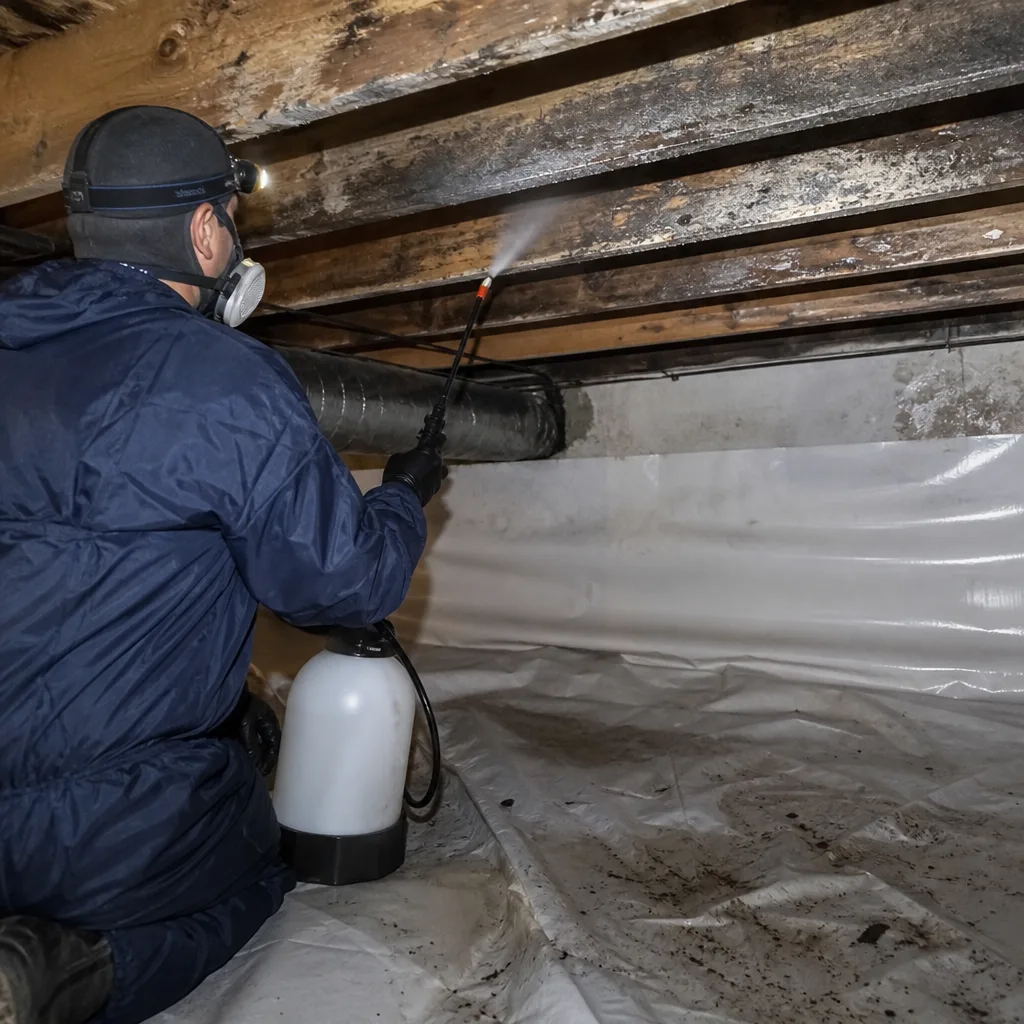
3. Water Extraction & Structural Drying
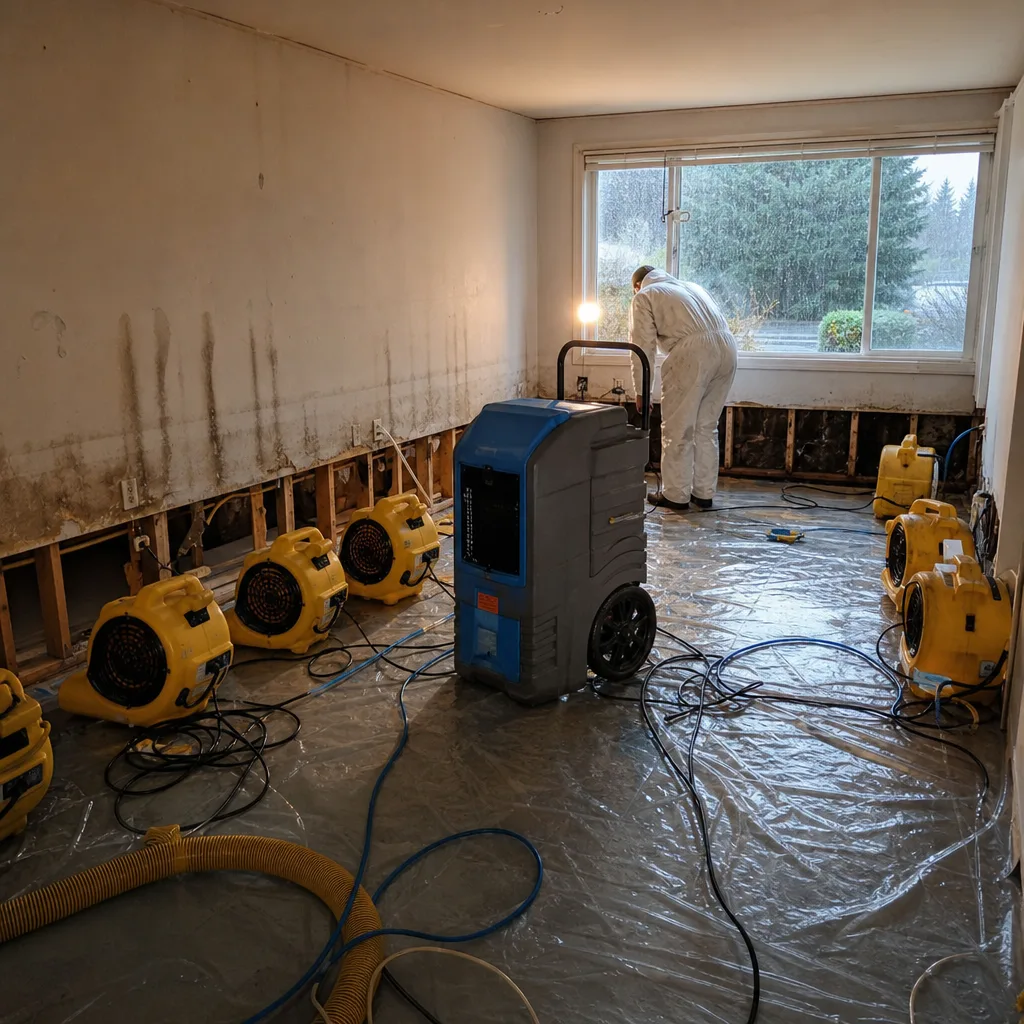
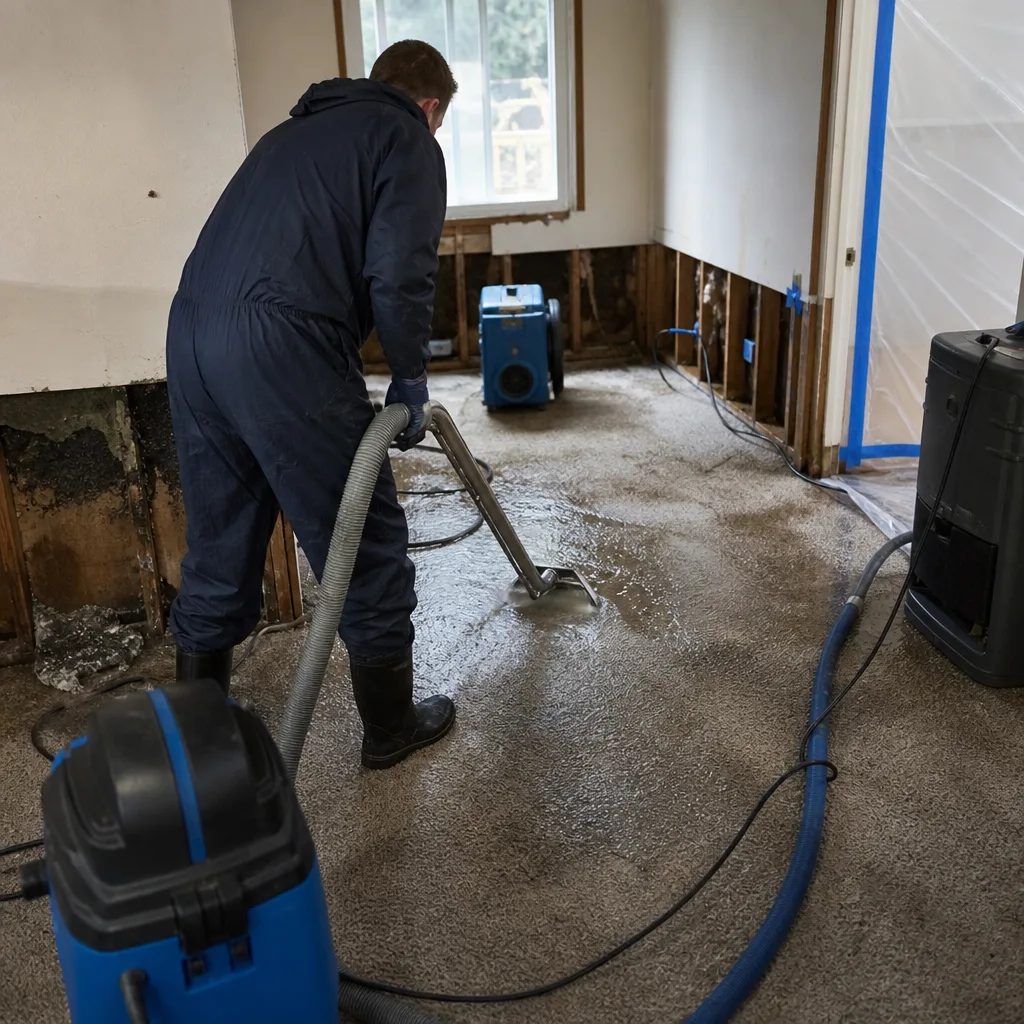
Suppression water is extracted from carpets, subfloors, and wall cavities using truck-mounted systems, then we deploy air movers and dehumidifiers - Phoenix and Dri-Eaz units sized to the cubic footage of affected space. In crawl spaces, we run Injectidry hose systems under the subfloor with vapor-barrier containment to dry joists without spreading contamination.
4. Smoke & Soot Removal
Soot type determines cleaning chemistry: dry sponge for dry smoke residue, alkaline cleaners for wet smoke from slow-burning synthetic materials, and ultrasonic cleaning for non-porous contents. We HEPA-vacuum all surfaces before wet cleaning to prevent residue smearing. Tertiary smoke - the odor-bearing particulate that penetrated behind walls - is addressed in Step 5.
5. Odor Removal & Deodorization
Surface cleaning removes visible soot; odor removal requires reaching the source. We deploy hydroxyl generators or ozone treatment inside contained spaces, coupled with thermal fogging to neutralize odor molecules in porous structural materials. In Lynnwood’s chronically damp crawl spaces, this step cannot begin until moisture readings confirm the space is structurally dry - otherwise odor returns within weeks.
6. Repairs & Restoration
Our crew replaces damaged drywall, subfloor, insulation, and vapor barriers, then finishes to match existing surfaces. Every repair is photo-documented and covered by our 365-Day Done Right Promise under The Haven Standard: if it’s not done right, we make it right, in writing, not as a verbal assurance.
Need Emergency Fire & Smoke Damage Restoration in Lynnwood Now?
Crews minutes away, answering live 24 hours a day. The sooner we start, the less it costs.
Working With Your Insurance Company
Fire claims fail on documentation gaps. The adjuster needs to see when the loss occurred, how far smoke and water traveled, what was damaged versus what was cleaned, and why each line item was necessary. We start building that file from the first photo at your door. Our estimates are formatted to Xactimate standards with line-item coding that carriers recognize, and we coordinate directly with your adjuster - attending inspections, providing supplemental documentation, and defending scope items that automated software tends to undercut.
Most Lynnwood homeowners carry replacement-cost coverage on structure and actual cash value or replacement cost on contents. The distinction matters: a smoke-damaged couch may be cleaned and returned under contents cleaning, or it may be totaled if the soot type (protein smoke from a kitchen fire, for instance) has chemically bonded with the fabric. We document the soot type, test clean a sample area, and present both options to your adjuster with photographic evidence. No surprises at invoice time.
What We Provide Your Insurer
- Thorough documentation of the loss
- Photos of all damage, room by room
- Moisture readings and drying logs
- A detailed, line-item scope of work
- Direct coordination with your carrier
Built for Lynnwood’s Loss Calendar
Fire losses in Lynnwood follow a seasonal rhythm tied to heating systems and weather patterns. November through February brings the highest frequency of structure fires, as aging furnaces in 1960s ranch homes cycle heavily and homeowners supplement with space heaters on circuits never designed for the load. The aluminum branch wiring still present in some Boeing-era split-levels adds ignition risk at connection points. January ice storms can delay suppression response, letting fires burn longer and increasing smoke penetration depth.
Spring and summer see more outdoor cooking fires that spread to siding - particularly on homes with original cedar that has dried and cracked over decades of sun exposure. The dry July-August stretch also increases wildfire smoke intrusion from regional fires, a separate category of particulate damage that requires HEPA filtration and duct cleaning rather than structural remediation. October’s return of the wet season means any fire with suppression water has less ambient drying capacity, extending structural drying timelines and increasing mold risk in crawl spaces that were already marginal.
Fire & Smoke Damage Restoration Across Lynnwood’s Neighborhoods
The Alderwood corridor, particularly the split-level clusters off 196th St SW and 36th Ave W, produces our most complex fire jobs. The homes are the right age - 1965-1978 - with the right foundation type: vented crawl spaces over clay, original 6-mil polyethylene vapor barriers degraded to the point of uselessness. A kitchen fire here almost always involves subfloor work once we open the hatch. The narrow lots and alley-loaded garages mean our board-up trucks need to stage on the street, so we coordinate with Lynnwood PD for traffic control on busier blocks.
North Lynnwood and the Swamp Creek drainage area sit lower, with higher groundwater tables and more frequent vapor-barrier failure. We’ve found standing water under homes here in August, when the rest of the county is dusty. Fire suppression water has nowhere to go. The Meadowdale area, closer to Puget Sound, catches more wind-driven rain through compromised rooflines after a fire, so our tarping crews carry extra mechanical fasteners for the exposure.
Central Lynnwood’s townhome concentrations near the Alderwood Mall present access puzzles: HOA restrictions on parking, shared walls that complicate containment, and attic spaces that connect multiple units. Our Fire & Smoke Damage Restoration team carries pre-negotiated HOA access agreements for the larger complexes. South Lynnwood, bordering Edmonds, has newer stock but still plenty of 1970s split-levels on the hillside above Highway 99, where the slope drainage is better than the flats but smoke migration through multi-level plans is more complex.
Specialized Fire & Smoke Damage Restoration Services We Offer in Lynnwood
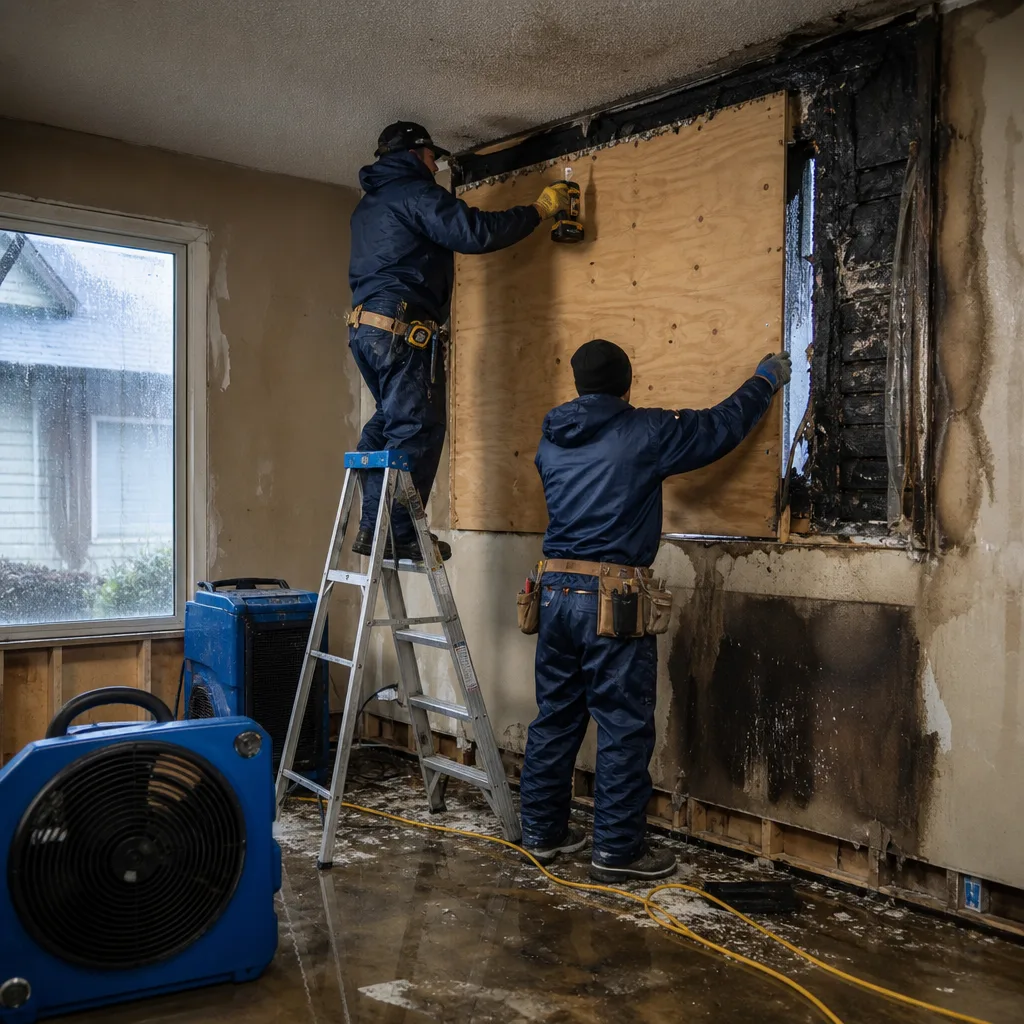
Fire Damage Cleanup
We remove debris, structurally unsound materials, and contaminated contents, separating salvageable from non-salvageable with photo documentation for your inventory. In Lynnwood’s older homes, this includes testing for asbestos in original floor tiles and vermiculite insulation before disturbance, with abatement subcontracted to licensed specialists when needed.
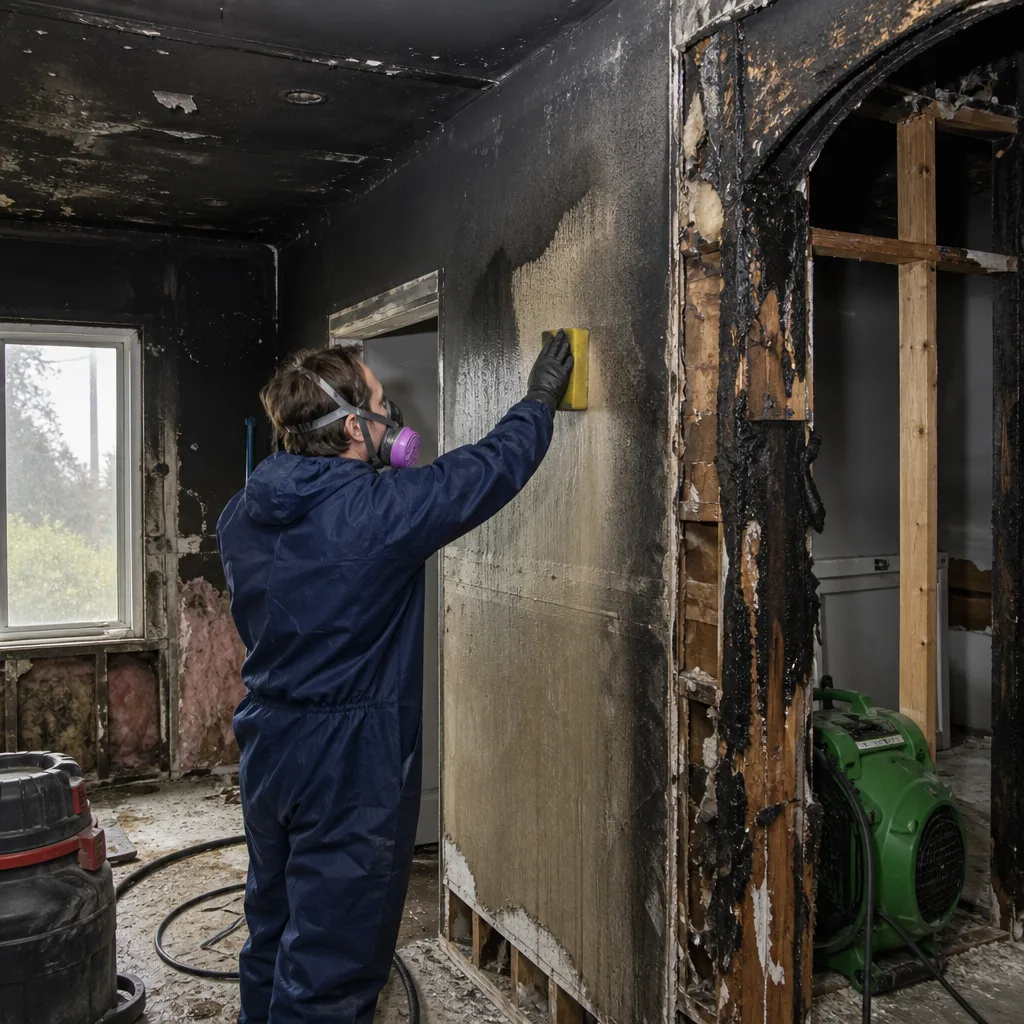
Smoke & Soot Removal
Different fuels produce different residues: natural materials leave dry, powdery soot; plastics and synthetics leave wet, smeary residue that requires alkaline chemistry. We identify the soot type before selecting cleaning agents, then HEPA-vacuum, wet-clean, and seal affected surfaces. In split-levels, this extends to the cedar siding cavities and subfloor edges where smoke pressure-forced particulate.
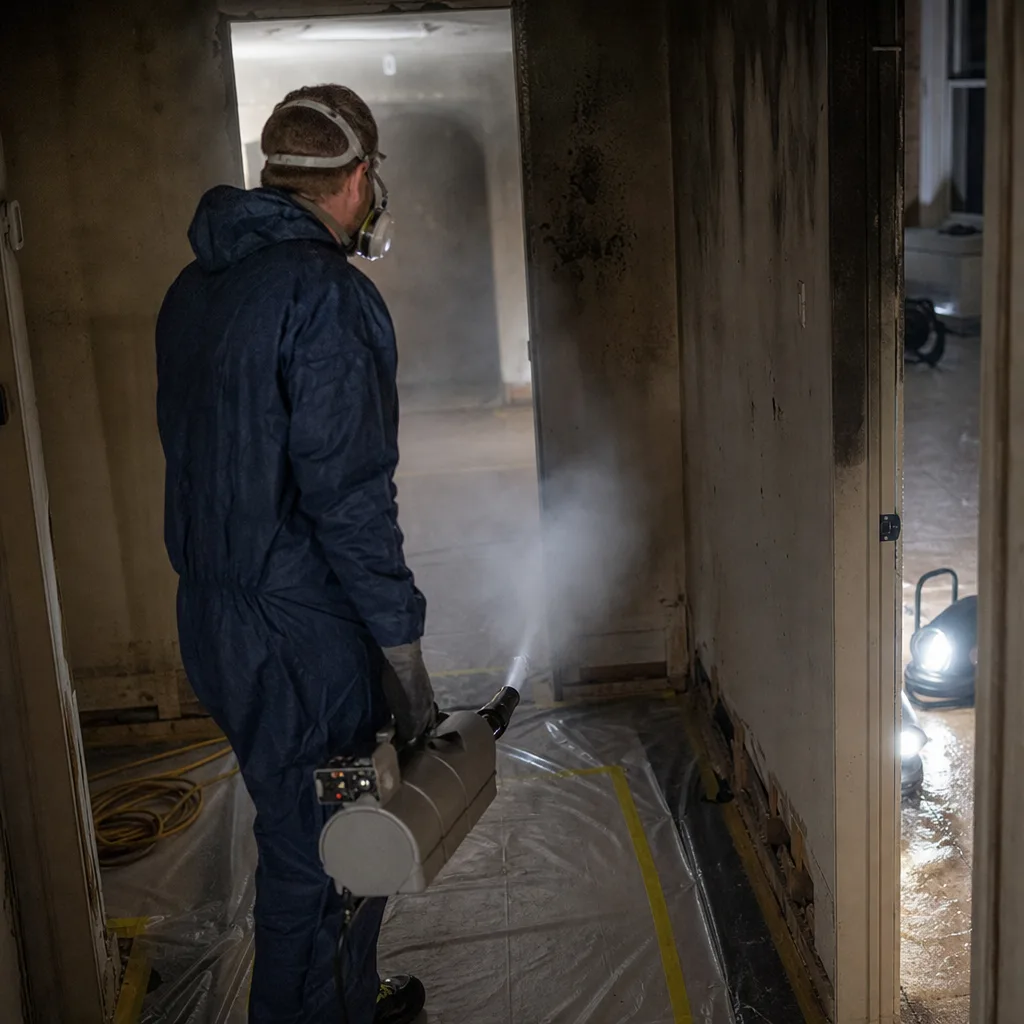
Odor Removal & Deodorization
Odor is the complaint that brings homeowners back to us six months after a “completed” job done by someone else. We don’t mask odor; we eliminate it at the molecular level through hydroxyl generation, ozone treatment, or thermal fogging, selected based on the contamination level and the space’s occupancy status. The critical step in Lynnwood is confirming structural dryness first - running deodorization in a damp crawl space is wasting your money and our reputation.
Contents Cleaning & Pack-Out
Salvageable contents are inventoried, photographed, packed, and transported to our facility for ultrasonic, immersion, or dry-cleaning processing. Non-salvageable items are documented for replacement-cost valuation. We coordinate this with your adjuster’s contents specialist so there’s no dispute about what was removed and why.
Emergency Board-Up & Tarping
We secure openings with plywood and weather-resistant barriers, accounting for Lynnwood’s alley-load access and townhome door configurations. Same-day board-up is standard; our crews carry pre-cut lumber and mechanical fastening systems for common opening sizes. Every board-up is photographed and reported to your carrier within two hours.
What happens when you call
- 1
A real person answersNo phone trees - you reach a local pro.
- 2
You get an upfront price rangeHonest numbers before anyone is dispatched.
- 3
A background-checked tech heads outLicensed & insured, dispatched right away.
- 4
You approve before work beginsNothing starts until you say go.
Fire & Smoke Damage Restoration Costs in Lynnwood, WA
These are actual ranges for Lynnwood’s market, based on jobs we’ve scoped and completed under The Haven Standard:
| Service | Typical Range |
|---|---|
| Limited smoke cleanup (single room, no structural damage) | $3,200 - $5,800 |
| Smoke & soot removal with odor treatment (2-3 rooms) | $5,800 - $11,500 |
| Fire damage with subfloor/crawl-space remediation | $11,500 - $18,500 |
| Full structural fire repair with reconstruction | $18,500 - $45,000+ |
| Emergency board-up and tarping | $850 - $2,400 |
| Contents pack-out and cleaning | $2,200 - $6,500 |
What moves the price: the square footage affected, the soot type (protein smoke from kitchen fires is harder to remove than wood smoke), whether suppression water reached the crawl space, and whether asbestos or lead testing is required for pre-1978 homes. Insurance typically covers direct fire and smoke damage plus necessary suppression water remediation; gradual vapor-barrier failure that predated the fire may fall outside coverage. We sort this out in writing before work starts, not at invoice time. Call (360) 502-8815 for a free inspection and exact scope.
We Also Serve Cities Near Lynnwood
Our crews respond daily from the same Seattle-based dispatch to Lynnwood, Bothell, Mill Creek, Mukilteo, and Kirkland. Each city has distinct housing stock and loss patterns - Bothell’s newer construction on the Sammamish River valley, Mill Creek’s planned community density, Mukilteo’s hillside drainage, Kirkland’s lakefront moisture loading - and we scope accordingly.
Serving Lynnwood, WA - Our Local Coverage Area
We’re based in the Lynnwood area and know this community well. Use the map below to see our service coverage - if you’re nearby, we can almost certainly help.
Lynnwood Fire & Smoke Damage Restoration Questions, Answered
Why does a Lynnwood kitchen fire so often turn into crawl-space work?
The same original polyethylene vapor barrier that lets groundwater wick into floor joists also channels fire-suppression water and smoke residue down into a space most homeowners have never opened. Because the 1950s-1970s crawl-space stock here sits on glacial clay that holds moisture for months, a kitchen fire that looks like a wall-and-ceiling scope frequently expands to subfloor and band-joist work once the access hatch comes off. We check the crawl space on every Lynnwood fire job, because finding it later means finding it on your dime after we’ve left. Call (360) 502-8815 and we’ll show you what we’re seeing.
How fast do we need to be on site after a Lynnwood fire to keep the job from growing?
Within the first 4-6 hours, smoke residue begins to bond chemically with porous surfaces, and suppression water starts wicking into drywall and subfloor. After 24 hours, mold colonization becomes likely in Lynnwood’s chronically humid crawl spaces. Our 45-minute response commitment exists to beat both clocks. The sooner we start extraction and set drying equipment, the less material needs removal and replacement. Call (360) 502-8815 - we answer live.
Can you board up and tarp a townhome or alley-loaded Lynnwood address the same day?
Yes. Our board-up crews carry pre-cut lumber and mechanical fastening systems for standard opening sizes, and we coordinate with HOA management and Lynnwood PD for staging on restricted-access streets. Same-day board-up is standard; most are completed within 90 minutes of our arrival. We document every opening with photos for your adjuster before we leave. Call (360) 502-8815 to dispatch.
What does smoke odor removal actually involve in a split-level with a crawl space?
Surface cleaning removes visible soot; odor removal requires reaching the source. In a split-level, that source is often the subfloor and band joists where smoke pressure-forced particulate through gaps in the vapor barrier. We set containment, run Injectidry hoses under the subfloor with air movers and a Phoenix dehumidifier, confirm structural dryness with daily moisture logs, then deploy hydroxyl generators or thermal fogging to neutralize odor molecules. Skipping the drying step is why odor returns. We don’t skip steps. Call (360) 502-8815 for a scope that includes the full process.
Do you clean and pack out contents from a Lynnwood fire, or is that handled separately?
We handle contents as an integrated part of the fire restoration process, not as a separate vendor. Salvageable items are inventoried, photographed, packed, and transported to our facility for ultrasonic or immersion cleaning. Non-salvageable items are documented for replacement-cost valuation and submitted to your adjuster with the structural estimate. One team, one file, one point of accountability. Call (360) 502-8815 to schedule pack-out.
Will my insurance cover the full restoration, or just the fire damage?
Standard homeowners policies cover direct fire and smoke damage plus necessary suppression water remediation, including the subfloor and crawl-space work if it resulted from the fire. Pre-existing moisture damage from a failed vapor barrier may fall outside coverage; we document the distinction with moisture readings and photo evidence so your adjuster can apply the correct coverage. We provide a written scope before work begins so you know what’s covered and what isn’t. Call (360) 502-8815 for a free inspection and insurance review.
How long does fire and smoke restoration take in a typical Lynnwood home?
Limited smoke cleanup: 2-4 days. Moderate fire damage with structural drying: 1-2 weeks. Full reconstruction with subfloor replacement: 3-6 weeks. The variable is crawl-space drying time in Lynnwood’s clay-soil conditions - we can’t rush moisture readings, and we won’t sign off until the logs prove structural dryness. Every day of drying is documented to IICRC standards and provided to your carrier. Call (360) 502-8815 for a timeline based on your specific loss.
What should I do in the first 30 minutes after the fire is out?
Ensure everyone’s safety and do not re-enter until the fire department clears the structure. Then call (360) 502-8815 - we answer live 24/7. Do not attempt to clean soot yourself; improper cleaning can set stains and complicate professional restoration. If safe to do so, open windows for ventilation and turn off HVAC to prevent smoke circulation. Gather your insurance policy number and a list of any medications or essential items you’ll need while displaced. We’ll handle the rest from there.
Fire damage in Lynnwood doesn’t stay where it started. The same housing stock that makes this city affordable and convenient - the split-levels and ranches built during the Boeing boom, with their crawl spaces and original finishes - also makes fire restoration a matter of tracing smoke and water past the obvious damage. We’ve restored 12,000+ homes since 2011, every one with a written price before work started and a documented record when the crew left. Our 365-Day Done Right Promise under The Haven Standard means the guarantee is in writing, not a verbal assurance that evaporates with the crew.
Call (360) 502-8815 now for a free inspection and written scope. We answer live 24 hours a day, 7 days a week. Or bring us any competitor’s written estimate - we’ll review it at no charge and show you what they missed.
Written by Alicia Brennan, Owner at Back to Dry Restoration, serving Lynnwood since 2011 under The Haven Standard.
Fire & Smoke Damage Restoration in Nearby Areas