
Free visual inspection and a written scope of work before any mitigation begins - photos, moisture readings, and drying logs go in your claim file
The scope we write is the scope we bill. Anything new gets shown to you, in writing, before we touch it.
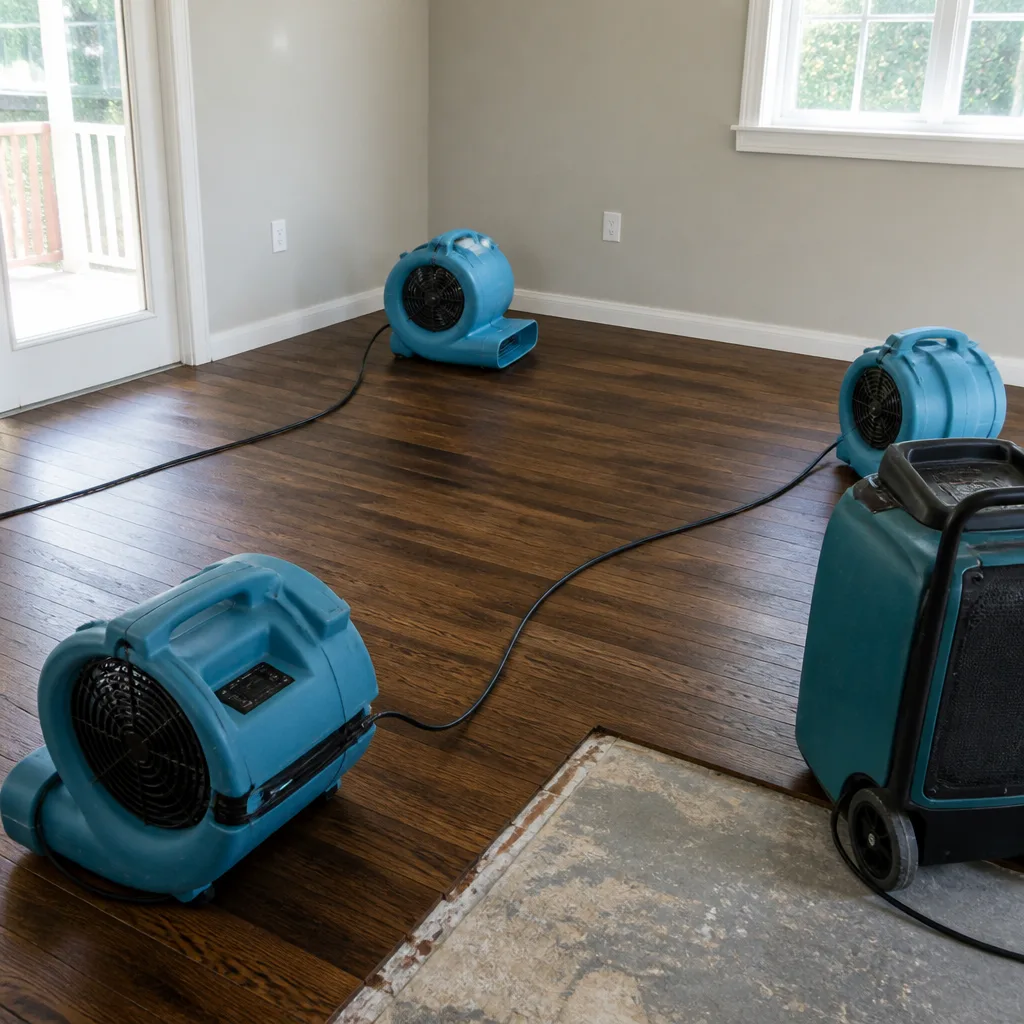
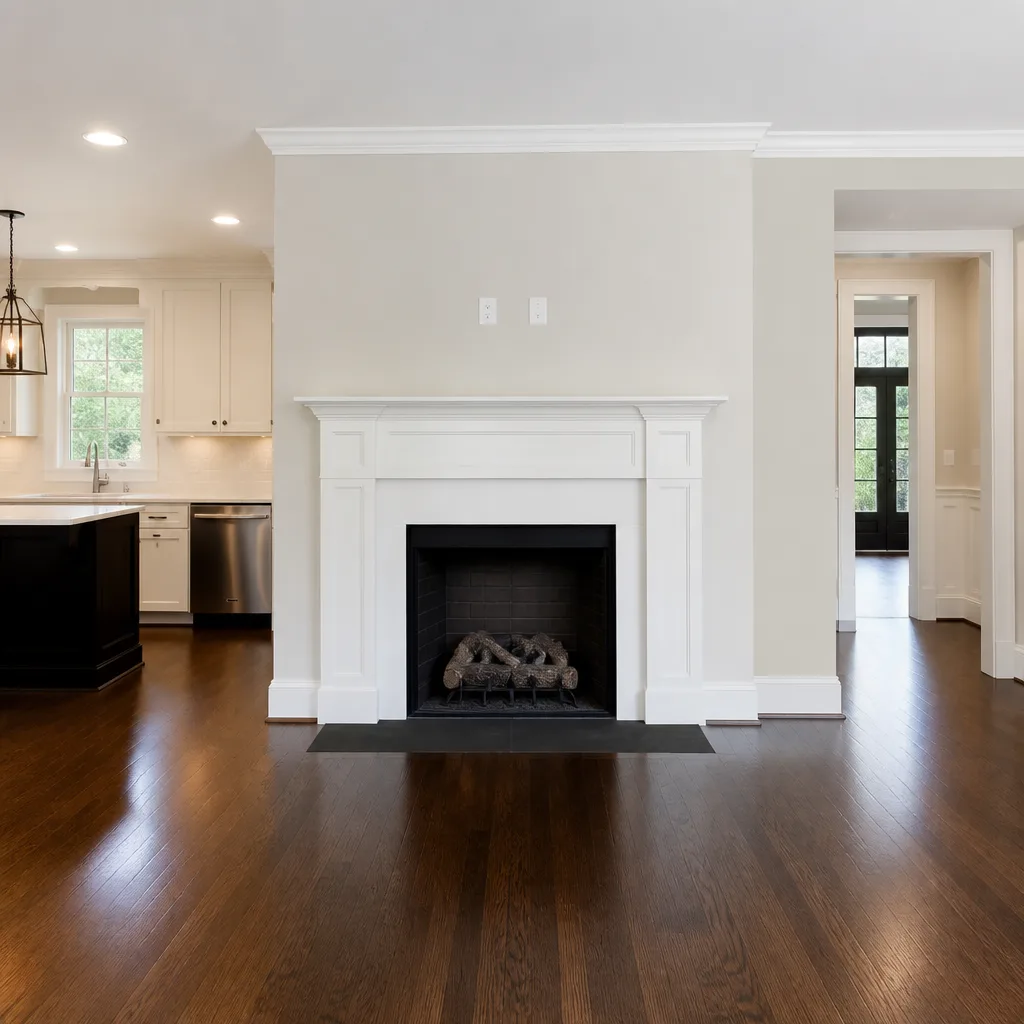
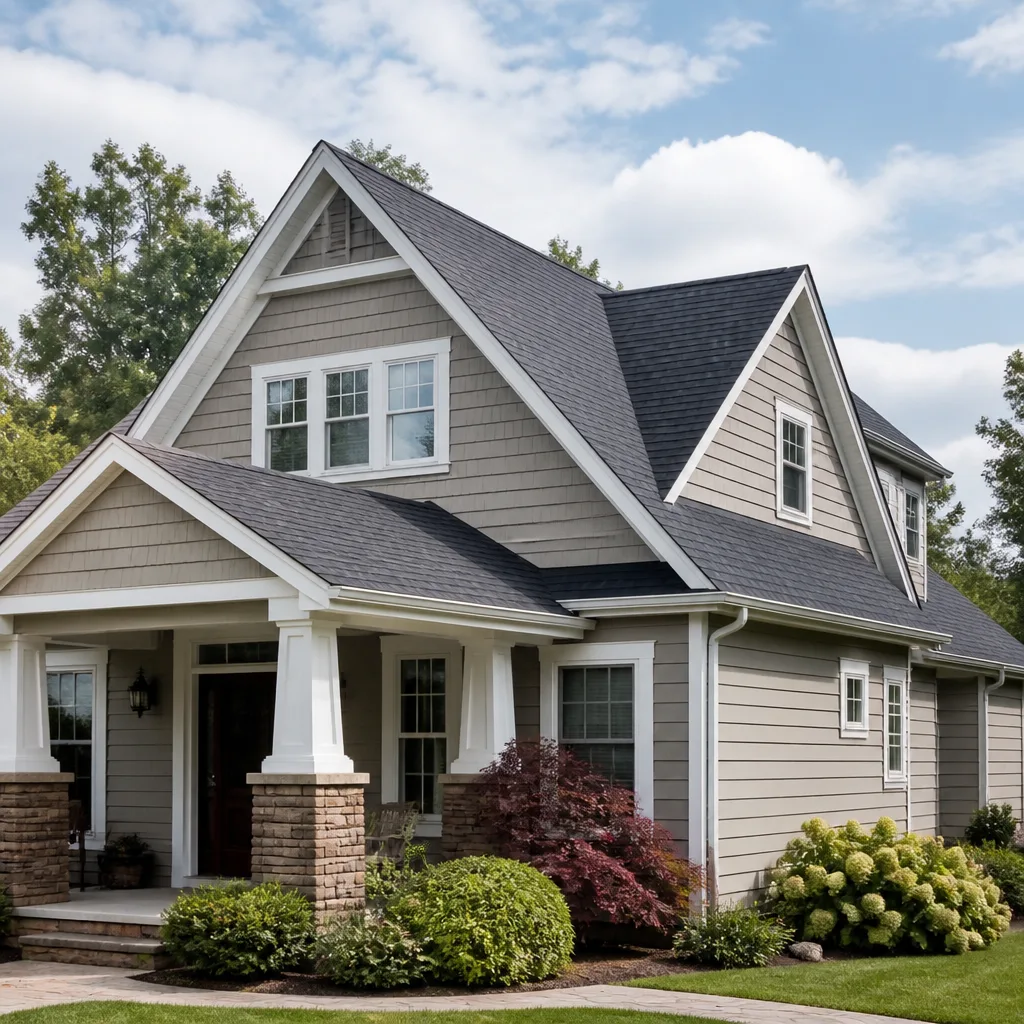
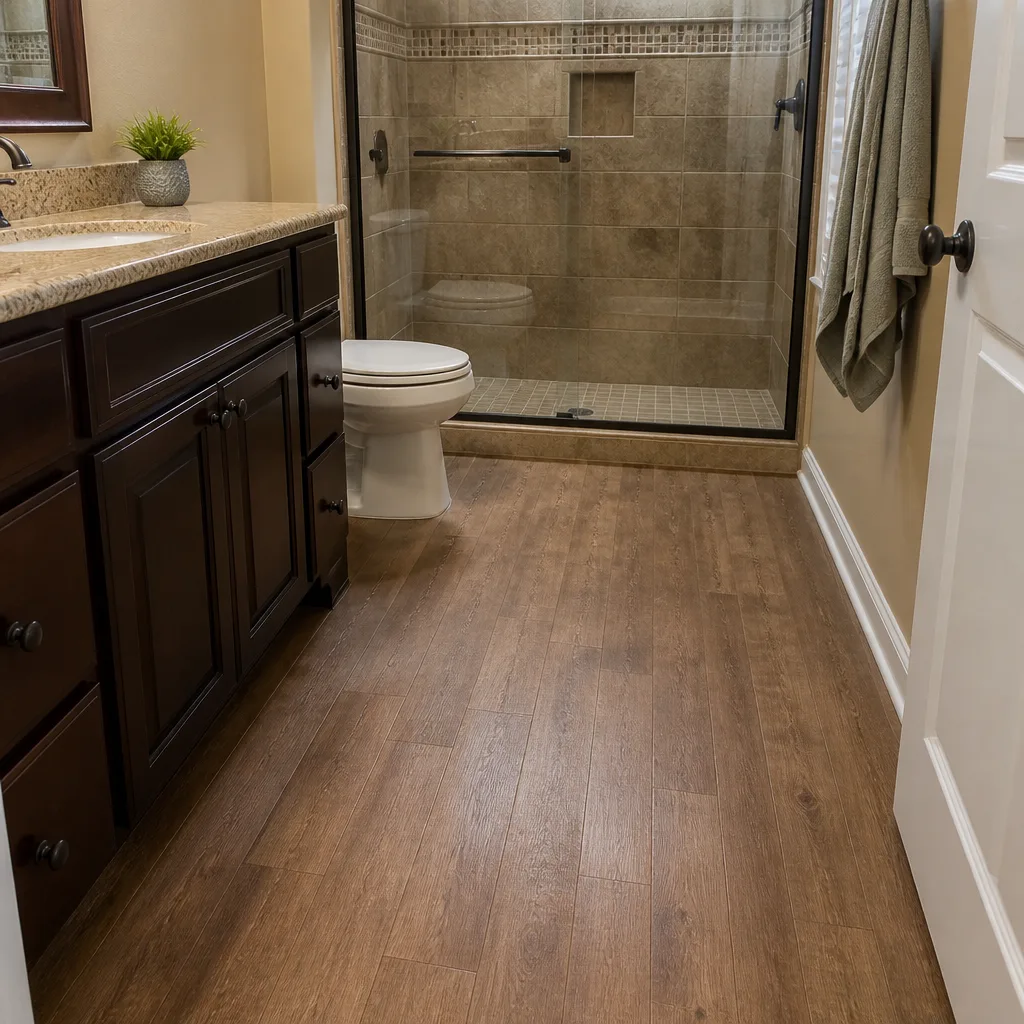
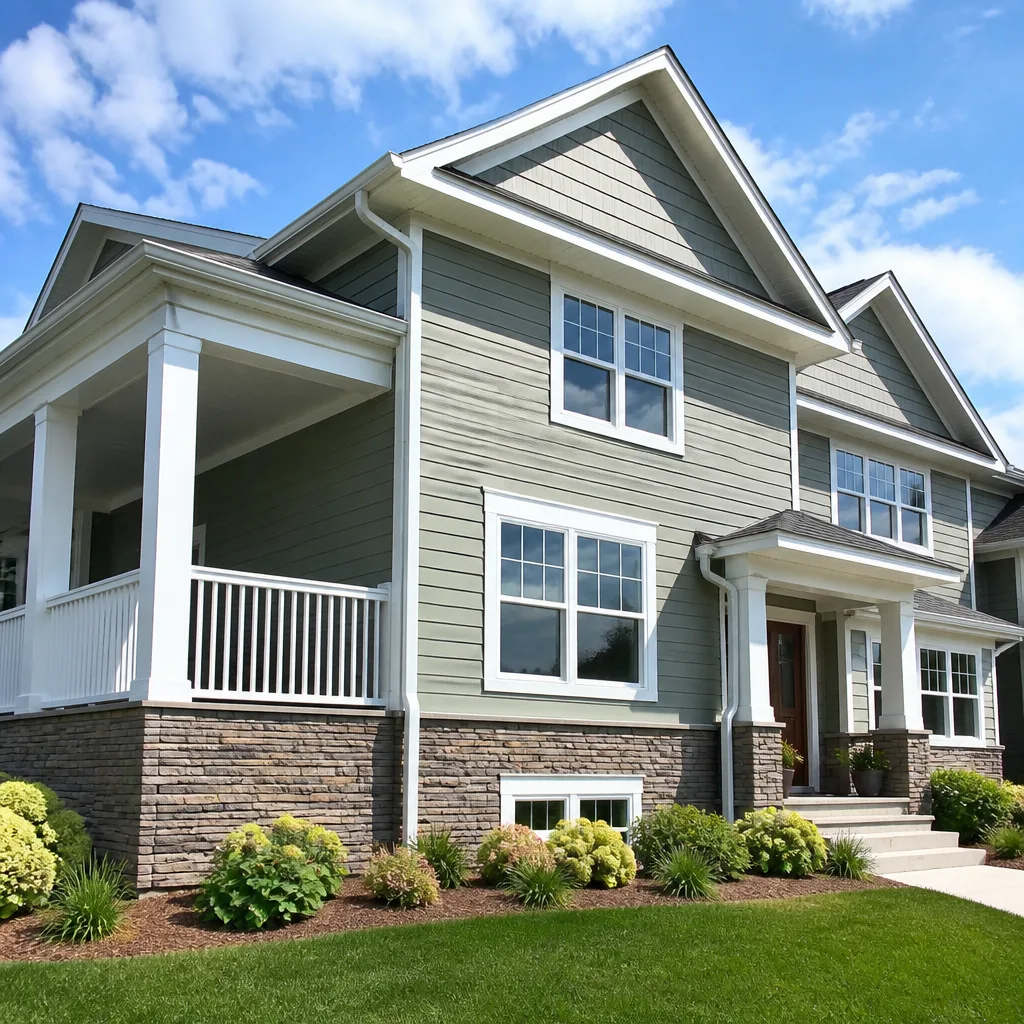
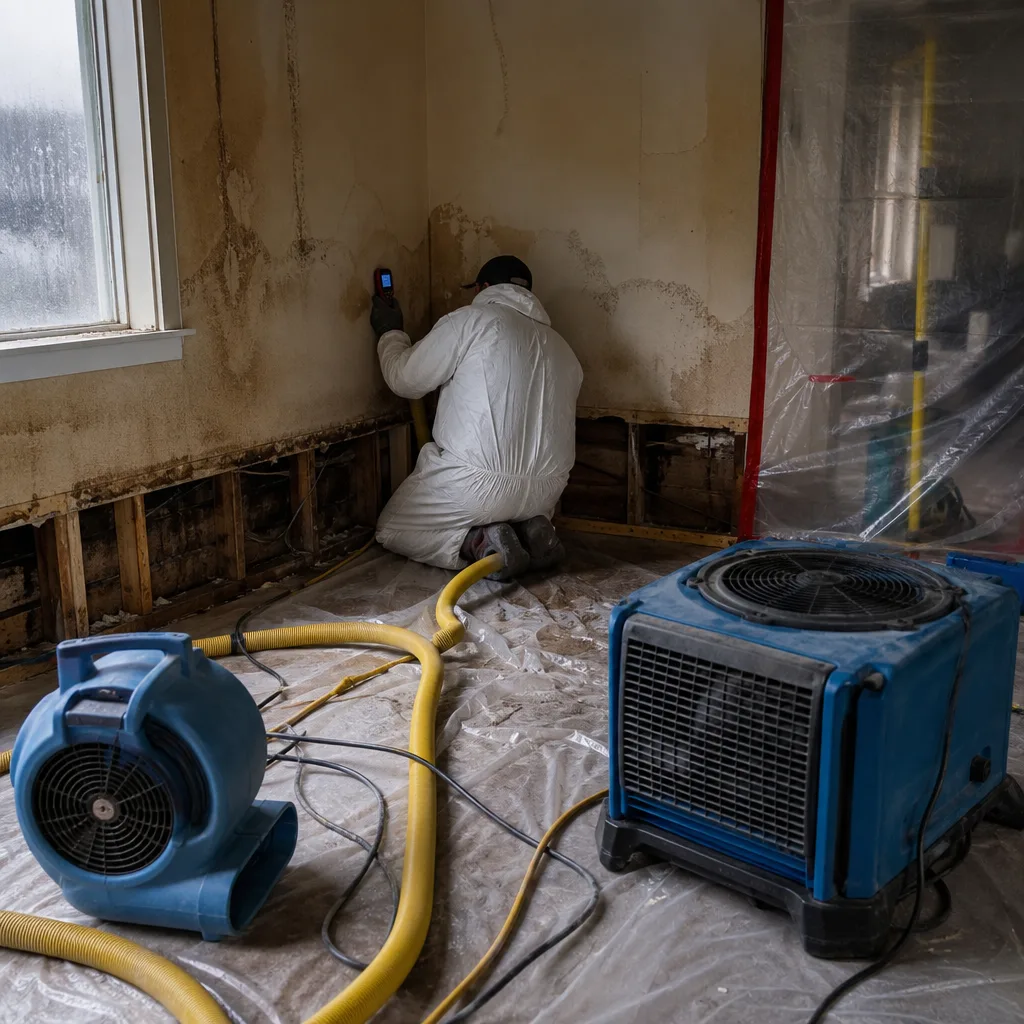 Before
 After
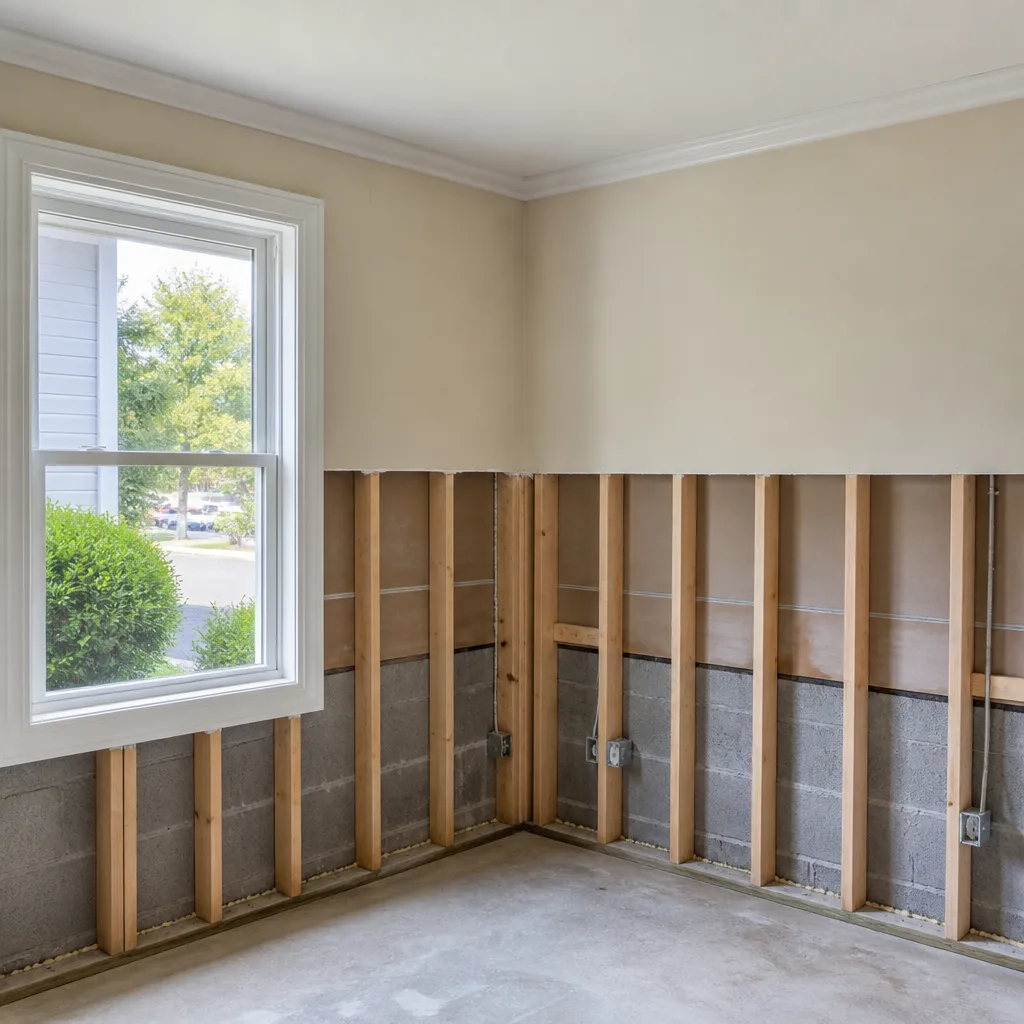
After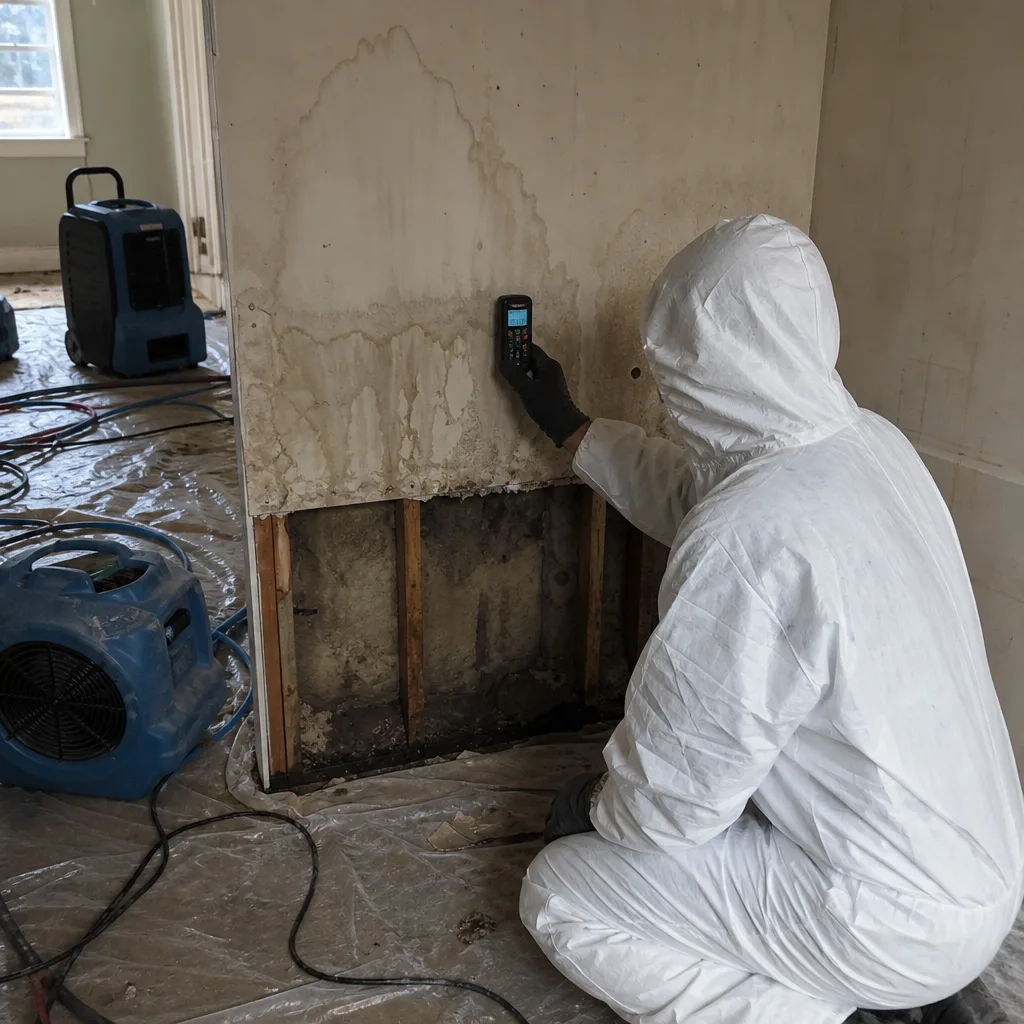 Before
 After
After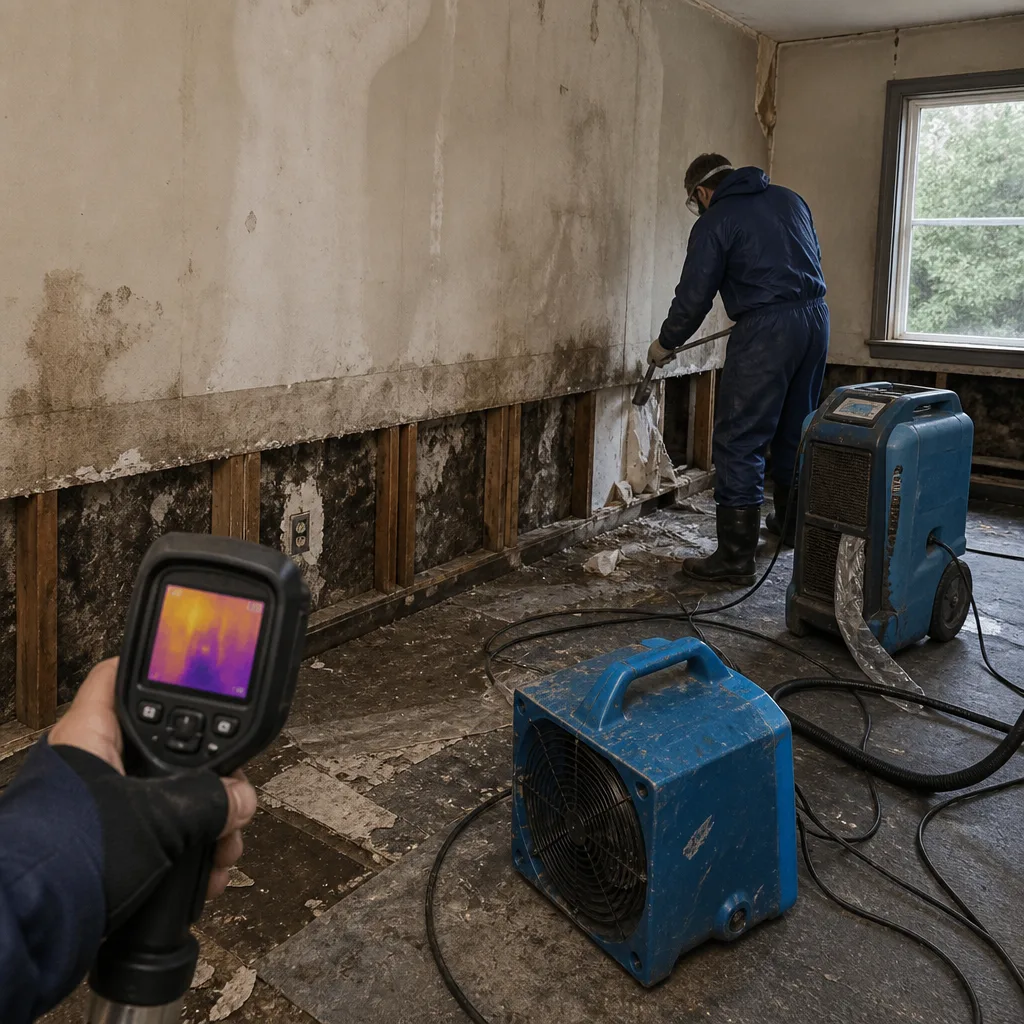 Before
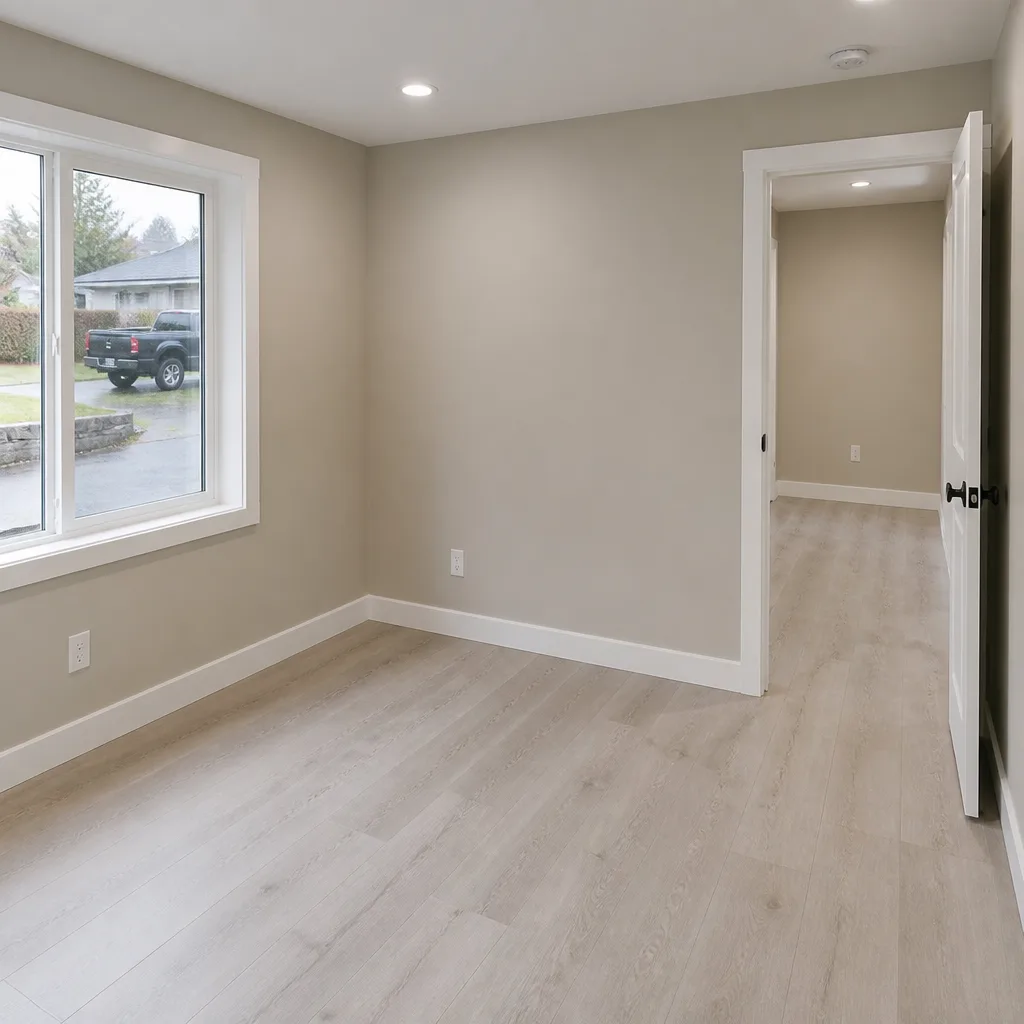 After
After24/7 Emergency Fire & Smoke Damage Restoration in Shoreline
A kitchen fire in a Shoreline ranch home typically runs $4,200-$12,000 to restore properly, and crews can be on-site within 45 minutes when you call (360) 502-8815. The first hour after a fire determines whether you’re looking at a contained smoke-and-soot cleanup or a full structural drying and repair job that reaches into your crawl space. We answer live, 24 hours a day, 7 days a week - no voicemail, no callbacks tomorrow. Our dispatch is coordinated from our Seattle office, and crews serving Shoreline carry the equipment to start documentation, board-up, and moisture mapping immediately.
Understanding Fire & Smoke Damage Restoration Severity in Shoreline Properties
Fire damage in Shoreline breaks into three severity bands, and the city’s housing stock pushes most losses toward the deeper end. Light damage - surface soot on walls and ceilings, no structural involvement - still demands HEPA air scrubbing and thermal fogging because smoke migrates through the open joist bays common in 1950s-1970s ranch construction. Moderate damage adds water intrusion from suppression, charred drywall, and compromised floor systems; here, the wood-framed sub-floor over an unconditioned crawl space becomes the critical zone, since smoke and suppression water driven downward meets decades of chronic dampness. Heavy damage involves structural members, roof systems, or lateral spread through shared walls in duplex and split-level configurations common near Aurora Avenue and 185th Street.
Soot residue types matter for scope. Dry smoke from fast-burning, high-heat fires produces powdery, easier-to-clean residues. Wet smoke from slow, smoldering burns - typical of Shoreline’s older upholstered furniture and wool carpets - leaves sticky, acidic deposits that etch surfaces and require alkaline cleaning agents. Protein fires from kitchen grease leave nearly invisible, pungent residues that standard cleaning misses entirely. Our Fire & Smoke Damage Restoration team identifies the residue type before selecting chemistry, because the wrong cleaner sets the stain permanently.
Why Shoreline Property Owners Choose DryMark Restoration Everett
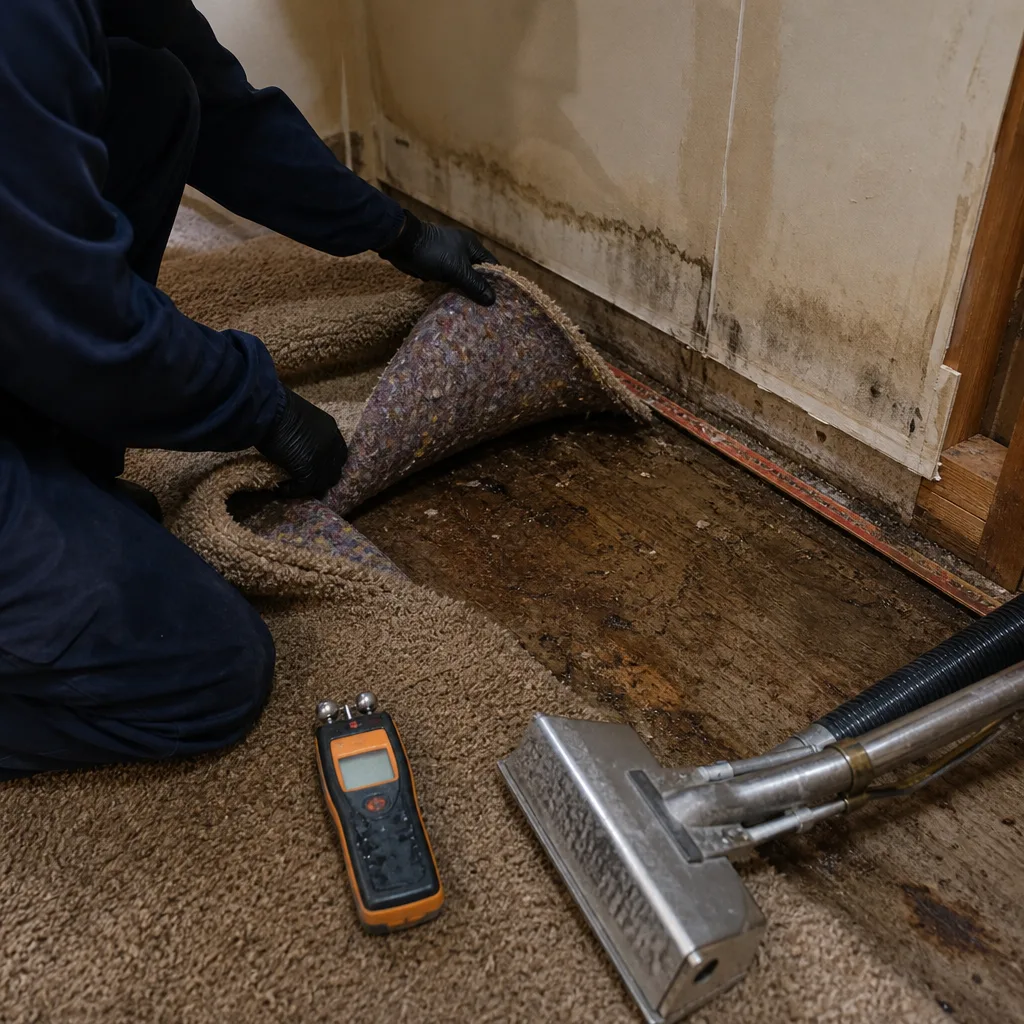
- 45-minute response commitment to Shoreline addresses - we track crew location in real time and dispatch the nearest available unit.
- 24/7 live answer by a real person, never an automated system; our emergency line rings to a human who can authorize board-up and dispatch simultaneously.
- IICRC-certified crews holding FSRT (Fire and Smoke Restoration Technician) and WRT (Water Damage Restoration Technician) certifications - the dual credential matters on every Shoreline fire job because suppression water is guaranteed.
- Free visual inspection and written scope before any work begins, per Haven Standard, Clause 1.
- Direct insurance billing with photo-documented estimates formatted to carrier standards - we coordinate with your adjuster, not just submit and wait.
- One team from emergency board-up through structural fire repair - no handoffs between mitigation and reconstruction contractors that lose continuity and documentation.
BeforeAfterOur Fire & Smoke Damage Restoration Process
1. Inspection & Assessment
We walk the loss with thermal imaging, moisture meters, and a photo rig, documenting every room before anything moves. On Shoreline’s mid-century homes, we pay particular attention to floor penetrations, crawl-space access points, and the condition of original vapor barriers - the places where fire damage hides below the visible line.
2. Emergency Board-Up & Stabilization
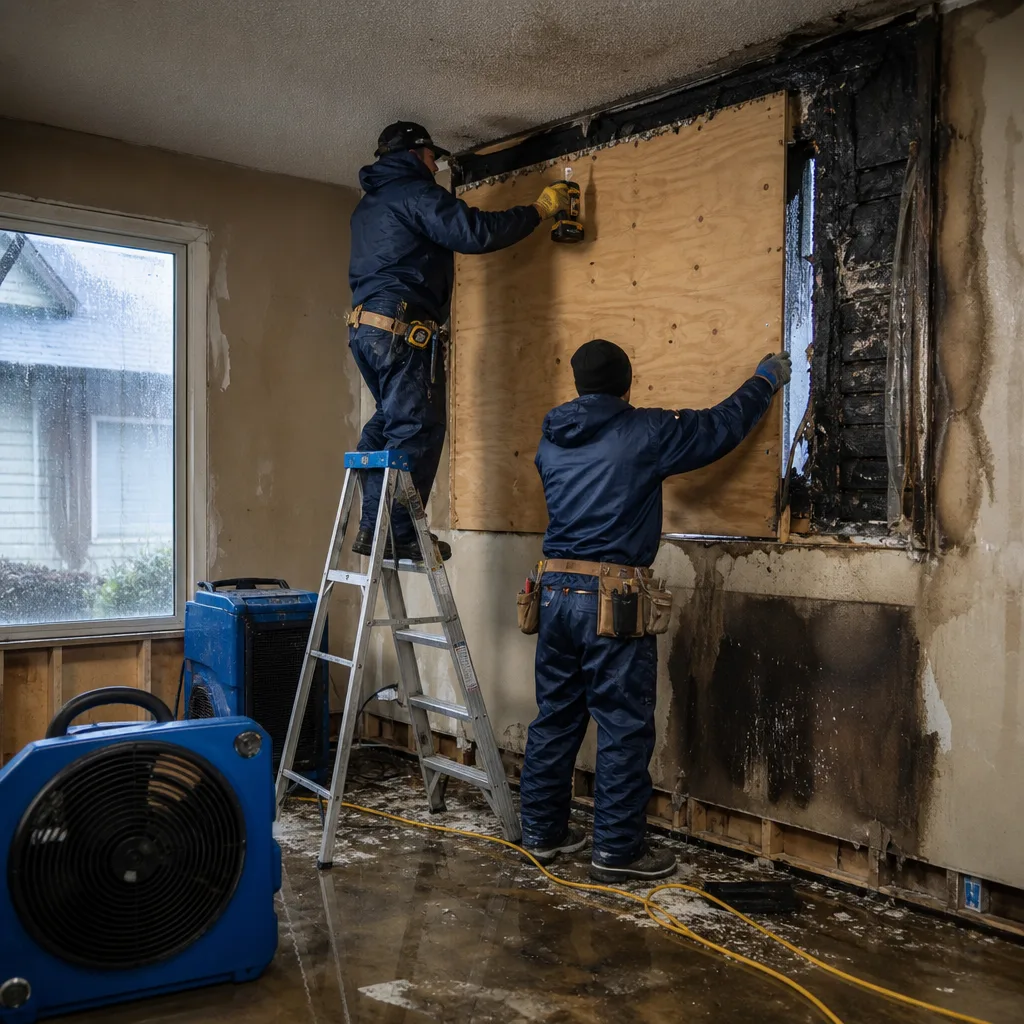
Broken windows, compromised doors, and roof holes get temporary protection against Shoreline’s eight-month rainy season. We tarp structural openings and install security fencing same-day, because a boarded opening that leaks becomes a secondary water loss with its own claim complexity.
3. Water Extraction & Structural Drying
Suppression water and the moisture already present in Shoreline’s chronically damp crawl spaces get addressed together. We deploy Injectidry mat systems for hardwood floors, Dri-Eaz and Phoenix LGR dehumidifiers for air volume control, and lay out air movers with calculated placement based on psychrometric readings - temperature, relative humidity, and vapor pressure differential, which is the force that actually drives moisture out of materials.
4. Smoke & Soot Removal
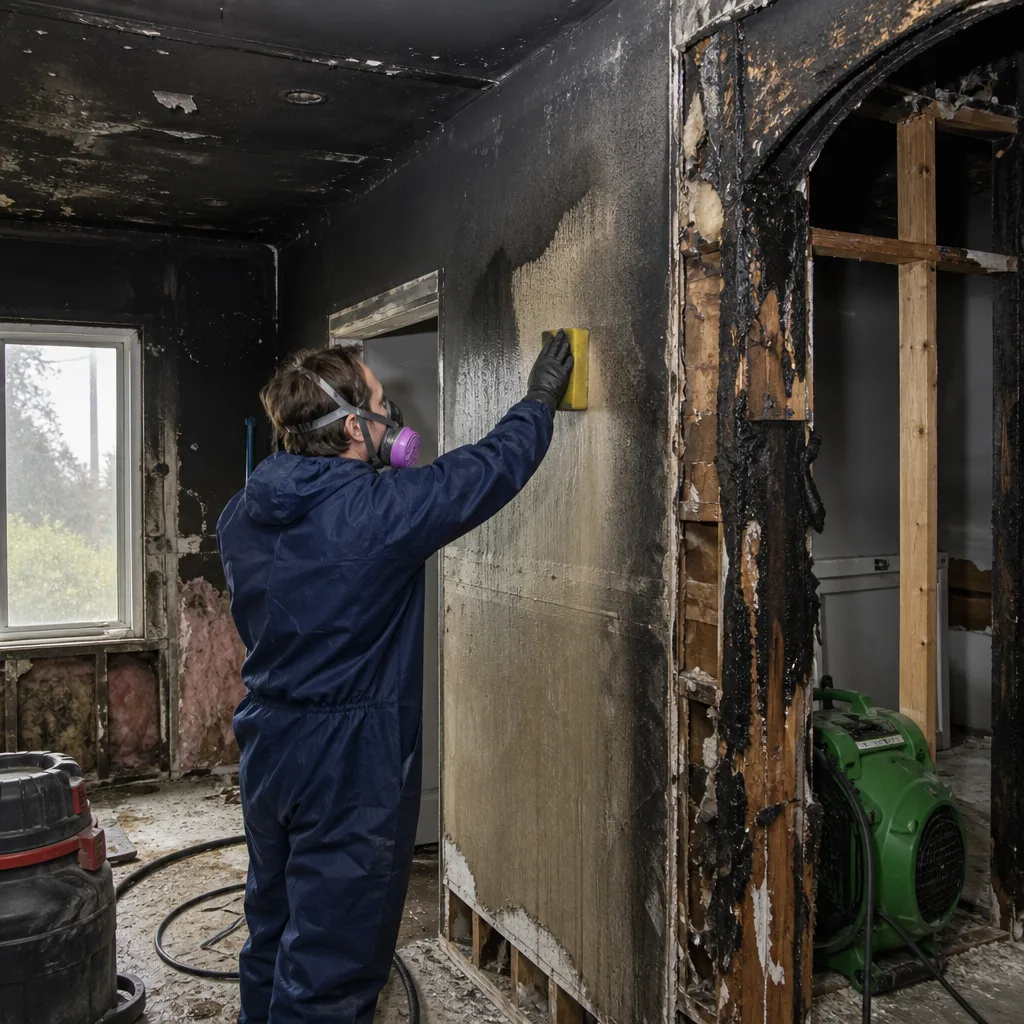
HEPA vacuums capture loose particulate first; then alkaline or solvent-based cleaning agents attack the specific residue type. We clean from top to bottom, following smoke migration patterns that in Shoreline’s open-framed ranch homes often reach attic spaces and wall cavities far from the fire origin.
5. Odor Removal & Deodorization
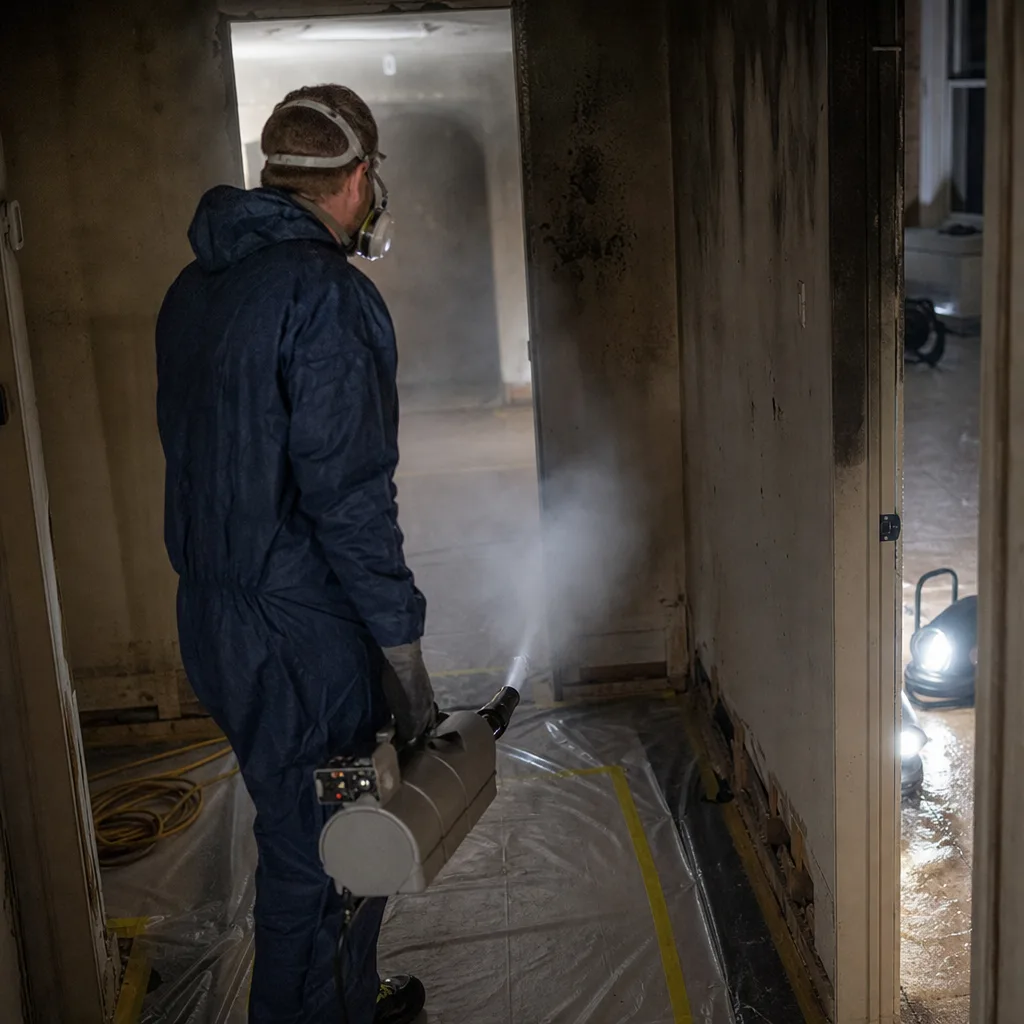
Thermal fogging recreates the heat that opened pores in structural materials during the fire, driving neutralizing agents into the same spaces smoke penetrated. Hydroxyl generators run safely with occupants present for ongoing treatment. For Shoreline’s deeply embedded crawl-space odors, we seal accessible framing with odor-blocking encapsulants after drying completes.
6. Structural Fire Repair & Restoration
Charred or heat-compromised framing gets sistered or replaced per King County building code. We submit permit applications for structural work and coordinate inspections. Final walkthrough includes new moisture readings, a completed photo record, and the signed 365-Day Done Right Promise under The Haven Standard.
Need Emergency Fire & Smoke Damage Restoration in Shoreline Now?
Crews minutes away, answering live 24 hours a day. The sooner we start, the less it costs.
Working With Your Insurance Company
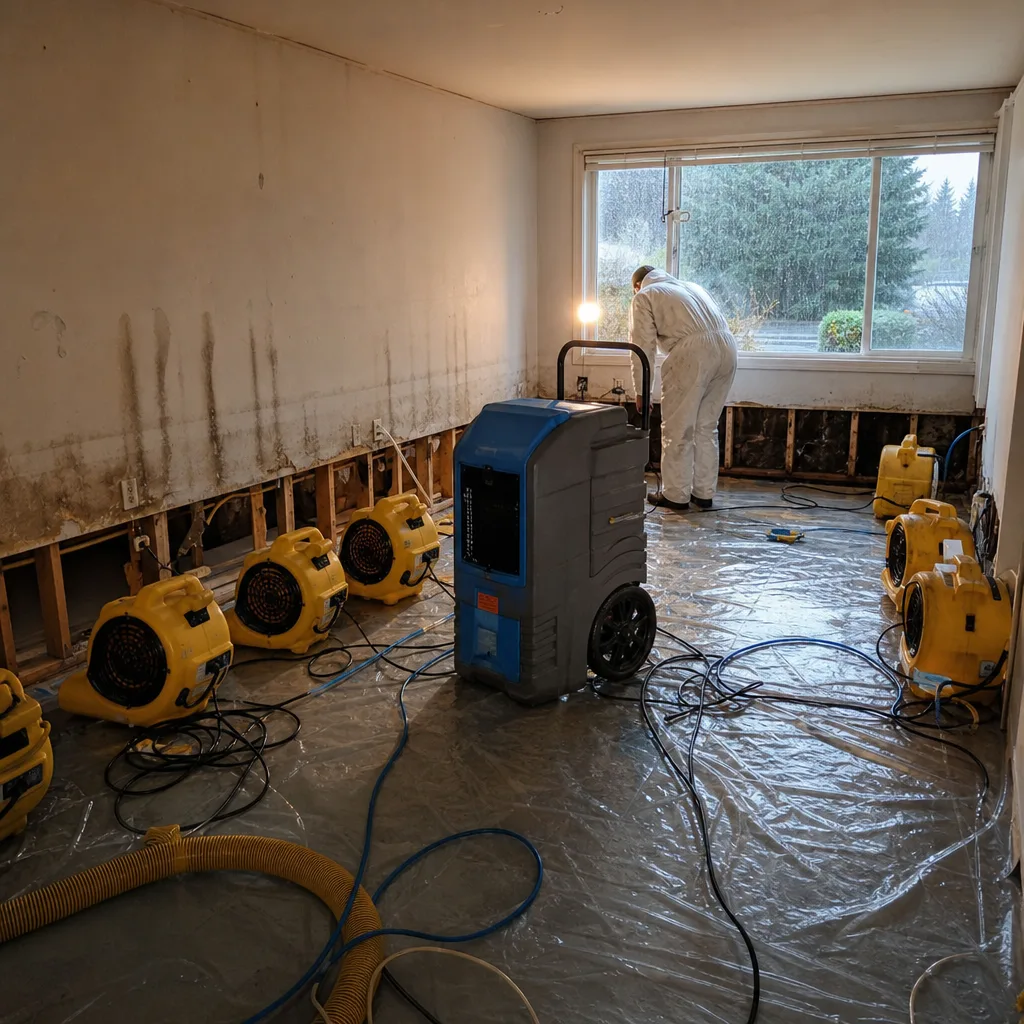
Fire claims fail on documentation gaps more often than on coverage disputes. We start the file from the first hour: time-stamped photos, moisture mapping with readings, and a narrative that connects the fire origin to every affected area. Our estimates follow Xactimate or Symbility formats that adjusters recognize, and we bill carriers directly when policyholders authorize it. The photo record on every visit - standard, never an upsell - gives your adjuster visibility without repeated site visits that delay the claim.
What We Provide Your Insurer
- Thorough documentation of the loss
- Photos of all damage, room by room
- Moisture readings and drying logs
- A detailed, line-item scope of work
- Direct coordination with your carrier
Built for Shoreline’s Loss Calendar
January through March brings the highest fire load in Shoreline, as heating systems in 1960s-era homes work overtime and space heaters supplement furnaces in original ductwork that never reached the back bedrooms. Kitchen grease fires spike in November and December, timed to holiday cooking in kitchens with original range hoods that vent poorly or not at all. Lightning is rare, but the Puget Sound convergence zone does deliver wind-driven rain that can complicate roof fires and make tarp integrity critical. Summer months see fewer structure fires but more outdoor cooking and deck incidents, particularly in the Richmond Beach bluff area where marine fog keeps surfaces damp and ignition-ready. The real constant is the crawl space: whatever month the fire occurs, the eight-month saturated-soil season means suppression water and structural drying merge into one extended job.
Fire & Smoke Damage Restoration Across Shoreline’s Neighborhoods
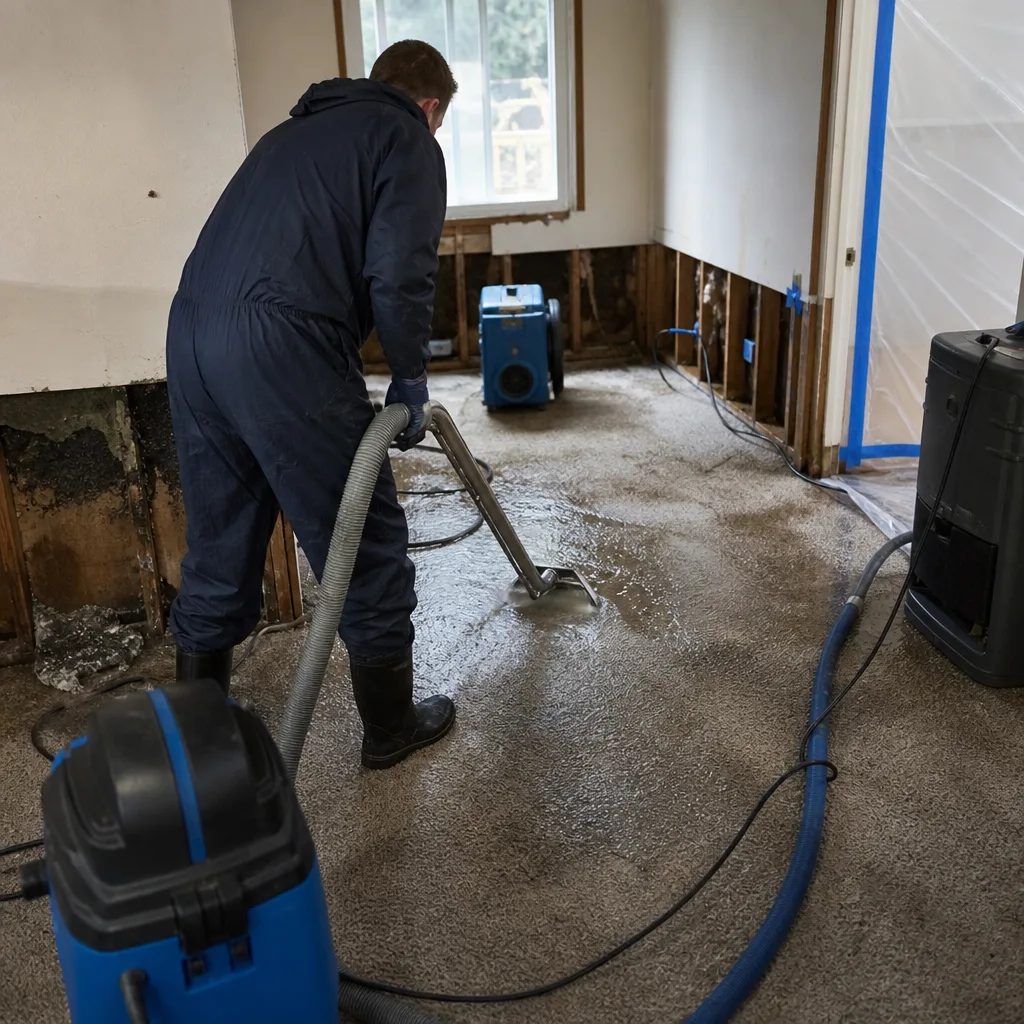
North City and Ridgecrest, running along Aurora Avenue north of 175th Street, hold dense concentrations of the 1950s-1960s ranch homes that define Shoreline’s fire risk profile. Original kitchen layouts with minimal egress, aging electrical panels, and galvanized supply lines create the classic scenario: contained burn in the kitchen, suppression water through the floor, hidden damage in the crawl space. Our crews know the access points and the typical joist spacing in these tracts.
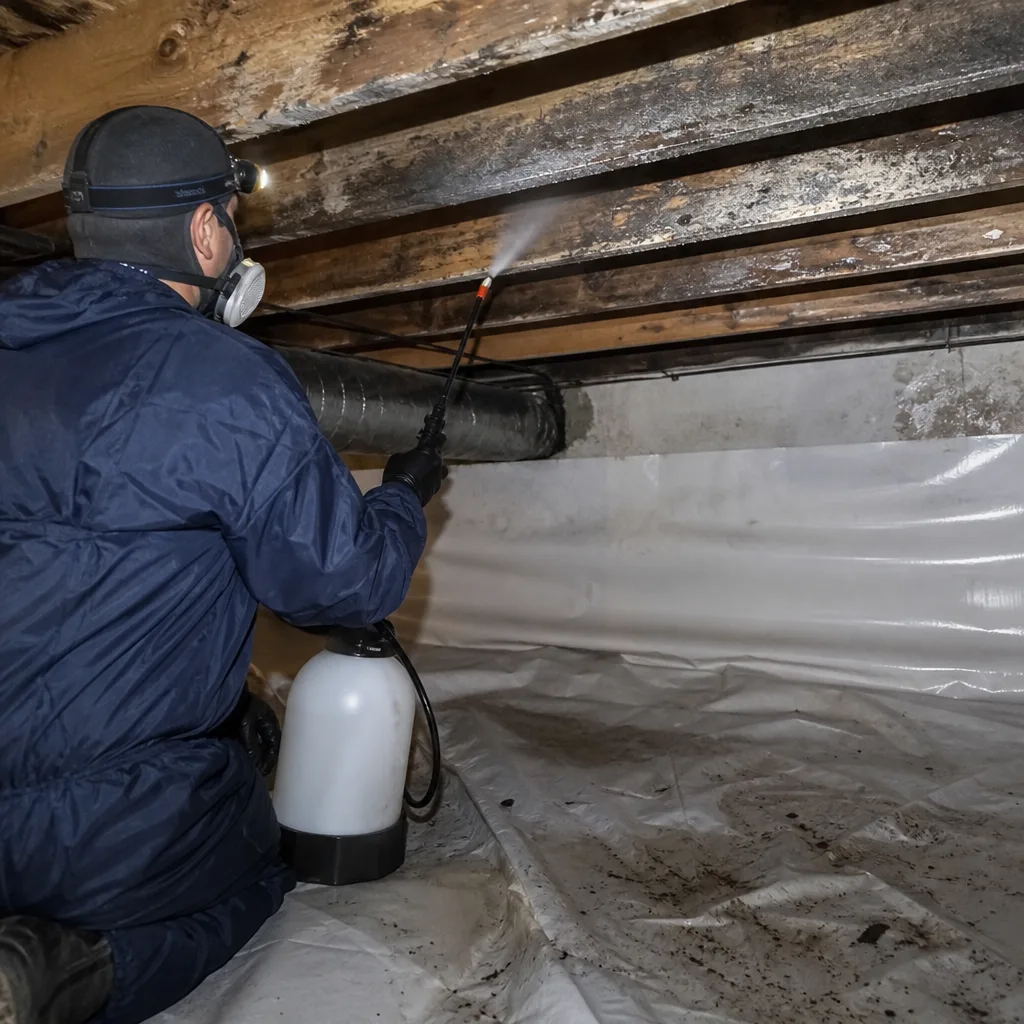
Richmond Beach, on the Puget Sound bluff, adds the marine exposure. Salt air accelerates corrosion in galvanized plumbing and electrical connections. The steep bank soils become saturated in winter and push groundwater toward foundations. We’ve traced “smoke odor” complaints in Richmond Beach homes back to lateral hillside seepage feeding new moisture into fire-damaged wall cavities - the smell was real, but the source was water, not residual soot. In the Richmond Beach bluff area, our crew responded to a kitchen fire in a 1960s rancher where the homeowner’s galvanized supply lines had already been weeping behind the finished wall; steam and suppression water had driven down through the wood-framed floor into the crawl space, and the moisture readings at the joists told us the sub-floor had been damp long before the fire. We set containment, ran air movers and dehumidification into the crawl, logged moisture mapping daily, and did antimicrobial treatment on the charred framing before any structural fire repair began.
The 145th and 185th Street corridors, now served by Lynnwood Link light rail stations, are seeing aggressive renovation of that same mid-century stock. Pre-purchase inspections regularly reveal decades of concealed crawl-space damage that sellers never addressed. Fire restoration in these properties often becomes a larger scope than the fire itself would suggest, because the first thorough inspection of the structure in forty years happens after the loss.
Ballinger and Echo Lake areas, east of I-5, sit on the same clay-dominant glacial till but with more mature tree canopy. Roof fires from chimney and heating system incidents are more common here, and the tree cover complicates ladder access and debris removal. We coordinate crane service when needed for structural stabilization.
Specialized Fire & Smoke Damage Restoration Services We Offer in Shoreline
Fire Damage Cleanup
Surface-level removal of debris, charred materials, and compromised contents, with immediate sorting into salvageable, cleanable, and total-loss categories. In Shoreline’s older homes, we pay particular attention to original built-ins and trim work that may be worth restoring rather than replacing, both for cost and for character retention during reconstruction.
Smoke & Soot Removal
Dry, wet, and protein residue each demand specific chemistry and technique. We test-clean a small area first to confirm method, then scale systematically. On Shoreline’s plaster-and-lath walls found in some pre-1960 construction, standard drywall methods fail - we adjust for substrate porosity and age-related brittleness.
Odor Removal & Deodorization
Thermal fogging, hydroxyl generation, and encapsulant sealing deployed in sequence based on odor penetration depth. Shoreline’s damp crawl spaces often require the full sequence: fogging for the living space, hydroxyl for ongoing air treatment, and encapsulant on accessible framing below after drying logs confirm target moisture content.
Contents Cleaning & Pack-Out
Salvageable items get inventoried, photographed, and transported to our facility for ultrasonic, ozone, or specialized cleaning. Non-salvageable items are documented for the claim with replacement valuation. We return cleaned contents only after the structure passes post-restoration verification.
Emergency Board-Up & Tarping
Immediate weather protection and security for compromised structures. In Shoreline’s rainy season, a proper tarp install with perimeter sealing prevents the secondary water losses that turn a fire claim into a mold claim six months later, which is why we also offer Mold Remediation in Shoreline as part of our full-service approach. We use fire-rated plywood and weatherproof fastening appropriate for wind exposure.
Structural Fire Repair
Replacement of charred or heat-compromised framing, sheathing, and structural connections, with permit coordination through King County. This is where we often find the full scope of pre-existing damage in Shoreline’s mid-century homes - the fire opens walls that haven’t been opened in decades, and we document everything for the claim file.
What happens when you call
- 1
A real person answersNo phone trees - you reach a local pro.
- 2
You get an upfront price rangeHonest numbers before anyone is dispatched.
- 3
A background-checked tech heads outLicensed & insured, dispatched right away.
- 4
You approve before work beginsNothing starts until you say go.
Fire & Smoke Damage Restoration Costs in Shoreline, WA
Light smoke and soot cleanup in Shoreline typically runs $1,800-$3,400 for a single room with no structural involvement. Moderate damage with suppression water, crawl-space drying, and partial drywall replacement runs $4,200-$8,500. Heavy structural fire repair with framing replacement, permit work, and full reconstruction can reach $12,000-$35,000 depending on square footage and finish quality.
What moves the price: the residue type (wet smoke and protein fires take more labor), the extent of water damage from suppression, whether the crawl space requires full drying and antimicrobial treatment, and the age of finishes that must be matched. Insurance typically covers direct fire and smoke damage plus necessary suppression water mitigation; gradual plumbing leaks discovered during the job may fall under a separate claim or policy exclusion. We deliver a written price before work begins, every time, with no scope-creep additions once the crew is inside - Haven Standard, Clause 1. Bring a competitor’s written estimate and we’ll review it at no charge.
We Also Serve Cities Near Shoreline
Our crews respond throughout the north King and south Snohomish corridor, including Shoreline and the surrounding communities of Everett, Lake Stevens, Marysville, and Snohomish. Dispatch and scheduling are coordinated from our Seattle office.
Serving Shoreline, WA - Our Local Coverage Area
We’re based in the Shoreline area and know this community well. Use the map below to see our service coverage - if you’re nearby, we can almost certainly help.
Shoreline Fire & Smoke Damage Restoration Questions, Answered
Why does a small kitchen fire in a Shoreline ranch home turn into such a large restoration scope?
Because the fire is rarely the whole problem. Shoreline’s mid-century ranch and split-level homes run on wood-framed floor systems over unconditioned crawl spaces with original or missing vapor barriers, so a fire that looks contained to one room often hides smoke and water residue pushed down into a chronically damp sub-floor that never fully dries on its own. The same clay-heavy glacial till and eight-month saturated-soil season that keeps those crawl spaces wet makes post-fire structural drying slower here than on Seattle’s better-drained lots. We scope the crawl on every job, and the drying log proves when it’s actually done. Call (360) 502-8815 for a free inspection and written scope.
We smell smoke months after a fire was supposedly cleaned up in our Richmond Beach home - what’s going on?
The odor source was likely misidentified. In Richmond Beach, lateral hillside seepage or failed galvanized supply lines can feed new moisture into fire-damaged cavities long after the soot is gone; the smell reads as smoke but is actually damp char and microbial growth on wood that never dried. Or the original cleaning missed protein residues from a grease fire, which are nearly invisible and extremely persistent. We trace odor with moisture mapping, boroscope inspection, and targeted testing - then fix the source, not just mask it. Call (360) 502-8815 for a free second opinion on any prior estimate.
Does Shoreline’s rainy season change how fast a fire-damaged crawl space dries?
Yes, measurably. Shoreline sits in the Puget Sound convergence zone and receives more precipitation than Seattle proper, while the clay-dominant glacial till beneath most of the city impedes drainage. This keeps hydrostatic pressure against foundations high from October through May, and crawl spaces that were already damp before the fire become extremely slow to dry without active dehumidification. We run drying logs daily and don’t declare completion until readings hit IICRC-standard moisture content - typically 12-16% for softwood framing. On Shoreline’s poorly draining lots, that takes longer than the schedule suggests. Call (360) 502-8815 for an inspection with documented readings.
Should old galvanized pipes and cast-iron drains be replaced during structural fire repair?
Often, yes, and we document the condition for your adjuster. Shoreline’s 1950s-1970s housing stock frequently has galvanized supply lines and cast-iron drain stacks that corrode and fail quietly behind finished walls; the fire and subsequent wall opening create the first real access for inspection. In our Richmond Beach field example, the galvanized lines had been weeping before the fire ever started. Replacing them during structural repair is more cost-efficient than opening walls again in two years, and we include the finding in our photo record and written scope. Call (360) 502-8815 to discuss what’s accessible on your job.
What’s the first thing you do when you arrive at a Shoreline fire loss?
Document, contain, and test. We photograph every room before anything moves, establish containment barriers to prevent soot migration, and take initial moisture readings at the fire origin and in the crawl space below. This 15-minute protocol gives us the baseline that every subsequent decision references, and it produces the documentation your insurer needs from hour one. Then we board up, extract any standing water, and begin the written scope. Call (360) 502-8815 - we answer live 24/7.
How fast can someone actually get here?
Our commitment is 45 minutes to Shoreline addresses once dispatch is authorized. We track crew GPS in real time and assign the nearest unit with FSRT-certified technicians. The live person who answers your call can authorize board-up and dispatch simultaneously - no voicemail, no callback queue. Call (360) 502-8815 now.
Will insurance cover this?
Homeowners policies typically cover direct fire damage, smoke damage, and necessary water mitigation from suppression, subject to your deductible and policy limits. Documentation quality determines how smoothly the claim processes: adjusters pay invoices that connect every line item to photo evidence and moisture logs. We format estimates to carrier standards, bill directly when authorized, and coordinate with your adjuster on scope questions. The 365-Day Done Right Promise backs our work if any issue arises post-settlement. Call (360) 502-8815 and we’ll review your coverage situation.
Can we stay in the home during restoration?
Sometimes, for light smoke and soot cleanup with HEPA air scrubbing running. For moderate to heavy damage, or any job requiring crawl-space work with antimicrobial application, we recommend relocation until air quality testing confirms safe reoccupancy. We coordinate with your adjuster on additional living expense documentation if your policy includes it. Call (360) 502-8815 for a same-day assessment of habitability.
Fire damage in Shoreline doesn’t stay on the surface. The city’s mid-century construction, chronic crawl-space dampness, and clay-locked soils mean that a contained-looking fire often conceals a deeper moisture and odor problem that only systematic documentation and drying logs will resolve. We don’t guess at dry; we measure it, log it, and prove it. Every job starts with a written price before work begins, includes a photo record on every visit, and closes with the 365-Day Done Right Promise under The Haven Standard. Call (360) 502-8815 for a free inspection and written scope - estimates are free, and we offer a free second opinion on any competitor’s written estimate.
Written by Alicia Brennan, Owner at Back to Dry Restoration, serving Shoreline since 2011.